KABUL: Afghan officials on Saturday declared the killing of Daesh’s top commander and its founder for northern Afghanistan, Qari Hekmat, describing his death as a major blow to the network that has conducted a series of bloody attacks in recent months.
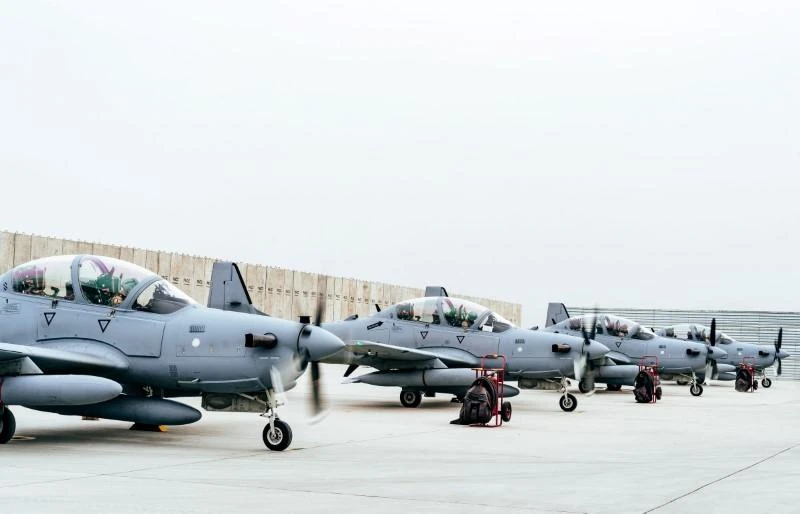
The 45-year-old Hekmat was killed in an airstrike during an operation on Thursday in Darz Aab district of Jowzjan province, lying near the border with Central Asia, the Defense Ministry said.
A former Taliban commander, Hekmat changed sides to Daesh two years ago after finishing a five-year prison sentence in a government jail and became the founder of the radical Iroup for northern Afghanistan, said Matin Beg, chief of the Independent Directorate of Local Governance.
“In terms of Daesh’s hierarchy, he was the top man of Daesh for northern areas. His killing is a heavy blow to Daesh and will have a major impact on Daesh in northern areas. It can slow down the speed of Daesh’s expansion,” he told Arab News in an interview.
Hekmat had under his command between 400 to 500 local fighters and several dozen foreign fighters.
Her was on the top target list of the government, said Beg, who used to serve as deputy spy chief for Afghanistan many years ago.
During his rule, Hekmat clashed with both the government and his former comrades in the Taliban, who have led the insurgency against the government and US-led troops since its ouster in late 2001, officials said.
He has been replaced by Habib Urahman, a local Uzbek, but the latter lacks the ability and experience the late Daesh commander possessed, Beg said.
Bilal Sarwary, a veteran Afghan journalist who has long covered the country’s events, described Hekmat as a charismatic person.
“He was resourceful and brutal at the same time. He was founder of Daesh in the north and toured villages in Jowzjan to garner support for Daesh, and managed to bring over members of IMU (Islamic Movement of Uzbekistan) to Daesh in the north,” Sarwary told Arab News.
Hundreds of IMU members have lived either in hideouts or under Taliban-controlled areas for nearly two decades in Afghanistan. Central Asia and Russia have long been concerned about possible infiltration of IMU and Daesh fighters in their nations for both radical and sabotage activities.
Recently a top Russian official said his estimates showed there were at least 7,000 Daesh active fighters in Afghanistan.
Afghan officials say the network, which sprang in late 2014 in Afghanistan and with its initial base in the eastern region, does not have strong roots in the country.
The US and Afghan government have in recent months conducted a number of air offensives against suspected Daesh areas in northern and northeastern parts of Afghanistan.
The 45-year-old Hekmat was killed in an airstrike during an operation on Thursday in Darz Aab district of Jowzjan province, lying near the border with Central Asia, the Defense Ministry said.
A former Taliban commander, Hekmat changed sides to Daesh two years ago after finishing a five-year prison sentence in a government jail and became the founder of the radical Iroup for northern Afghanistan, said Matin Beg, chief of the Independent Directorate of Local Governance.
“In terms of Daesh’s hierarchy, he was the top man of Daesh for northern areas. His killing is a heavy blow to Daesh and will have a major impact on Daesh in northern areas. It can slow down the speed of Daesh’s expansion,” he told Arab News in an interview.
Hekmat had under his command between 400 to 500 local fighters and several dozen foreign fighters.
Her was on the top target list of the government, said Beg, who used to serve as deputy spy chief for Afghanistan many years ago.
During his rule, Hekmat clashed with both the government and his former comrades in the Taliban, who have led the insurgency against the government and US-led troops since its ouster in late 2001, officials said.
He has been replaced by Habib Urahman, a local Uzbek, but the latter lacks the ability and experience the late Daesh commander possessed, Beg said.
Bilal Sarwary, a veteran Afghan journalist who has long covered the country’s events, described Hekmat as a charismatic person.
“He was resourceful and brutal at the same time. He was founder of Daesh in the north and toured villages in Jowzjan to garner support for Daesh, and managed to bring over members of IMU (Islamic Movement of Uzbekistan) to Daesh in the north,” Sarwary told Arab News.
Hundreds of IMU members have lived either in hideouts or under Taliban-controlled areas for nearly two decades in Afghanistan. Central Asia and Russia have long been concerned about possible infiltration of IMU and Daesh fighters in their nations for both radical and sabotage activities.
Recently a top Russian official said his estimates showed there were at least 7,000 Daesh active fighters in Afghanistan.
Afghan officials say the network, which sprang in late 2014 in Afghanistan and with its initial base in the eastern region, does not have strong roots in the country.
The US and Afghan government have in recent months conducted a number of air offensives against suspected Daesh areas in northern and northeastern parts of Afghanistan.