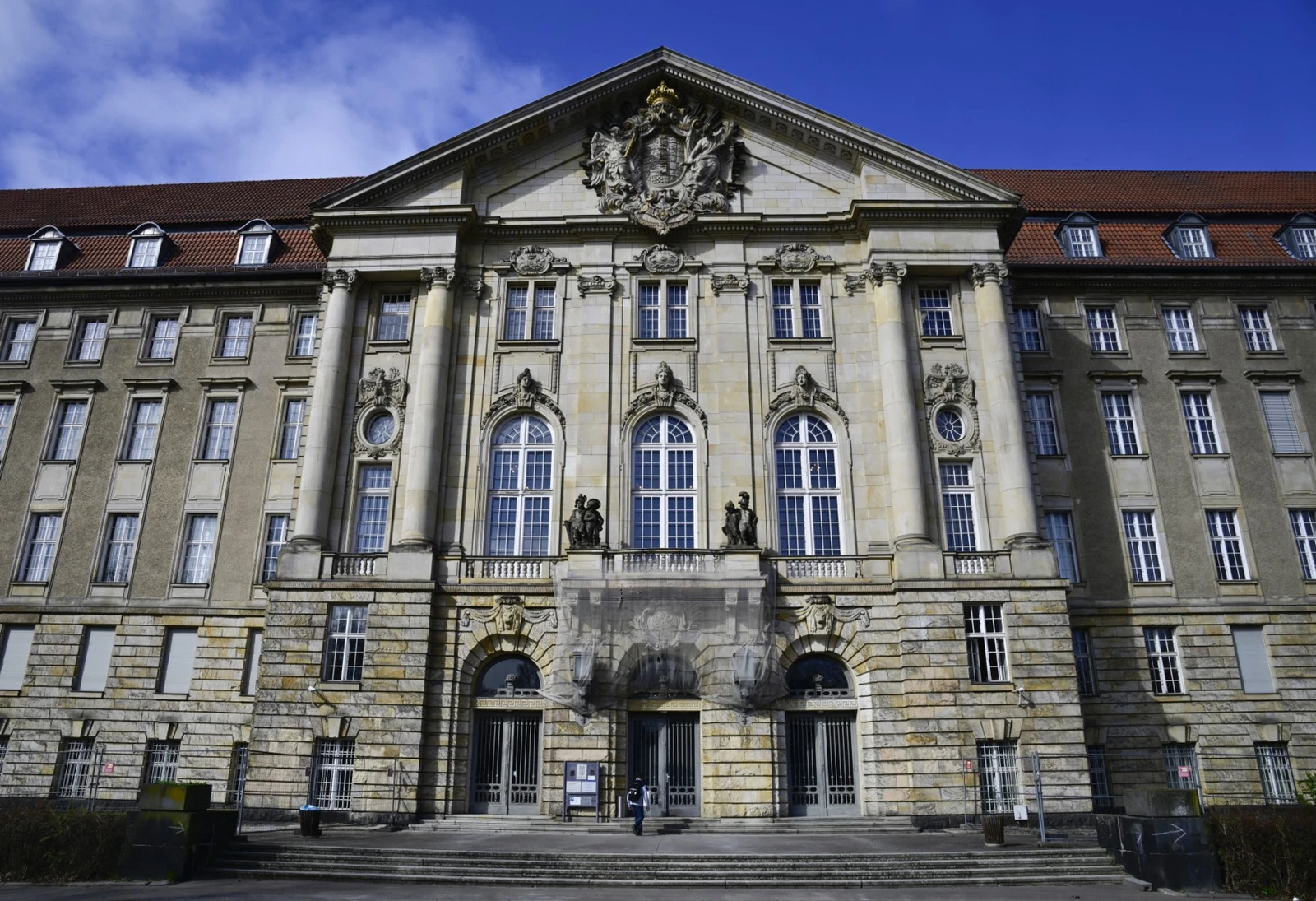
- Woman accused of spying for Russia in Berlin
- Trial follows arrest that caused Germany-Moscow tensions
BERLIN: A Berlin woman accused of spying for Russia will go on trial on espionage charges on Thursday, 10 months after her high-profile arrest sparked a diplomatic clash between Germany and Moscow.
The German-Ukrainian businesswoman partially identified as Ilona W., 57, is accused of using contacts with current and former German defense ministry officials to gather information about military aid for Ukraine, drone test sites and the arms industry.
She is also accused of facilitating access to high-level political events in Berlin for her alleged handler, an officer from Russia’s GRU intelligence agency working as a supposed diplomat at the Russian embassy in Berlin.
The alleged involvement of the Russian embassy drew outrage from German officials at the time of the woman’s arrest in late January, including Foreign Minister Johann Wadephul, who called it a “hostile act” and “completely unacceptable.”
Russia’s ambassador was summoned over the incident, and the handler — identified by news weekly Der Spiegel as the embassy’s deputy military attache — was expelled from Germany.
The woman had for years led an advocacy group that called for international cooperation, particularly around relations between Germany, Russia and Ukraine.
Prosecutors say Ilona W. started spying on behalf of Russia by October 2023, or possibly even earlier.
In addition to her advocacy work, she also ran a small marketing agency.
Both positions, according to prosecutors, provided her with extensive connections within military and political circles and helped her gain access to events around the German capital.
Prosecutors charge that she helped her Russian handler attend political events in Germany and helped introduce him to contacts which he hoped to build into his own intelligence network.
The Russian ambassador to Berlin, Sergei Nechayev, flatly denied the allegations in an interview with AFP this week.
“The Russian Embassy has no connection whatsoever to this woman, and even if she happened to cross paths with one of our representatives — perhaps at some reception — that means absolutely nothing,” Nechayev told AFP, adding that he may have seen her himself at an event.
“But she is not a Russian citizen and, as far as we are aware, has no ties to Russia,” he said. “She is a German and Ukrainian citizen, and, frankly, we do not associate with such individuals here.”
The trial is expected to run until May 2027.