- Southeast Asian nations started talks for fuel-sharing mechanism during a meeting in May
- War in Middle East is the ‘most urgent issue’ for world leaders to discuss, expert says
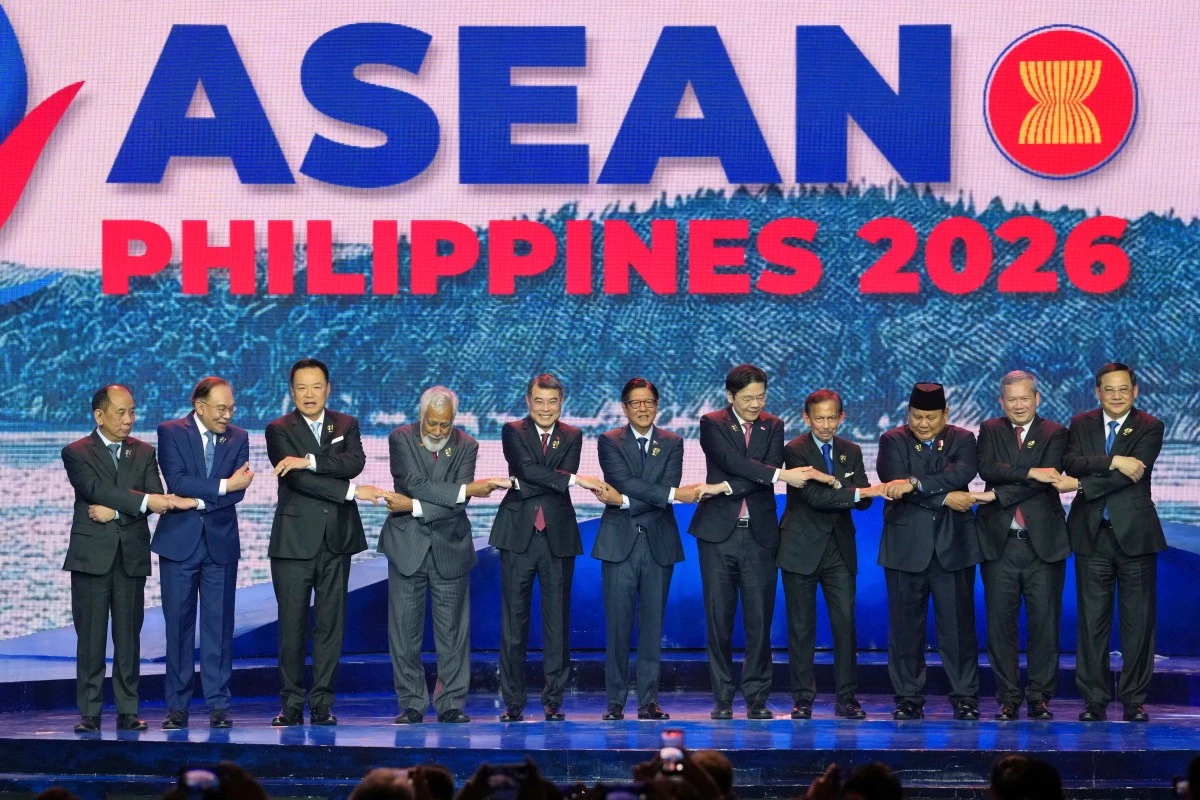
MANILA: Southeast Asian leaders are expected to discuss new measures to deal with the energy crunch triggered by the fallout of the US-Israel war on Iran during their upcoming annual summit, the Philippines said on Friday.
As chair of the 11-member Association of Southeast Asian Nations, the Philippines will host the three-day gathering in Manila from Sunday, which will also be joined by other world leaders, including US President Donald Trump, Chinese Premier Li Qiang, Indian Prime Minister Narendra Modi, and Brazilian President Luiz Inacio Lula da Silva.
The global energy crisis is among the issues expected to top the agenda, as Southeast Asian countries lacking stockpiles faced energy uncertainty this year after US-Israeli attacks on Iran and Tehran’s retaliatory strikes on American allies in the Gulf region upended key supply chains moving through the Strait of Hormuz.
“We are still feeling the impacts of the Middle East crisis,” Dominic Xavier Imperial, a spokesperson for the Philippines’s ASEAN chairmanship, said on Friday.
“So, we should expect some additional measures and decisions from our leaders in addressing the energy situation that we’re facing at the moment.”
ASEAN, one of the world’s fastest economic blocs, imports more than 55 percent of the crude for its refineries from the Middle East.
The impact of the crisis has affected the region’s 700 million population, according to the ASEAN Center for Energy, even as dependence on power imports from the Middle East varies across the bloc’s member states, from around one-quarter of crude in some markets to more than four-fifths in others.
In the Philippines and in Cambodia, petrol retail prices have jumped by 76 and 68 percent respectively, while in Thailand diesel surged by 70 percent, according to the center’s data.
Inflation in the Philippines has jumped from 2.4 percent in February to 7.8 percent last month, while Malaysia’s projected petroleum subsidy costs have surged to $10 billion, almost tripling the initial budget.
Michael Ricafort, chief economist of the Rizal Commercial Banking Corporation, is expecting the upcoming summit to produce new regional cooperation on energy supply, including diversifying supply agreements.
“This includes strengthening arrangements with Middle Eastern countries as sources of crude oil, as well as cooperation among ASEAN member states on the supply of refined petroleum products,” he told Arab News.
“Because some countries have larger inventories, with reserves that can last hundreds of days … There could be opportunities to establish mutual arrangements and strengthen cooperation in this area.”
ASEAN nations have been in talks for an emergency fuel-sharing mechanism, after they proposed a regional oil stockpile during a similar summit held in May in Cebu in response to the energy crisis sparked by the war in the Middle East.
The measure might be developed similarly to ASEAN’s existing rice stockpile, which involves the bloc’s members plus China, Japan and South Korea. Under this mechanism, the staple item is stockpiled for immediate release during disasters without disrupting market prices.
The war in the Middle East will be the “most urgent issue” for the leaders to address during the meeting, which is the “perfect venue to push for peace,” as some of the most influential world leaders will be in attendance.
“These conflicts have brought nothing good. On the contrary, they have driven up oil prices and caused disruptions in oil supply. That is the number one issue. This applies not only to the Middle East but also to the Russia-Ukraine war. There’s a common stance to end these conflicts and support diplomatic solutions,” Ricafort said.
“This is the kind of position that can be advanced at this summit because all the key players are here.”