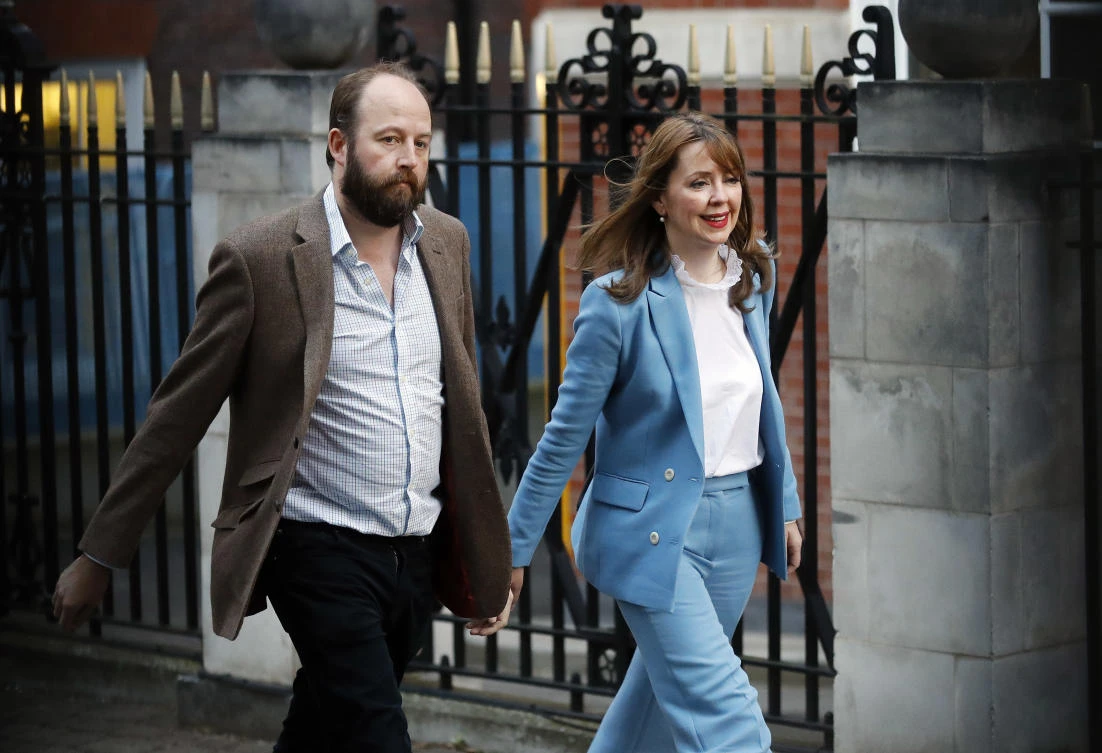
LONDON: British Prime Minister Theresa May’s two closest aides announced their resignations Saturday after a crushing electoral setback that left her authority in tatters.
Senior members of the ruling Conservative party had reportedly made the departure of Nick Timothy and Fiona Hill a condition of allowing May to stay on after losing her parliamentary majority in Thursday’s vote.
But it will be another blow to the prime minister, who has been heavily reliant on their advice and support since her previous job at the Interior Ministry.
Timothy said he had resigned on Friday after the result was confirmed, and took responsibility for the Conservative manifesto, including a botched plan for elderly social care that caused a major backlash.
But he wrote on the Conservative Home website: “The reason for the disappointing result was not the absence of support for Theresa May and the Conservatives but an unexpected surge in support for Labour.”
A party spokesman confirmed Hill had also resigned.
Timothy and Hill have been accused of creating a “toxic” atmosphere in Downing Street.
May’s former Director of Communications, Katie Perrior, had earlier recounted the “terrible” atmosphere at meetings attended by the pair, whom she said showed no respect for other staff or even ministers.
“I felt what the prime minister needs when you’re going through a tough time like negotiating Brexit is diplomats, not street fighters,” Perrior, who quit before the election, told BBC radio.
“They really only know one way to operate and that’s to have enemies and I’m sure I’m one of those this morning.”
The Conservative-backing Daily Telegraph newspaper had earlier warned: “Mrs May must accept that the result is an indictment of the furtive way she does business.
“She needs to be more collegiate, seeking the advice of the cabinet and backbench MPs while reducing her almost total reliance on a tiny cadre of advisers.”
Timothy had been widely blamed for the social care plan, over which May was forced to backtrack in the middle of the election campaign following signs it was hitting the party’s core support.
Hill has also made enemies with her combative style, confronting anyone — including staff, ministers and journalists — who seemed less than loyal to her boss.
Sky News anchor Adam Bolton read out a text message she had sent to him live on air after he mentioned the health of the prime minister, who has diabetes.
“Tell Bunter (Bolton) that he should watch what he says about my boss’s health. Utterly unfounded and untrue. We will be making a formal complaint,” she wrote.
Last December, Hill also told senior Conservative lawmaker Nicky Morgan to keep away from Downing Street after criticizing the premier for her expensive leather trousers.
Meanwhile May was working to fill out the ranks of her minority government Saturday after an election that proved a disaster for her Conservative Party, a headache for Britain’s exit from the European Union — and potentially a fatal blow to May’s premiership.
May’s office has said that the most senior Cabinet members — including Treasury chief Philip Hammond, Foreign Secretary Boris Johnson and Home Secretary Amber Rudd — will keep their jobs, but she is expected to shuffle the lower ranks of ministers.
Several ministers lost their seats in Thursday’s election, which saw the Conservatives lose their majority in Parliament. May’s party won 318 seats, eight short of the 326 they needed for an outright majority. The main opposition Labour Party took 262.
May announced the party would try to work with Northern Ireland’s Democratic Unionist Party, an alliance that is fraught with difficulties.
The DUP whose 10 seats would allow the government to get measures through Parliament, is a socially conservative pro-British Protestant group that opposes abortion and same-sex marriage and includes both environmentalists and climate-change deniers among its senior ranks.
Instead, the result has sown confusion and division in British ranks, just days before negotiations are due to start on June 19.
Labour leader Jeremy Corbyn, riding a wave of acclaim for his party’s unexpectedly strong showing, called on May to resign.
She seems secure for the immediate future, because senior Conservatives do not want to plunge the party into a damaging leadership contest. But Britain’s Saturday newspapers agreed she is just clinging on.
“May fights to remain PM,” said the front page of the Daily Telegraph, while the Times of London said: “May stares into the abyss.”
May was under pressure to fire her most senior advisers, Nick Timothy and Fiona Hill, blamed by many Conservatives for steering the election campaign toward disaster.
Katie Perrior, who quit as May’s communications chief in April, said Timothy and Hill were “great street fighters but poor political leaders.”
“Mrs. May doesn’t need street fighters now, she needs people with charm and diplomacy to get her through the next few weeks and months” Perrior wrote in the Times of London.
Senior members of the ruling Conservative party had reportedly made the departure of Nick Timothy and Fiona Hill a condition of allowing May to stay on after losing her parliamentary majority in Thursday’s vote.
But it will be another blow to the prime minister, who has been heavily reliant on their advice and support since her previous job at the Interior Ministry.
Timothy said he had resigned on Friday after the result was confirmed, and took responsibility for the Conservative manifesto, including a botched plan for elderly social care that caused a major backlash.
But he wrote on the Conservative Home website: “The reason for the disappointing result was not the absence of support for Theresa May and the Conservatives but an unexpected surge in support for Labour.”
A party spokesman confirmed Hill had also resigned.
Timothy and Hill have been accused of creating a “toxic” atmosphere in Downing Street.
May’s former Director of Communications, Katie Perrior, had earlier recounted the “terrible” atmosphere at meetings attended by the pair, whom she said showed no respect for other staff or even ministers.
“I felt what the prime minister needs when you’re going through a tough time like negotiating Brexit is diplomats, not street fighters,” Perrior, who quit before the election, told BBC radio.
“They really only know one way to operate and that’s to have enemies and I’m sure I’m one of those this morning.”
The Conservative-backing Daily Telegraph newspaper had earlier warned: “Mrs May must accept that the result is an indictment of the furtive way she does business.
“She needs to be more collegiate, seeking the advice of the cabinet and backbench MPs while reducing her almost total reliance on a tiny cadre of advisers.”
Timothy had been widely blamed for the social care plan, over which May was forced to backtrack in the middle of the election campaign following signs it was hitting the party’s core support.
Hill has also made enemies with her combative style, confronting anyone — including staff, ministers and journalists — who seemed less than loyal to her boss.
Sky News anchor Adam Bolton read out a text message she had sent to him live on air after he mentioned the health of the prime minister, who has diabetes.
“Tell Bunter (Bolton) that he should watch what he says about my boss’s health. Utterly unfounded and untrue. We will be making a formal complaint,” she wrote.
Last December, Hill also told senior Conservative lawmaker Nicky Morgan to keep away from Downing Street after criticizing the premier for her expensive leather trousers.
Meanwhile May was working to fill out the ranks of her minority government Saturday after an election that proved a disaster for her Conservative Party, a headache for Britain’s exit from the European Union — and potentially a fatal blow to May’s premiership.
May’s office has said that the most senior Cabinet members — including Treasury chief Philip Hammond, Foreign Secretary Boris Johnson and Home Secretary Amber Rudd — will keep their jobs, but she is expected to shuffle the lower ranks of ministers.
Several ministers lost their seats in Thursday’s election, which saw the Conservatives lose their majority in Parliament. May’s party won 318 seats, eight short of the 326 they needed for an outright majority. The main opposition Labour Party took 262.
May announced the party would try to work with Northern Ireland’s Democratic Unionist Party, an alliance that is fraught with difficulties.
The DUP whose 10 seats would allow the government to get measures through Parliament, is a socially conservative pro-British Protestant group that opposes abortion and same-sex marriage and includes both environmentalists and climate-change deniers among its senior ranks.
Instead, the result has sown confusion and division in British ranks, just days before negotiations are due to start on June 19.
Labour leader Jeremy Corbyn, riding a wave of acclaim for his party’s unexpectedly strong showing, called on May to resign.
She seems secure for the immediate future, because senior Conservatives do not want to plunge the party into a damaging leadership contest. But Britain’s Saturday newspapers agreed she is just clinging on.
“May fights to remain PM,” said the front page of the Daily Telegraph, while the Times of London said: “May stares into the abyss.”
May was under pressure to fire her most senior advisers, Nick Timothy and Fiona Hill, blamed by many Conservatives for steering the election campaign toward disaster.
Katie Perrior, who quit as May’s communications chief in April, said Timothy and Hill were “great street fighters but poor political leaders.”
“Mrs. May doesn’t need street fighters now, she needs people with charm and diplomacy to get her through the next few weeks and months” Perrior wrote in the Times of London.