- Presidential palace sealed off, schools suspended ahead of annual rally marking 1972 martial law
- Since last year, Sept. 21 also marks anti-corruption mobilization in wake of flood prevention scandal
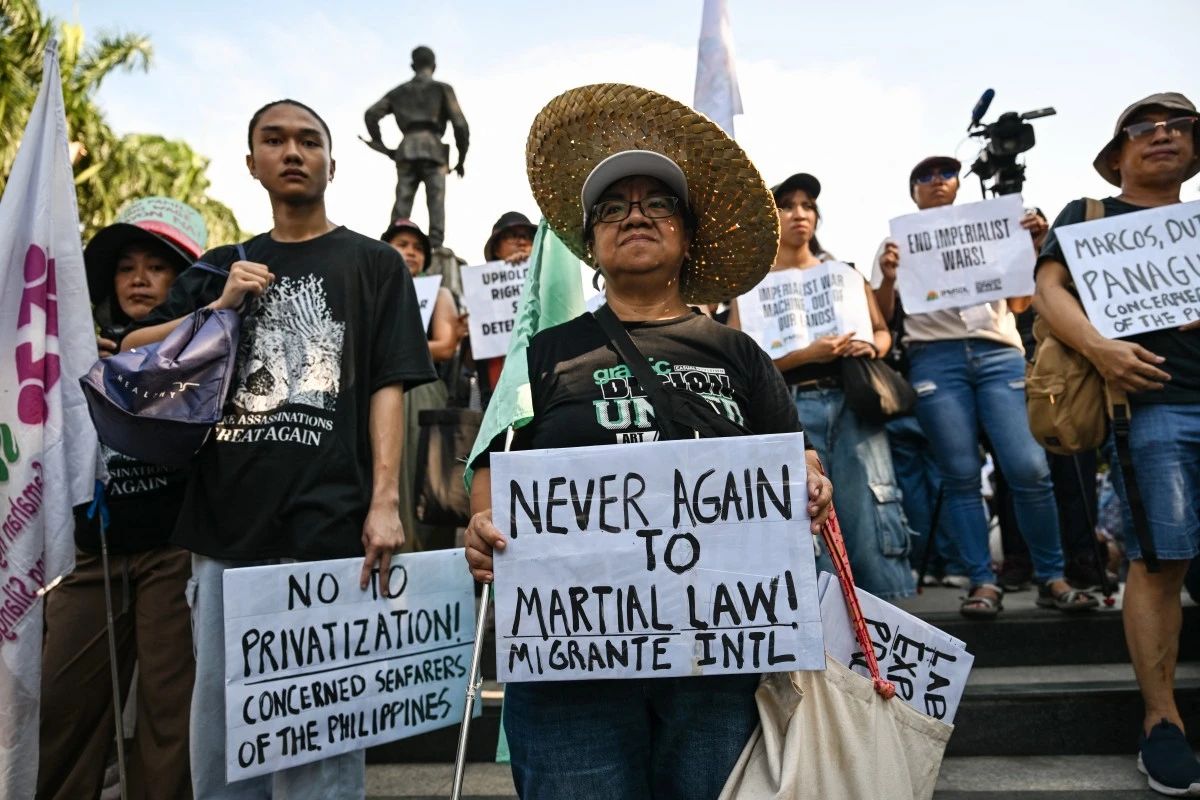
MANILA: Parts of the Philippine capital were locked down on Monday as thousands of demonstrators took to the streets to protest corruption and mark the 54th anniversary of the declaration of martial law, a period marred by violence and rights abuses.
More than 17,000 police personnel were deployed across the main protest sites in Manila, and classes in schools across the city were suspended or moved online. The presidential palace complex, Malacanang, was sealed off, with the Presidential Office citing “standard security protocols.”
Protesters were expected to rally in the area as part of the annual commemoration of the martial law period, during which the father and namesake of President Ferdinand Marcos Jr. assumed emergency powers in what many remember as one of the darkest periods in the Southeast Asian nation’s history. He was ousted 14 years later in a popular uprising.
Since last year, Sept. 21 has also marked anti-corruption mobilization by labor, youth and church groups in the wake of a multibillion-dollar graft case involving fake flood control projects. Many powerful political figures were implicated in the scandal, fueling public backlash and demands for accountability in one of the world’s most typhoon-prone countries.
“Our primary goal is really to highlight that the Filipino people’s fight against flooding, corruption, poverty and lack of accountability is continuing, especially since only three people have been arrested so far,” David San Juan, convener of the People’s Movement Against Corruption and co-organizer of Monday’s rallies, told Arab News.
“The flood control scam has really not been resolved. And what’s even more alarming is that next year, there is still a 107 billion peso ($1.7 billion) budget for flood control, despite the fact that the government has failed to conduct a full accounting of previous flood control expenditures. If we don’t hold those responsible for corruption accountable, it will happen again and again.”
JL Dalope, spokesperson for SAKA, an anti-feudal alliance of artists and cultural workers, which also advocates land justice, said that among this year’s issues, demonstrators would also raise the Philippines’ membership in Pax Silica — a US-led initiative, under which the country would switch from microchip production to being a hub for global artificial intelligence infrastructure. The Philippines formally joined the US coalition in April 2026.
The centerpiece of Pax Silica in the Philippines is the establishment of a 4,000-acre Economic Security Zone located in Tarlac. It has drawn protests, as the designated land overlaps with the ancestral land of local Indigenous groups.
The controversial project paves the way for state-sponsored “land grabbing,” according to Dalope.
“The issue of Pax Silica is very significant, especially when it comes to AI and data centers. Our farmers could also be affected. They could lose their land or have their land taken away from them,” he said. “We are trying to make our voices louder.”