1. The Republic of Congo, also known as Congo-Brazzaville to distinguish it from the neighboring Democratic Republic of Congo, became independent on Aug. 15, 1960. Abbe Fulbert Youlou was its first president, but Alphonse Massamba-Debat took over in 1963 following an uprising dubbed the “Trois Glorieuses” (“Three Glorious Days”). In 1968, he was overthrown by Marien Ngouabi, who established a Marxist-Leninist regime and named the country the People’s Republic of Congo, run by the Congolese Labour Party (PCT). Ngouabi was assassinated in 1977 and Lt. Gen. Joachim Yhombi-Opango took over, until he was toppled two years later by Sassou Nguesso, who served in the elite paratroop corps. In 1990, Sassou Nguesso was forced to accept a multi-party system, and was defeated in a 1992 election by Pascal Lissouba. Disputed legislative election results led to civil unrest in 1993-94 that left some 2,000 people dead.
2. A second bout of civil unrest in 1997 killed between 4,000 and 10,000 people, and led to Lissouba’s ouster by Sassou Nguesso. Fresh fighting broke out in 1998-99, killing thousands more, and the southern Pool region was the scene of fighting between government troops backed at times by forces from Angola, and locally based rebels until 2003.
3. Sassou Nguesso won two successive mandates, in 2002 with 85 percent of the result, and in 2009 with 68 percent, but both tallies were contested by opposition parties. In 2012, the ruling PCT party won an absolute majority in the national assembly, with the opposition denouncing “flagrant irregularities.”
4. Oil production is the country’s most important economic sector, and Congo is the 4th biggest producer in sub-Saharan Africa. Congo began to increase activity in the forestry sector, and wood, both lumber and plywood, is now the second biggest export. China is by far the primary destination for Congolese exports, absorbing 52 percent in 2012 according to the CIA World Factbook. With the civil strife damaging business activity, it was not until 2000 that an economic recovery got started. Growth in 2014 was estimated at six percent last year.
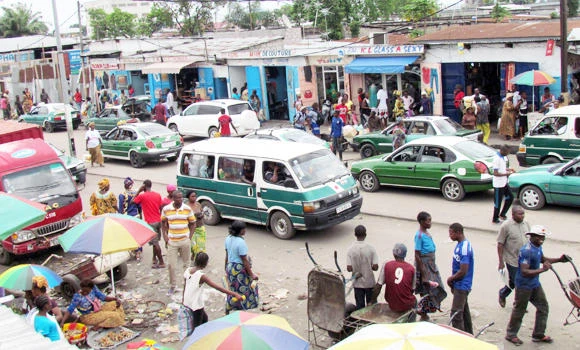
5. Half the population still lives in poverty however, and according to World Bank data, per capita income stood at $2,710 (2,440 euros) in 2014. Economic reform programmes have been set up with help from the International Monetary Fund and the World Bank. Congo had a population of 4.5 million in 2014, spread across 342,000 sq. km that stretch inland from western central Africa’s Atlantic coast, an area somewhat smaller than Japan or Paraguay, for example.
Five things to know about Republic of Congo