HAMBURG: The final statement from Group of 20 (G-20) leaders has exposed a divide between the US and other G-20 members on the Paris accord aimed at combating climate change.
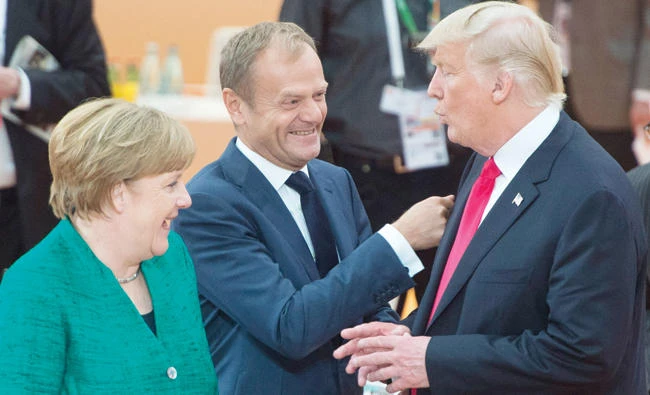
German Chancellor Angela Merkel, hosting the two-day G-20 summit, said she was pleased all club members besides the US had agreed the Paris climate accord was irreversible.
“I think it’s very clear that we could not reach consensus, but the differences were not papered over, they were clearly stated,” Merkel told reporters at the end of the two-day meeting.
She said she did not share the view of British Prime Minister Theresa May who said on Friday she thought Washington could decide to return to the climate agreement.
In the final communique, the G-20 leaders took note of the US decision to withdraw from the landmark accord.
“The leaders of the other G-20 members state that the Paris Agreement is irreversible,” the statement read.
On trade, another sticking point, the leaders agreed they would “fight protectionism including all unfair trade practices and recognize the role of legitimate trade defense instruments in this regard.”
Trump, who on Friday found chemistry in his first face-to-face meeting with Russian President Vladimir Putin, congratulated Merkel on her stewardship of the summit.
“You have been amazing and you have done a fantastic job. Thank you very much chancellor,” he said.
French President Emmanuel Macron also hailed the approach, saying that the club found an “indispensable balance” through the text and halted any backsliding on fighting climate change, which is blamed for melting ice caps, rising seas and severe weather events.
The French leader, at his first G-20 gathering, also took the opportunity to announce a new climate summit for December 12, which he said would focus on climate financing.
Trump and Putin on Friday discussed alleged Russian meddling in the US election but agreed to focus on future ties rather than dwell on the past, a result that was sharply criticized by leading Democrats in Congress.
For Merkel, the summit was an opportunity to show off her diplomatic skills ahead of a federal election in September, when she is seeking a fourth term in office.
She treated the leaders to a concert at Hamburg’s Elbphilharmonie on Friday night, where they listened to Beethoven while their aides began an all night slog to thrash out the consensus on trade that had eluded the leaders.
Trade policy has become more contentious since Trump entered the White House promising an “America First” approach.
Merkel chose to host the summit in Hamburg, the port city where she was born, to send a signal about Germany’s openness to the world, including its tolerance of peaceful protests.
The results of the summit are not absolutely decisive, on either the trade or the climate issue.
The no-protection pledge was often violated, increasingly in harder-to-detect ways such as tax breaks for home industries rather than obvious import taxes.
Meanwhile, failure to agree on climate does not stop countries from moving ahead in meeting the Paris agreement’s goals, or exceed them if they want to. Additionally, US states and private companies can pursue lower emissions on their own.
G-20 agreements are statements of intent and rely on governments themselves to follow through. Still, they set the tone for global policymaking and enable peer pressure when they’re not followed.
Other deals at the summit included an agreement to press Internet providers to detect and remove extremist content as a way of fighting terrorist incitement and recruiting.
John Kirton, co-director of the G-20 Research Group at the University of Toronto’s Munk School of Global Affairs, called the summit a “very solid success,” pointing to broad agreement on the agenda, much of it focusing on less controversial issues.
He said that over the long term the G-20 implements 70 percent of its promises, and has implemented 80 percent of them since last year’s summit in Hangzhou, China.
The G-20 comprises Argentina, Australia, Brazil, China, Germany, France, Britain, India, Indonesia, Italy, Japan, Canada, South Korea, Mexico, Russia, Saudi Arabia, South Africa, Turkey, the US and the EU.
Merkel also said that “deep differences” remain between her and Turkish President Recep Tayyip Erdogan, after they met on the sidelines of the G-20 Summit.
She stressed, however, that Erdogan had engaged in the talks and that the gathering “honored” Turkey’s role in managing the migrant crisis driven by Syria’s civil war and other conflicts.
German Chancellor Angela Merkel, hosting the two-day G-20 summit, said she was pleased all club members besides the US had agreed the Paris climate accord was irreversible.
“I think it’s very clear that we could not reach consensus, but the differences were not papered over, they were clearly stated,” Merkel told reporters at the end of the two-day meeting.
She said she did not share the view of British Prime Minister Theresa May who said on Friday she thought Washington could decide to return to the climate agreement.
In the final communique, the G-20 leaders took note of the US decision to withdraw from the landmark accord.
“The leaders of the other G-20 members state that the Paris Agreement is irreversible,” the statement read.
On trade, another sticking point, the leaders agreed they would “fight protectionism including all unfair trade practices and recognize the role of legitimate trade defense instruments in this regard.”
Trump, who on Friday found chemistry in his first face-to-face meeting with Russian President Vladimir Putin, congratulated Merkel on her stewardship of the summit.
“You have been amazing and you have done a fantastic job. Thank you very much chancellor,” he said.
French President Emmanuel Macron also hailed the approach, saying that the club found an “indispensable balance” through the text and halted any backsliding on fighting climate change, which is blamed for melting ice caps, rising seas and severe weather events.
The French leader, at his first G-20 gathering, also took the opportunity to announce a new climate summit for December 12, which he said would focus on climate financing.
Trump and Putin on Friday discussed alleged Russian meddling in the US election but agreed to focus on future ties rather than dwell on the past, a result that was sharply criticized by leading Democrats in Congress.
For Merkel, the summit was an opportunity to show off her diplomatic skills ahead of a federal election in September, when she is seeking a fourth term in office.
She treated the leaders to a concert at Hamburg’s Elbphilharmonie on Friday night, where they listened to Beethoven while their aides began an all night slog to thrash out the consensus on trade that had eluded the leaders.
Trade policy has become more contentious since Trump entered the White House promising an “America First” approach.
Merkel chose to host the summit in Hamburg, the port city where she was born, to send a signal about Germany’s openness to the world, including its tolerance of peaceful protests.
The results of the summit are not absolutely decisive, on either the trade or the climate issue.
The no-protection pledge was often violated, increasingly in harder-to-detect ways such as tax breaks for home industries rather than obvious import taxes.
Meanwhile, failure to agree on climate does not stop countries from moving ahead in meeting the Paris agreement’s goals, or exceed them if they want to. Additionally, US states and private companies can pursue lower emissions on their own.
G-20 agreements are statements of intent and rely on governments themselves to follow through. Still, they set the tone for global policymaking and enable peer pressure when they’re not followed.
Other deals at the summit included an agreement to press Internet providers to detect and remove extremist content as a way of fighting terrorist incitement and recruiting.
John Kirton, co-director of the G-20 Research Group at the University of Toronto’s Munk School of Global Affairs, called the summit a “very solid success,” pointing to broad agreement on the agenda, much of it focusing on less controversial issues.
He said that over the long term the G-20 implements 70 percent of its promises, and has implemented 80 percent of them since last year’s summit in Hangzhou, China.
The G-20 comprises Argentina, Australia, Brazil, China, Germany, France, Britain, India, Indonesia, Italy, Japan, Canada, South Korea, Mexico, Russia, Saudi Arabia, South Africa, Turkey, the US and the EU.
Merkel also said that “deep differences” remain between her and Turkish President Recep Tayyip Erdogan, after they met on the sidelines of the G-20 Summit.
She stressed, however, that Erdogan had engaged in the talks and that the gathering “honored” Turkey’s role in managing the migrant crisis driven by Syria’s civil war and other conflicts.