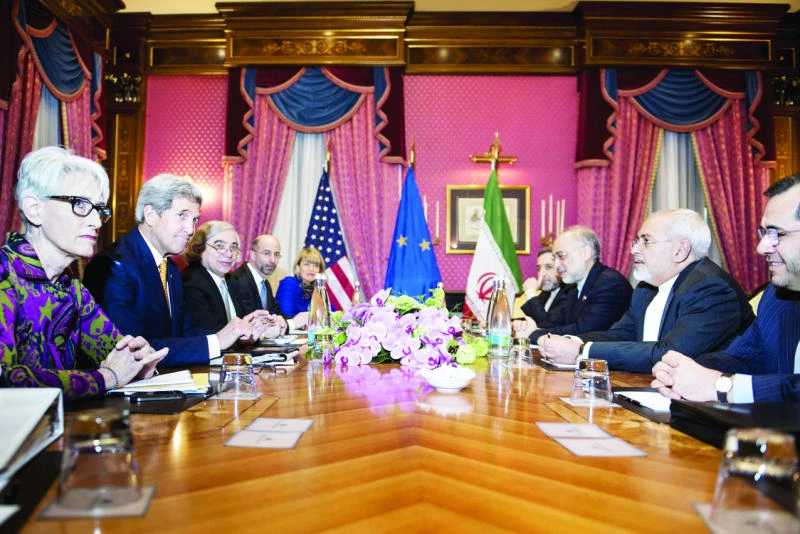
LAUSANNE: Iran’s nuclear chief said Thursday he was “optimistic” about reaching a ground-breaking nuclear deal, as US and Iranian diplomats launched down-to-the-wire talks chasing a March 31 deadline.
“On the whole I am optimistic,” Ali Akbar Salehi, head of the Atomic Energy Organization of Iran, said in an exclusive interview with AFP on the sidelines of the crunch talks which resumed in the Swiss town of Lausanne.
But he warned “there are those who have an interest in more troubles and not dealing with this question have not been inactive. They are trying to make sure there is no deal.”
After 18 months of intense negotiations around the globe, US Secretary of State John Kerry launched a final round of talks with his Iranian counterpart Mohammad Javad Zarif before Tuesday’s deadline with American officials also saying a deal was in sight.
“We very much believe that we can get this done by (March) 31,” a senior State Department official said.
“We can see a path forward here to get to an agreement, we can see what that path might look like,” the official told reporters, cautioning however that this “doesn’t mean we’ll get there.”
Six world powers negotiating with Iran since late 2013 want Iran to disable parts of its nuclear infrastructure to put an atomic bomb out of reach and end a 12-year standoff.
After missing two deadlines in 2014 to turn a interim November 2013 accord into a lasting deal, the parties set March 31 for a “framework” agreement with a full pact setting out all the technical details to be agreed by June 30. In another sign that the negotiations have reached a critical stage, French Foreign Minister Laurent Fabius will fly to Lausanne on Saturday.
Fabius has long been fearful of a soft deal giving Iran the possibility of obtaining nuclear weapons. It remained unclear whether he would be joined by other P5+1 counterparts from Britain, China, Germany and Russia.
Kerry and Zarif both refused to answer questions about Yemen at the start of their talks in a luxury Lausanne hotel.
Britain’s Philip Hammond, who is on stand-by to come to Lausanne at the weekend, also warned of the consequences of failure.
No deal would mean a “fundamentally more unstable Middle East, with the prospect of a nuclear arms race in the region,” Hammond said.
Iran upbeat as nuclear talks hit final stretch