- Approximately 100 people were arrested during the unrest
- Protests were driven by water shortages and rising living costs
PORT LOUIS: Mauritius extended a curfew on Wednesday over roughly a third of the island after rare violent protests saw almost 100 people arrested.
The Indian Ocean island nation, popular with tourists for its pristine beaches and coral reefs, has long been seen as a model of prosperity and stability.
But protests against water shortages and the rising cost of living have rocked Mauritius in recent days.
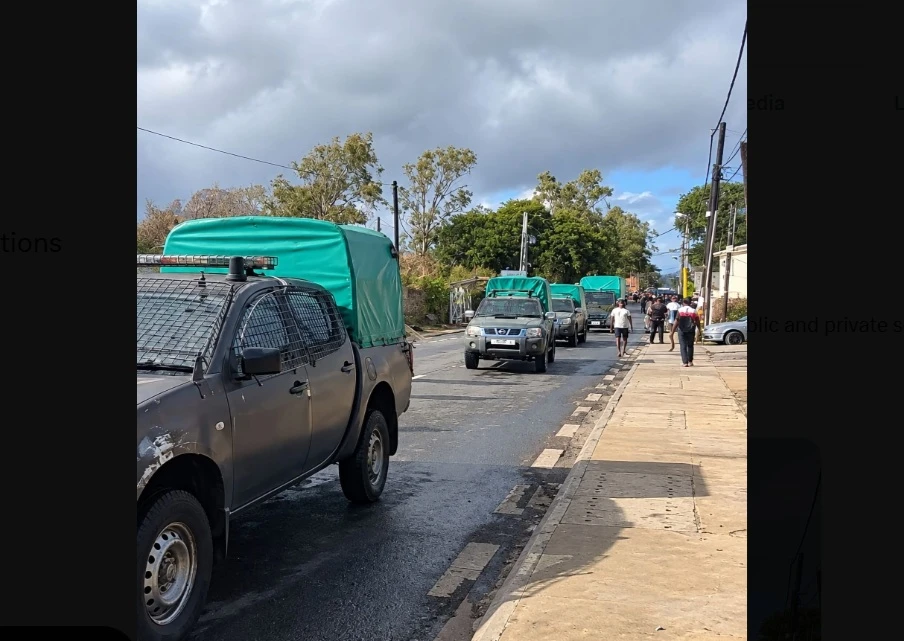
The government said it would extend Tuesday’s curfew to Friday morning, affecting 10 administrative regions, mainly on the outskirts of towns.
“No one has the right to take justice into their own hands or take the law into their own hands,” Prime Minister Navin Ramgoolam said Tuesday evening in a televised speech.
The measures were announced in a statement following a special cabinet meeting.
The statement detailed looting, arson, and damage to public property, including police stations, traffic lights and CCTV cameras, during the protests, which left seven police officers wounded.
It said that 84 people were arrested on Tuesday, “making a total of 94 arrests since the beginning of the riots.”
Those detained include 16 minors.
Ramgoolam also railed against “drug traffickers who add fuel to the fire.”
Police sources told AFP that traffickers finance drug addicts to attack stations.
The statement said those arrested could face prosecution under the Prevention of Terrorism Act.
It also said that “in view of the number of minors involved in the riots” it would consider amendments to lower the age from “14 years to 12 years for the detention and prosecution of minors.”
The protests had begun before the shooting of a woman by a police officer. The officer who shot her, according to witnesses, has been arrested.
The Ministry of Education has also suspended classes on Thursday and Friday in all nurseries, primary and secondary school facilities.
Mauritius has seen remarkable growth since gaining independence from the United Kingdom in 1968.
Its economy, once primarily agricultural and centered on sugar production, has diversified and is now driven by tourism as well as textiles and the financial sector.
Mauritius even briefly achieved high-income country status in 2020, before its economy was hit hard by the Covid-19 pandemic.