LAUSANNE: Marathon talks toward an Iran nuclear deal picked up pace Friday as US President Barack Obama appealed to Tehran to seize an “historic” opportunity and begin a “brighter future.”
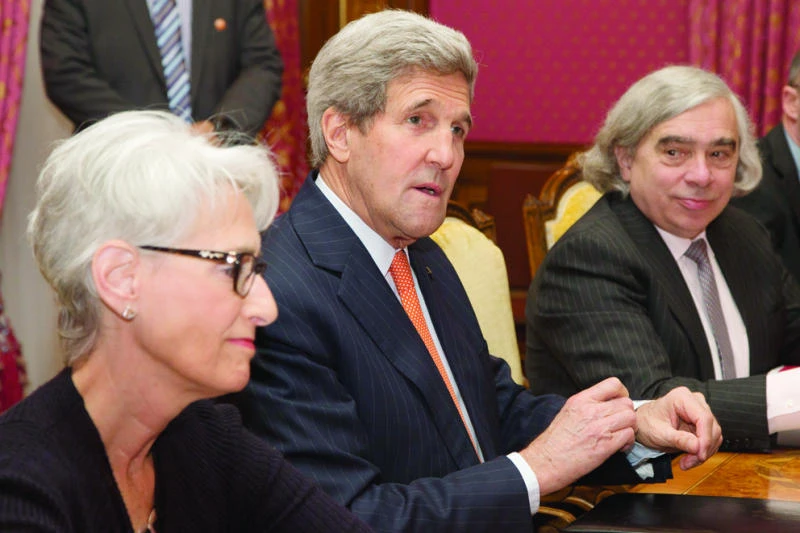
In Switzerland, US Secretary of State John Kerry and his Iranian counterpart began their fifth day of talks, while in Brussels the leaders of Germany, France and Britain also met.
In a Nowruz (Persian New Year) video address, Obama said that a “reasonable nuclear deal... can help open the door to a brighter future for you the Iranian people.”
“I believe that our nations have an historic opportunity to resolve this issue peacefully, an opportunity we should not miss,” Obama said.
In an apparent response, Iranian Foreign Minister Mohammad Javad Zarif said it was the other side that had to make a decision.
“Iranians have already made their choice: engage with dignity. It’s high time for the US and its allies to chose: pressure or agreement,” Zarif wrote in a message posted on his official Twitter account.
Iran and six world powers — the US, China, Russia, Britain, France and Germany — are seeking to agree the outlines of a deal by March 31 after more than a year of negotiations.
The mooted agreement, due to be finalised by July, is aimed at convincing the world after a standoff now in its 13th year that Iran won’t build nuclear weapons under the guise of its civilian program.
The highly complex deal would likely involve Iran reducing in scope its nuclear activities, allowing ultra-tight inspections, exporting nuclear material and limiting development of new nuclear machinery.
In exchange Iran, which denies wanting nuclear weapons, would be granted staggered relief from the mountain of painful sanctions that have strangled its oil exports and hammered its economy.
Obama’s Republican opponents and Israel’s freshly re-elected Prime Minister Benjamin Netanyahu, whose country is assumed to have nukes itself, fear the deal will not do enough to stop Iran getting the bomb.
Negotiators missed two deadlines last July and November for a deal but the pressures in Washington, where Republicans are teeing up new sanctions legislation, all but rule out a new extension, experts say.
N-talks intensify after Obama plea appeal