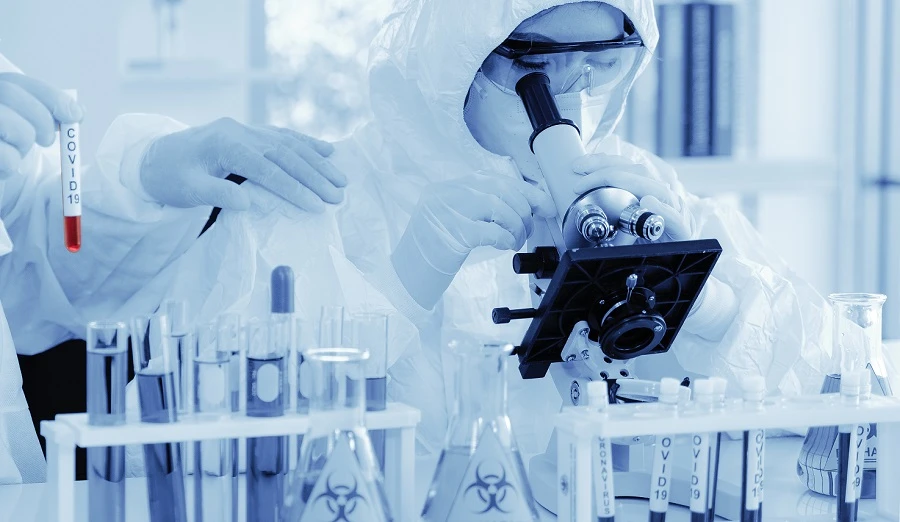
- Trial drug stimulates lungs’ immune response to rapidly counteract effects of virus
LONDON: Preliminary trials conducted by a UK-based company suggest an experimental drug could reduce the number of COVID-19 patients needing intensive care by nearly 80 percent.
Biotech company Synairgen developed the treatment, which uses a protein — interferon beta — that the body produces naturally when it fights a viral infection.
During the trial, this protein was inhaled directly into patients’ lungs in the hopes of stimulating an immune response.
Synairgen said patients who underwent the treatment were two to three times more likely to recover to the point where everyday activities were not compromised by their illness.
It also said patients who underwent the trials experienced “very significant” reductions in breathlessness, and the average time that patients spent in hospital was reduced by a third for those receiving the drug.
The scientist in charge of the trial, Tom Wilkinson, said the team is “delighted with the positive data produced,” and if the results are confirmed in larger studies, the new treatment will be “a game changer.”
Synairgen CEO Richard Marsden told the BBC: “We couldn’t have expected much better results than these.”
He described the results as “a major breakthrough in the treatment of hospitalized COVID-19 patients.”
The drug’s effectiveness can in part be credited to the growing body of research into the disease.
Scientists have previously noted that COVID-19 attacks the body without stimulating lungs’ immune response.
Stephen Holgate, professor of immunopharmacology at the University of Southampton and co-founder of Synairgen, said recognizing that coronavirus “is known to have evolved to evade the initial antiviral response of the lung” is a valuable insight.
“Our treatment of giving high local concentrations of interferon beta, a naturally occurring antiviral protein, restores the lungs’ ability to neutralize the virus,” he added.
Governments and private companies worldwide are pouring significant resources into developing effective treatments for COVID-19.
Vaccines remain the gold standard for virus protection. But developing effective treatments in the absence of a working vaccine could prove significant in reducing COVID-19’s mortality rate.