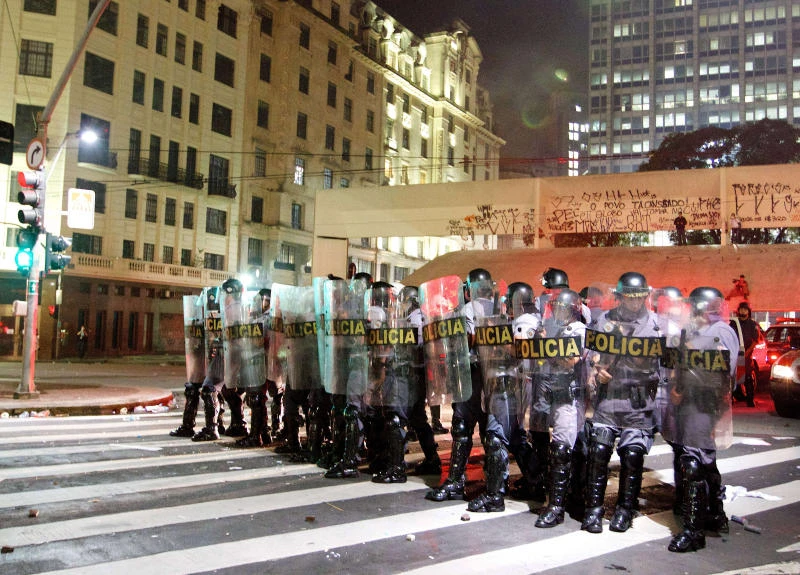
SAO PAULO: Demonstrators blocked a major highway and other roads in Sao Paulo yesterday, crippling transportation in Brazil’s largest city and financial hub, in an ongoing wave of protests against poor public services, inflation and police violence.
The protests, the biggest in Brazil in over two decades, followed overnight demonstrations that led to sporadic looting and vandalism. Police in Sao Paulo, the focal point of the nationwide demonstrations, arrested more than 63 people after protesters tried to storm the city hall, torched a police facility and broke windows.
Sao Paulo Mayor Fernando Haddad was considering yesterday a possible reduction in bus fares, following cuts by officials in a handful of other state capitals. The national protests were sparked last week by fare hikes, which came as Brazil struggles with annual inflation of 6.5 percent, unleashing a swelling tide of complaints that caught authorities off guard.
President Dilma Rousseff, who has acknowledged the legitimacy of the protesters’ demands, dispatched federal troops to five Brazilian cities to help maintain order around the Confederations Cup, which began earlier this month. The international soccer tournament is seen as a warmup to the 2014 World Cup, which Brazil is hosting.
Rousseff’s action, part of the contingency plan for the tournament, is similar to previous deployments of federal troops when crime, violence or other unrest disrupted annual Carnival celebration and other big events.
Federal troops also will be deployed in Rio de Janeiro, Salvador, Belo Horizonte and the national capital, Brasilia.
It remains unclear whether fare reductions will be enough to slow the demonstrations or whether organizers, a loose collection of young activists who are organizing through social media, will continue calling for protests.
Troops sent to 5 Brazilian cities after protests