- Cage is a London-based group Prime Minister Boris Johnson once described as “apologists for terror”
- Qureshi described in 2015 the British Daesh executioner known as “Jihadi John” as a “beautiful young man”
LONDON: A British publisher has been condemned for producing a book edited by a leader of an advocacy group accused of supporting extremists.
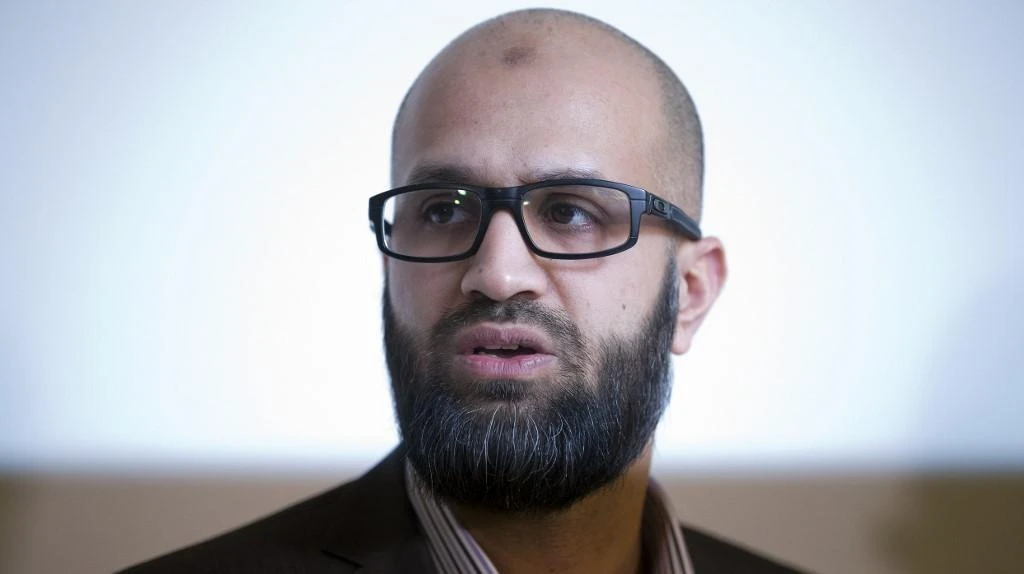
Manchester University Press will print “I Refuse to Condemn,” edited by the research director for CAGE, Asim Qureshi, in October, The Sunday Telegraph reported.
CAGE is a London-based group Prime Minister Boris Johnson once described as “apologists for terror.”
Qureshi described in 2015 the British Daesh executioner known as “Jihadi John” as a “beautiful young man.”
Jihadi John, whose real name was Mohammed Ewazi, was responsible for a series of Daesh beheadings in Syria.
Britain’s counter-extremism commissioner, Sara Khan, criticised the publisher and said its publication of the book gave legitimacy to a group that supported convicted terrorists and provided platforms for “Al-Qaeda ideologues.”
“CAGE's senior leaders have advocated supporting violent jihad overseas,” Khan told The Sunday Telegraph.
She added that Qureshi had also refused to condemn the preachings of Haitham Al-Haddad, a cleric who defended female genital mutilation and stoning to death of adulterous women.
“Groups like CAGE use the guise of ‘freedom of speech’, ‘rule of law’ and ‘anti-racism’, but it is the commission’s view that when CAGE's activism, beliefs and behaviours are examined closely, these values are in fact a cover to legitimise their divisive activism,” Khan said.
The university publisher website describes the book, which is a collection of essays, as exploring how “writers manage to subvert expectations as part of their commitment to anti-racism”.
A CAGE spokesman said criticism of a book before publication demonstrated an “obsession with censoring opinions critical of state policies.”
A spokesman for Manchester University Press said the book was not a defence of violent criminals but an “examination of society’s expectations around an ‘appropriate’ response from innocent people of colour unconnected with extremists except for similarities of race or religion.”
He added that “The book holds that a refusal to condemn an individual or their actions cannot and should not be interpreted as support for that person or their conduct. “