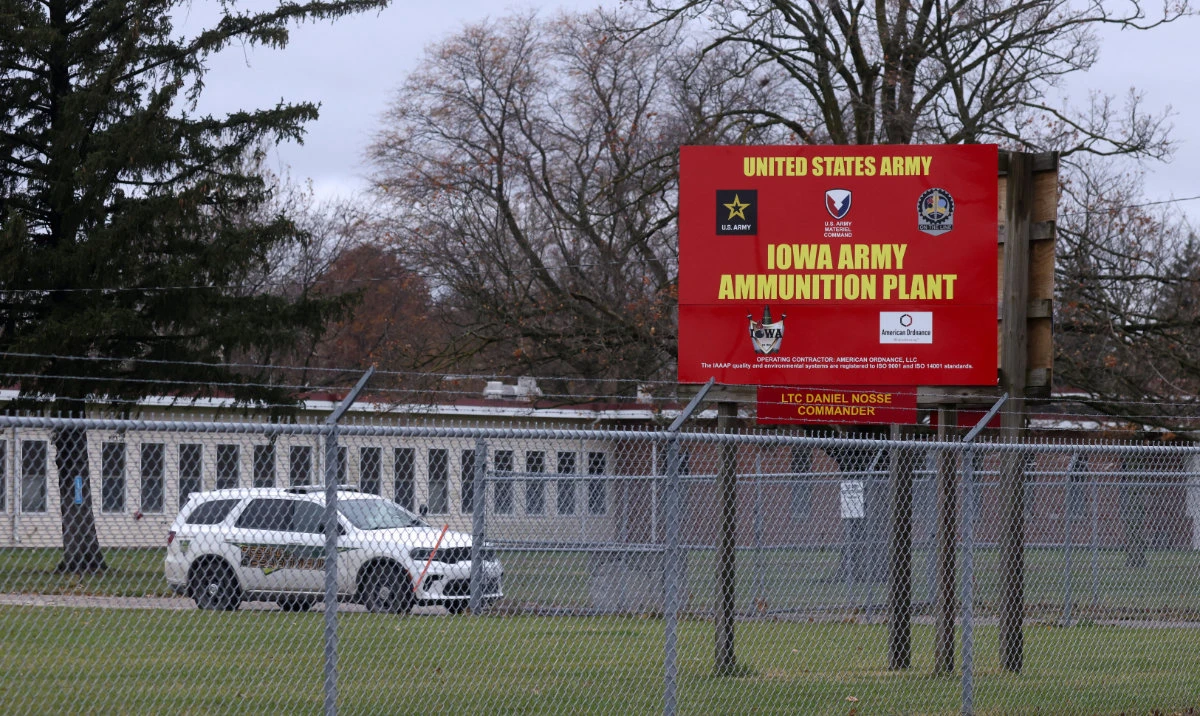
- The Iowa Army Ammunition Plant discovered several barrels of degraded lead azide, which pose an increasing risk of explosion due to instability
- Residents in the area have been advised to stay inside, close windows, and prepare for possible toxic lead particles in the air following the detonation
The US Army plans to invoke emergency provisions to avoid a court order that had put on hold plans to detonate several tons of bomb-making chemicals in Iowa, saying that continued delays will make it more dangerous as the weather starts to turn colder.
“To protect its personnel and the surrounding communities, the Army needs to take swift action,” government lawyers told the 8th US Circuit Court of Appeals in a filing late Saturday. “Protection of human health and the environment demand action now, not delay.”
Environmental groups criticized the government’s move, decrying it as a maneuver to get around a court order and avoid public demands for safety and transparency.
The appeals court on Thursday granted a request by environmentalists to put on hold a permit that cleared the way for the detonation in Middletown, a small community about 160 miles (257 kilometers) southeast of Des Moines. It was initially planned for Friday, but the Army later announced that it would push the operation to Monday following an outpouring of public concern about potential health and environmental effects.
Environmentalists have called for a review of the emergency permit that was approved earlier this month by the US Environmental Protection Agency.
In a statement Sunday, the Iowa Environmental Council, Sierra Club, and Earthjustice questioned claims that all alternatives were given appropriate consideration.
“The Army seemed more concerned over the weekend with finding a way to sidestep the judicial process than on meeting the public’s demands for greater transparency, notice to affected communities, and far stronger protection of people, property, and the environment from serious harm,” said Earthjustice Attorney Thien Chau.
Officials contend that the chemicals are unstable, and the risk of an uncontrolled explosion is growing, particularly as temperatures drop. They said there is a risk that the chemicals may explode as temperatures are expected to drop below 30 degrees Fahrenheit (-1 Celsius) in the coming days.
In March, staff at the Iowa Army Ammunition Plant found several dozen barrels of degraded lead azide, which is used in munitions production. Crystallization of the material created an unstable and dangerous situation, prompting the Army to assemble experts in munitions chemistry, engineering and environmental safety to come up with a plan.
According to EPA documents, alternatives such as neutralizing and decomposing the drums’ contents with other chemicals were considered. But officials said handling the drums would increase the probability of an accidental, fatal detonation.
The environmental groups disagreed, arguing in their petition that other alternatives were not fully considered. They also criticized officials for not sharing more information with the public.
The Army had shared details during a public meeting in Middletown in October, but a public advisory a week ago was the first time other communities — some as far away as 100 miles (160 kilometers) — became aware of the potential impact. Nearly 400 people live in Middletown but thousands more in surrounding areas could be affected by detonated material that could disperse in the air and land on the ground.
Vibrations from the two planned blasts were expected to be quick, but they could break old windows. That led officials to recommend some residents in Middletown vacate the area.
Iowans in the region were told to stay inside; keep windows and doors closed; bring pets and livestock indoors; and clean cars, windowsills and outdoor surfaces afterward.
“The detonation will result in an air plume with some lead-containing particles which will disperse in the air and deposit on the ground,” an advisory states. “Lead is toxic to humans and animals.”