LONDON: Engineering companies are ramping up investment in new anti-terror bollards and barriers as demand for protection surges in the wake of a spate of attacks across Europe.
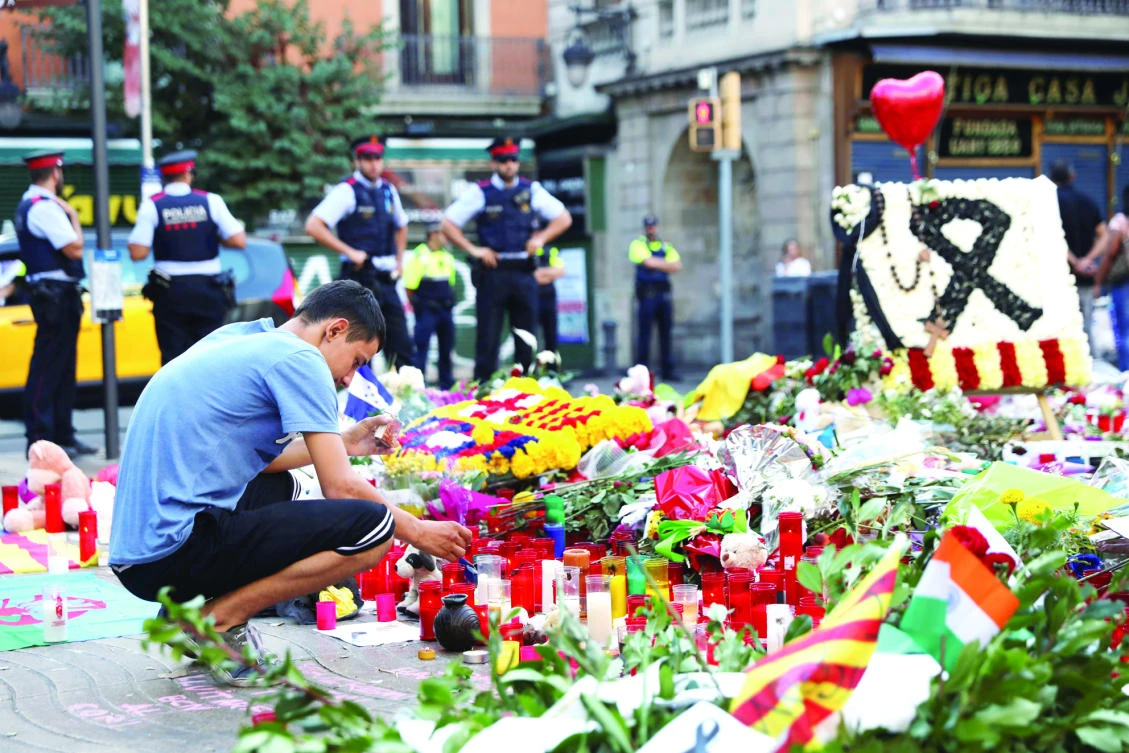
Attacks in London, France and most recently in Spain that involved vehicles being driven at speed into pedestrians has forced municipal authorities to look at new security measures. While not being treated as a terrorist attack, one person was also killed on Aug. 21 in the French city of Marseille after a van swerved off a road and hit a bus shelter.
With recent attacks involving the use of a vehicle as a weapon or “lone wolves” wielding guns or knives, manufacturers of anti-terror bollards and other forms of security products are looking at how best they can use their technology to protect a city’s busy streets, bridges and stadiums.
“With popular tourist or public areas now coming under increasing threat, this has driven the need for new product innovations to be designed. For instance, there is now an increasing need for temporary security measures,” said Gavin Hepburn, sales and marketing director at UK firm ATG Access.
It has just launched a new road block system that is said to be be able to resist the force of a 2,500kg vehicle traveling at 30 miles per hour. The system is intended for use at temporary public events and has been designed to be lightweight and quick to deploy, the company said in a statement.
The UK firm Avon Barrier Corporation is also developing new temporary systems and is examining how its products can provide protection from gunfire.
“We are also looking at advertising boarding, so you incorporate some kind of ballistic protection within an advertising boarding so people run and hide. I am working on some very big projects that include that sort of thing,” said Paul Jeffrey, managing director, at the Bristol-based firm in a phone interview. He said his firm is also looking at protection systems for hotel staff in the event of an attack.
These developments come as governments and city authorities around the world look at how they can better protect their citizens from attack.
“We’ve seen a growth in investment in major cities across the UK, along with European cities, such as Amsterdam. This mostly comes down to the fact that there has been a change in threat in these cities. Fixed, critical, national infrastructure is no longer the main target for attacks, but instead terrorists are now directly targeting people within crowded public areas,” said Hepburn.
Following events in Barcelona, the Australian Prime Minister Malcolm Turnbull said his government is set to launch a new strategy on how to protect crowded spaces from attacks.
Earlier this year, the Singaporean government agreed to make it a legal requirement for events with large crowds to meet a certain level of security requirements. This has possibly sparked increased demand for physical anti-terror systems in Asia, said Jeffrey.
“(The) Far East is just starting to pick up… there is an awful lot of activity going into Singapore,” he said.
While interest from governments and local councils has spiked, that interest does not always translate into actual investment, said Jeffrey.
“The trouble is people seem to get interested and start to think about it and then don’t do a lot about it,” he said. Cost is one of the prohibitive factors, and it is often difficult to prioritize where to focus your investment.
John Coaffee, professor of urban geography at the University of Warwick, said: “The priority is, of course keeping citizens safe, but given the vast array of soft targets that could potentially be attacked where do you prioritize? Likewise, what types of protective security measures are required? Bollards, however ugly, can be effective against vehicle-borne attacks but won’t prevent knife attacks or suicide attacks.”
Attacks in London, France and most recently in Spain that involved vehicles being driven at speed into pedestrians has forced municipal authorities to look at new security measures. While not being treated as a terrorist attack, one person was also killed on Aug. 21 in the French city of Marseille after a van swerved off a road and hit a bus shelter.
With recent attacks involving the use of a vehicle as a weapon or “lone wolves” wielding guns or knives, manufacturers of anti-terror bollards and other forms of security products are looking at how best they can use their technology to protect a city’s busy streets, bridges and stadiums.
“With popular tourist or public areas now coming under increasing threat, this has driven the need for new product innovations to be designed. For instance, there is now an increasing need for temporary security measures,” said Gavin Hepburn, sales and marketing director at UK firm ATG Access.
It has just launched a new road block system that is said to be be able to resist the force of a 2,500kg vehicle traveling at 30 miles per hour. The system is intended for use at temporary public events and has been designed to be lightweight and quick to deploy, the company said in a statement.
The UK firm Avon Barrier Corporation is also developing new temporary systems and is examining how its products can provide protection from gunfire.
“We are also looking at advertising boarding, so you incorporate some kind of ballistic protection within an advertising boarding so people run and hide. I am working on some very big projects that include that sort of thing,” said Paul Jeffrey, managing director, at the Bristol-based firm in a phone interview. He said his firm is also looking at protection systems for hotel staff in the event of an attack.
These developments come as governments and city authorities around the world look at how they can better protect their citizens from attack.
“We’ve seen a growth in investment in major cities across the UK, along with European cities, such as Amsterdam. This mostly comes down to the fact that there has been a change in threat in these cities. Fixed, critical, national infrastructure is no longer the main target for attacks, but instead terrorists are now directly targeting people within crowded public areas,” said Hepburn.
Following events in Barcelona, the Australian Prime Minister Malcolm Turnbull said his government is set to launch a new strategy on how to protect crowded spaces from attacks.
Earlier this year, the Singaporean government agreed to make it a legal requirement for events with large crowds to meet a certain level of security requirements. This has possibly sparked increased demand for physical anti-terror systems in Asia, said Jeffrey.
“(The) Far East is just starting to pick up… there is an awful lot of activity going into Singapore,” he said.
While interest from governments and local councils has spiked, that interest does not always translate into actual investment, said Jeffrey.
“The trouble is people seem to get interested and start to think about it and then don’t do a lot about it,” he said. Cost is one of the prohibitive factors, and it is often difficult to prioritize where to focus your investment.
John Coaffee, professor of urban geography at the University of Warwick, said: “The priority is, of course keeping citizens safe, but given the vast array of soft targets that could potentially be attacked where do you prioritize? Likewise, what types of protective security measures are required? Bollards, however ugly, can be effective against vehicle-borne attacks but won’t prevent knife attacks or suicide attacks.”