- A member of the Shoura Council asked those working in the volunteering field to get trained and qualified if they wanted to continue in this area.
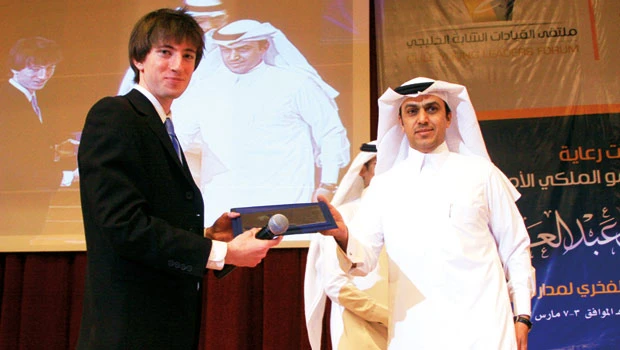
- Najeeb Al-Zamil was speaking on the second day of the 2nd Gulf Young Leaders Forum in Riyadh yesterday.
He referred to associations specialized in the rehabilitation and training of volunteers in all Gulf states, including the Association of Voluntary Work in Dammam that works for the development and training of volunteers.
The event was opened by Hamad bin Mohammed Al-Sheikh, deputy minister of education for boys, on behalf of Defense Minister Prince Salman, who is also president emeritus of Riyadh Schools.
Guests included the Director General of the Arab Bureau of Education of Gulf States Ali bin Abdulkhaliq Qarni, who delivered his speech by spelling out the concept of brotherhood. He recalled the vision of Custodian of the Two Holy Mosques King Abdullah, who recently said the time has come for GCC leaders to move from the stage of cooperation to a union.
Qarni pointed out leaders of the Gulf countries are working hard to promote young people to develop their talent and harness their full potential.
Al Zamil noted Gulf states have interests in promoting volunteerism and cited Bahrain, a country considered a pioneer in this area. There are 880 voluntary societies there, followed by Saudi Arabia which has 600 associations, while at a pan-Arab level Jordan has the highest number of voluntary associations (2,000).
In his lecture on volunteerism and its impact in shaping the skills of the leader, Al-Zamil said voluntary acts of charity must be rendered free of charge and that in order to help others, such work must be purely for the sake of Allah. Such an act removes the sense of vanity as well as making others feel happy.
He elaborated on his experience in the field of volunteerism, noting volunteering begins with the encouragement of family and society. Al-Zamil said there are many obstacles to volunteering, including the objection of some families to allow their children to work for voluntary associations and the lack of adequate training.
Talking on leadership qualities, the Shoura member pointed out a leader is characterized by high motivation to do voluntary work for no charge, in addition to having faith and a wish to help bring change for the better. He said world reformers are those leaders who are driven by a love of change for the better.
Al-Zamil asked students to work hard to serve the community and develop scientific interests for achievement and also work to rehabilitate themselves if they want to engage in voluntary work.
On his part, Michael Costigan, who is the youngest CEO of his own company in the United States, stressed young leaders must have their own models for learning, adding that he personally benefited from the experience and expertise of others in education and the founding of his own establishment.
Costigan was talking on the role of the community in support of leadership programs. He recounted his personal experience in the field of voluntary work, which he began when he was only 13, pointing out that education has an essential role in the rehabilitation and training of young people and helps them establish their own businesses and refine their talent.
He said education must not stop at a certain age, but the person must work to gain knowledge and education throughout his life.
Outlining obstacles and difficulties faced by young people, whether in the field of study or in the field of establishing their business and their own companies, Costigan said there are several obstacles. The leaders of the future can only come through the exchange of knowledge and learning from others, as well as to engage in mutual dialogue and encourage discussions and dialogue between the youth of countries.
He also touched on his experience in voluntary work, pointing out that he was engaged in several areas inside and outside the US in voluntary work. He had benefited a lot from volunteering, which increased his knowledge and the development of relations with others.