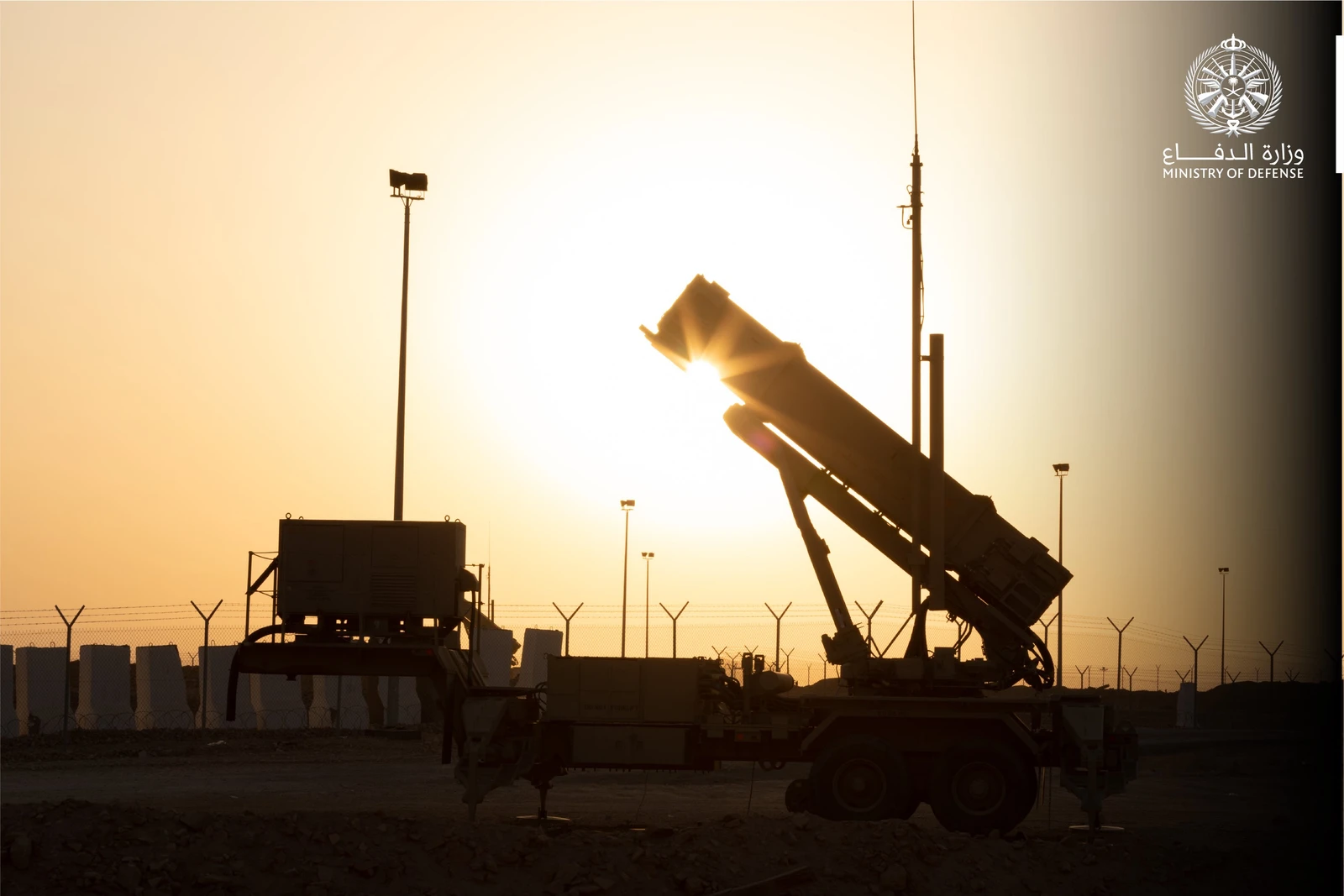
DAMMAM, 18 March 2003 — As US President George W. Bush issued his last warning to Saddam Hussein, people in the Eastern Province braced themselves for the war in the hope that it will not spill over to other GCC and Middle East countries.
“The war is coming in the next 48 hours” was a general opinion among the Saudis as well as expatriates. “It is inevitable now. Bush is all set to strike Iraq and disturb the peace in the region and the world,” said Abdul Aziz Al-Faki, a local journalist.
Although people in general are perturbed by the threat of a possible war hardly anyone is scared like in the 1990-1991 Gulf War. “The situation has changed and the main theater has shifted from Dhahran to Kuwait. Therefore, there is no direct threat to the region, but war is certainly a disturbing factor and it does bring devastation and pain,” said Faleh Al-Sagheer, managing editor of Al-Youm newspaper.
The market reflected the disturbed mood of the people, as most of the shops in downtown Dammam and Alkhobar were empty during the peak business hours. “People are in no mood to spend money. Expatriates do not want to shop in an uncertain atmosphere,” said the owner of an electronics shop in Alkhobar.
Supermarkets and grocery stores, however, reported brisk sales during the past 72 hours. “But certainly it is not panic buying or people buying to hoard foodstuff in the eventuality of a war,” said the manager of a large supermarket chain in Dammam.
There are very few shops in Dammam and Alkhobar selling gas masks, and there are hardly any takers. During the Gulf War the Civil Defense Department had provided gas masks to all residents free of charge.
Last week the businessmen at the Eastern Province Chamber of Commerce and Industry discussed import of gas masks by the private sector and its demand in the local market. A general belief is that during this crisis residents will not require masks and hence it will not be a “very good business proposition.” But there is no denying the fact that the war threat has slowed down business in the Eastern Province.
“Construction activity has almost come to a complete halt,” said Abdullah Al-Saleh, a construction contractor in Dammam. Similarly, the transport business is experiencing a steep fall. However, there are a few companies who have bagged contracts for transportation of some equipment to Kuwait.
The automobile industry is also facing an uphill drive and many auto dealers confirm that their sales have declined substantially. The Harraj, where old cars are traded, wore a deserted look. “In the past two days we have sold only two cars,” said the manager of Star Car Exhibition. The airport, seaport, railway station and SAPTCO are operating as usual and have announced that they will be working normally in the event of a war. The announcement of the Presidency of Civil Aviation that all the airports will function normally came as a big relief to the people of the region who had been apprehensive that the airport in Dammam might be closed due to its proximity to Kuwait.
Although the authorities have tightened security, there is no abnormal deployment of security forces in Dammam and Alkhobar. Security personnel are conducting block checking at various points and highways but nothing more than that. Certainly, the Eastern Province does not present the aspect of a war zone as it did in 1990-91.