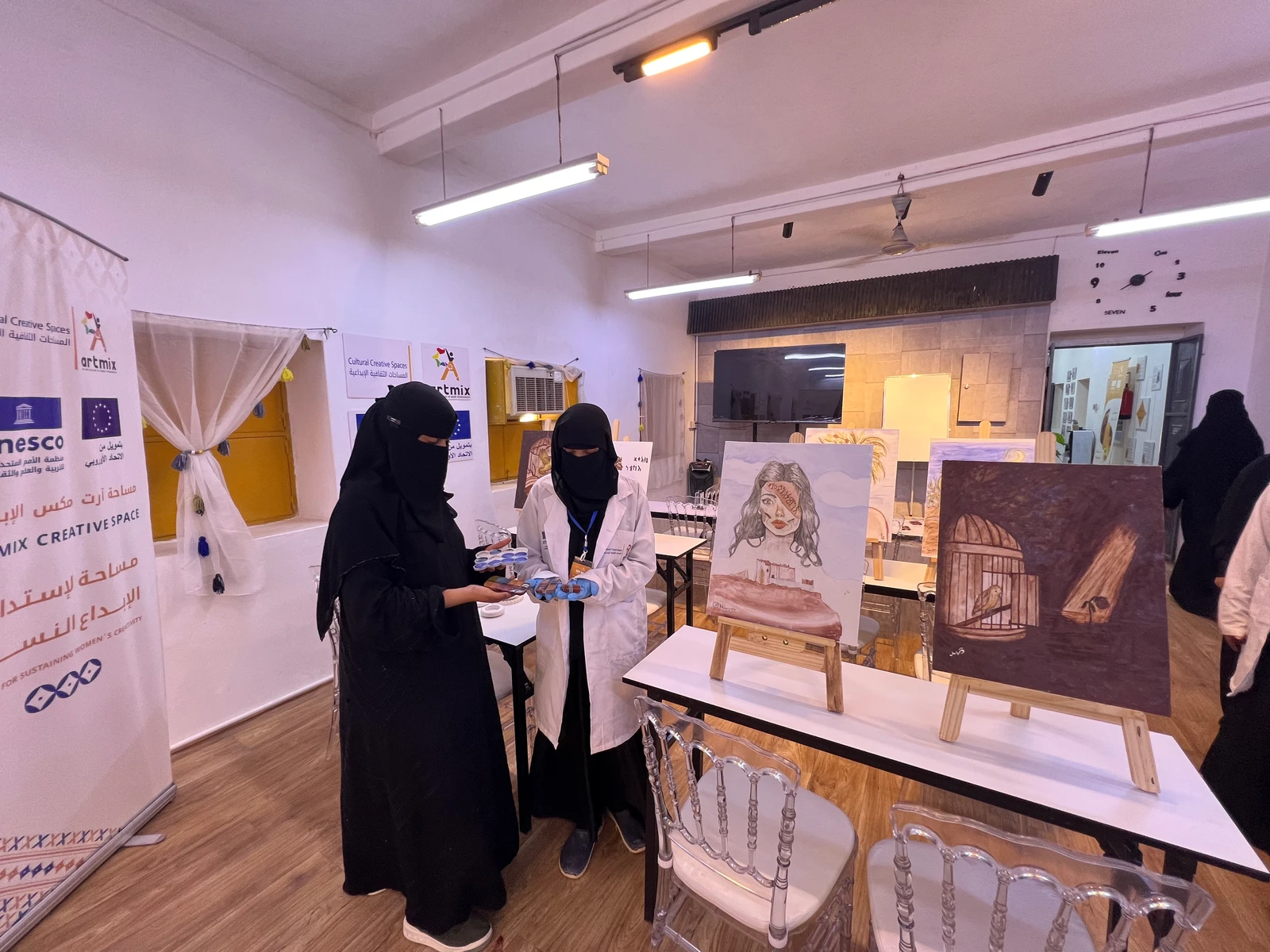
- ArtMix Creative Space opened in late 2025 with funding from the EU and in cooperation with UNESCO
- It stands across a dry watercourse from Shibam, a UNESCO World Heritage Site
AL-MUKALLA: A portrait fashioned from discarded blue and black plastic bags greets visitors to ArtMix Creative Space near Shibam, Yemen’s historic mud-brick city in Hadramout province.
Mounted on recycled cardboard and embellished with stone-like shapes, the work captures the philosophy of the women-run initiative: transforming simple local and discarded materials into art.
“Our primary goal was to create artistic products using the simplest resources,” Manal Saleh, the space’s director, told Arab News during a tour. “You do not need to spend a great deal to produce something that is both functional and aesthetically pleasing.”
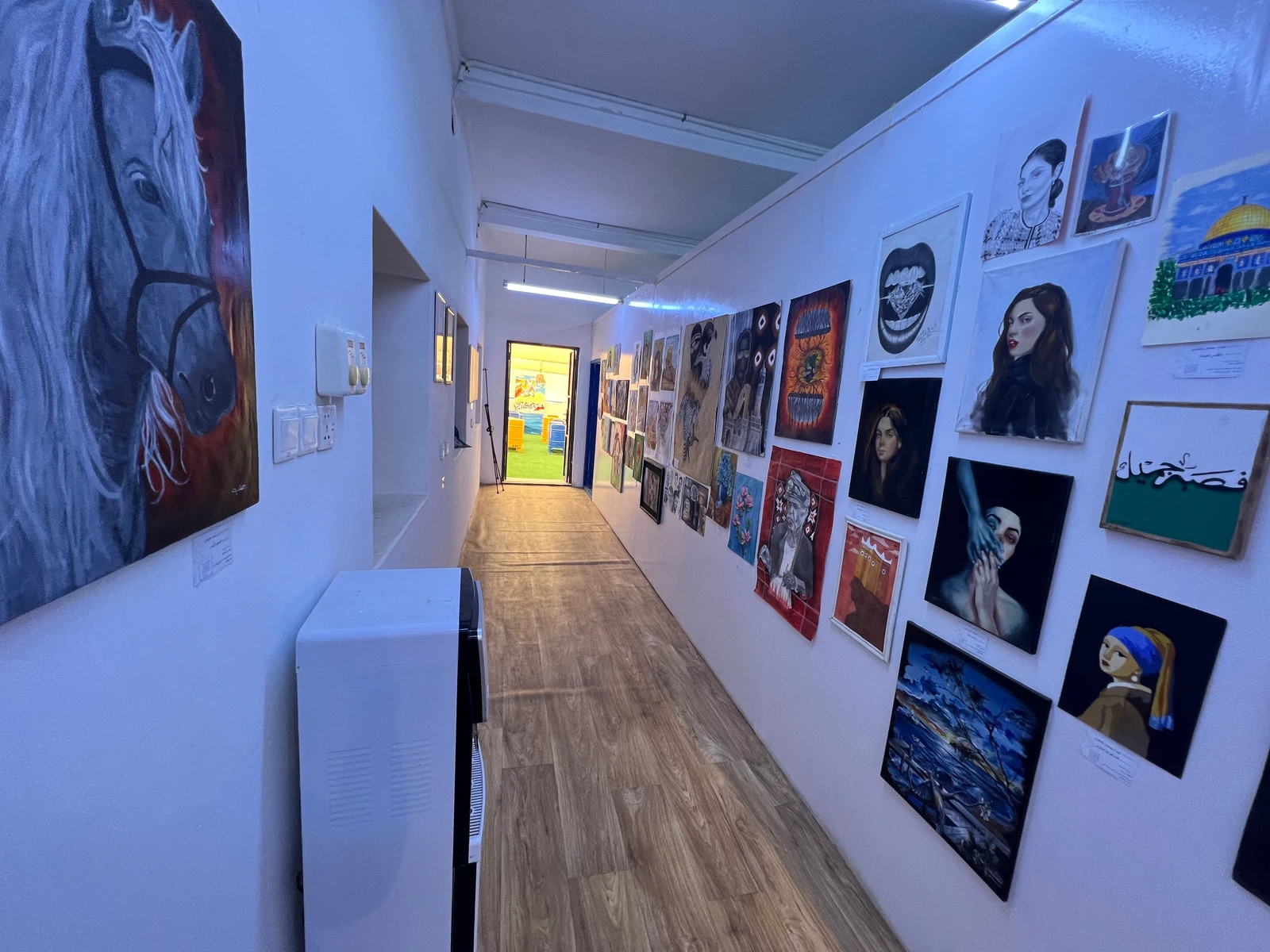
The corridors are filled with paintings and other works by local artists. Colorful metal barrels serve as tables, while old vehicle tires have been transformed into cushioned stools.
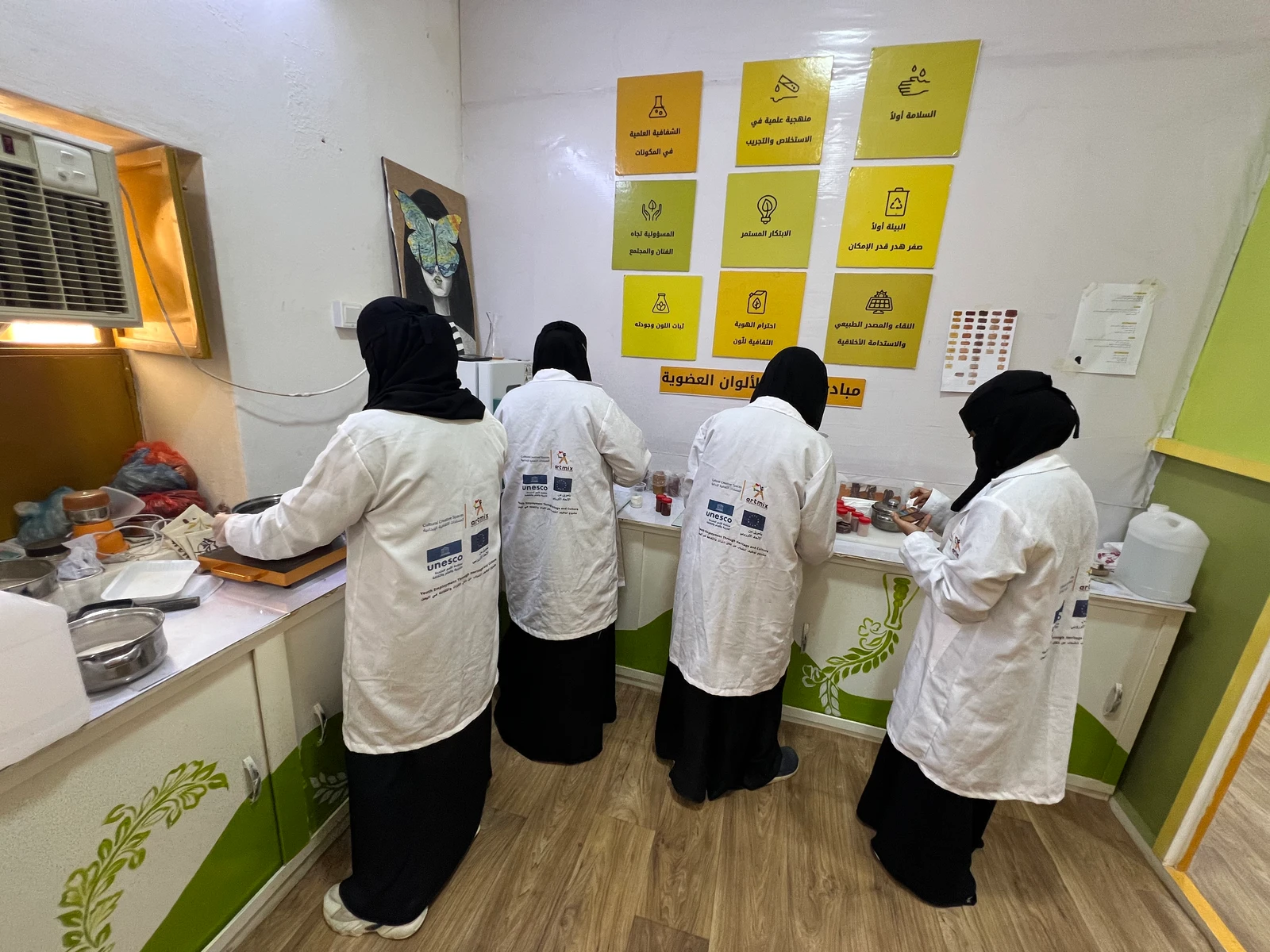
At the heart of the space is a laboratory measuring about 12 sq. meters, where women turn local minerals and plants into natural pigments.
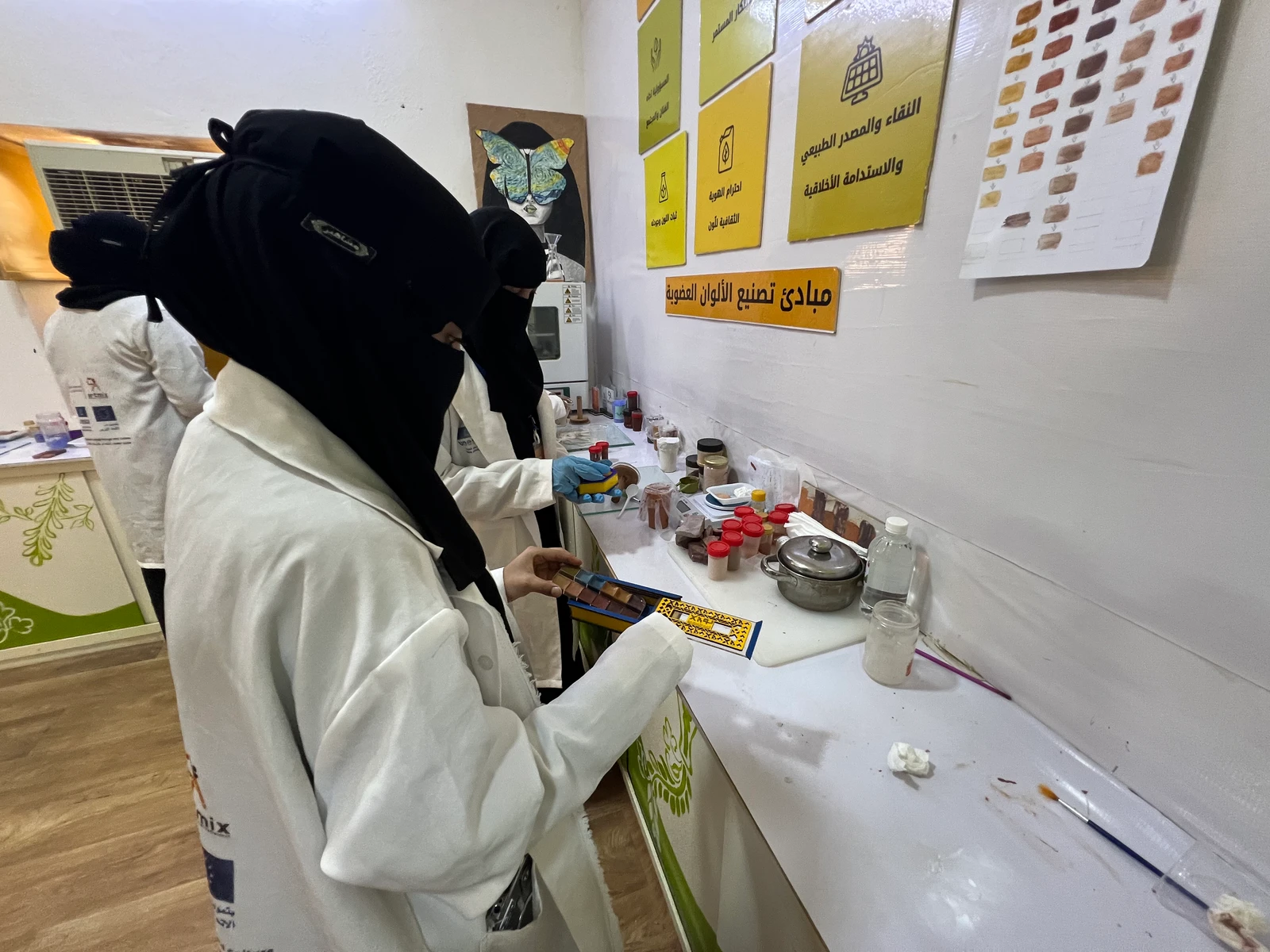
Wearing white laboratory coats, gloves and black niqabs, the women work through different stages of production. One spreads a blue pigment across a glass plate, another applies a brown pigment to a test panel, while a colleague dries another color in a machine.
In a nearby room, other women sort rocks to identify the most suitable specimens and separate plant leaves before crushing the materials into powder and sending them to the laboratory.
“Our laboratory produces pigments from rocks and plants through a multistage process,” Saleh said. “We test and refine the colors to ensure they are of high quality. Some pigments were prone to spoiling, so we made adjustments until we reached the stable versions we have today.”
ArtMix Creative Space opened in late 2025 with funding from the EU and in cooperation with UNESCO. It stands across a dry watercourse from Shibam, a UNESCO World Heritage Site.
For months, the women have collected rocks and leaves from Wadi Hadramout, close to the building. After the materials are crushed and processed, the resulting pigments are exposed to different environmental conditions and tested on paper, fabric, leather and footwear.
“We test the colors under light and apply them to different materials to monitor any changes,” Saleh said.
The women have also learned to distinguish rocks that yield strong pigments from those that do not. Saleh said a rock that does not crumble easily when struck can produce a deeper, more vibrant color.
“There is one type of rock that does not crumble when struck, and it produces a very dark, rich color,” she said.
Advisers in Yemen and abroad monitor the work from the selection of rocks and leaves through to final production, helping to ensure that the process is safe.
“We have specialists in the environment, quality control, chemistry, and health and safety, as well as an expert outside Yemen with experience in producing colors,” Saleh said.
The high cost and limited availability of imported paints were among the main reasons for establishing the laboratory. Many Yemeni artists cannot afford imported products, while at times the paints are unavailable even to those who can.
Saleh said the project aims to provide affordable, high-quality paints that local artists can obtain whenever they need them.
“We are producing an alternative to the paints we normally buy from stationery shops, with the goal of becoming self-sufficient,” she said. “It is a locally made product that women artists can use in their paintings.”
When the laboratory develops a new color, local artists are invited to test it. Their paintings are then displayed on the walls so the team can monitor whether the pigments fade and assess their durability over time.
Months after the project began, the walls are filled with works created using the laboratory’s pigments. Most depict the surrounding landscape, local faces and people in traditional dress.
Saleh said the pigments had remained stable after months of exposure to different conditions. As an example, she held up a colorful portrait of a local man and woman in traditional clothing, painted on leather and mounted on a wall.
Despite the unusual surface and strong colors, the work had retained its original appearance.
“We are painters ourselves, and we are pleased with the quality of the colors and the paintings they produce,” she said. “Now, if our supplies run out, we can make our own colors.”
The location beside Shibam, famously dubbed the “Manhattan of the Desert” by British explorer Freya Stark in the 1930s, is no coincidence.
The initiative hopes tourists visiting the ancient city will stop to see and buy its products, which are also promoted on social media. But Saleh said the setting provides something equally important: inspiration.
Shibam was built centuries ago using materials from its surroundings, including mud, palm trunks, wooden poles, straw and limestone.
“Shibam is much like us — a city of art that created its legacy using the simplest available resources,” Saleh said. “It became a powerful example of the ingenuity of the Yemeni people, even with very limited means.”
Beyond pigment production, ArtMix offers local communities courses in painting and animation-related skills, including scriptwriting, voice-over work, illustration, animation, sound design and audio engineering.
Women have also received training in using artificial intelligence in their work and marketing their products on social media. The aim, Saleh said, is to help them find employment, including opportunities they can pursue from home.
“Our belief is that every young woman is capable of working from home, either independently or as part of a team,” she said.
Once tested and approved, the finished pigments are arranged in flower-shaped palettes and packaged in colorful hexagonal boxes bearing the ArtMix logo and the words “Made in Yemen.”
“Producing our first prototype from natural pigments developed entirely here proves that dreams can come true,” Saleh said.
“Only a year ago, this was merely an aspiration. Our dream is for the product to reach artists and anyone interested in using colors, both in Yemen and abroad.”