JEDDAH, 18 March 2003 — The Kingdom yesterday urged the UN Security Council to safeguard the independence and sovereignty of Iraq and try to avert a US-led war on the country. The government also promised to guarantee the safety of foreigners living in the Kingdom if war does break out.
The Council of Ministers, which met here yesterday, felt that the “ongoing discussions in the Security Council must focus on resolving the Iraq crisis peacefully and avert war in the region.” Divisions and differences among the Security Council members will lead to grave consequences and to war, said a Cabinet statement carried by the Saudi Press Agency. “The Security Council has a major responsibility to preserve global security and peace and to safeguard the independence, sovereignty, interests and territorial integrity of member states, including Iraq,” the statement added.
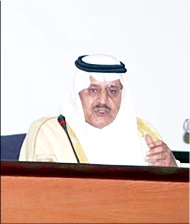
In a separate statement, Interior Minister Prince Naif said that foreigners are guests and “it is incumbent on us to ensure their safety” in the event of a war. At the same time the prince stressed Saudi Arabia’s opposition to a war against Iraq, saying that there is no justification for a military operation. Prince Naif said it was not in Saudi Arabia’s power to stop the US and Britain doing something they wanted to do, but he hoped the war would not take place.
The Kingdom has boosted its military preparations in an attempt to counter any backlash from a conflict in Iraq, as US and British citizens adopted low profile routines throughout the country.
Security measures have been most noticeably increased around oil installations in the Eastern Province — the home of oil giant Saudi Aramco. The Kingdom expects some 100,000 Iraqi refugees to try to enter the Kingdom but has put measures in place to keep them out.
The Supreme Civil Defense Council met in early March to develop a national plan to deal with an Iraq war.
The ministers of finance, health, planning, industry and electricity, transport and commerce together with the army chief of staff and heads of public security and civil defense are all members of the council. They agreed to allow the private importation and sale of gas masks to protect residents from biological or chemical attack.
The Health Ministry reassured citizens that it had sufficient medicines stockpiled for several months and the Ministry of Commerce confirmed that there were sufficient food supplies available for at least three months.
As war clouds gathered over the region “very few of the estimated 35,000 to 45,000 US citizens in Saudi Arabia have left,” said John Burgess, counselor for public affairs at the US Embassy. “Some US companies have asked dependents to leave, but not many have.”
Those remaining in the Kingdom have adopted a low-key approach to security. “Many have been here for a long time,” said a British businessman. “I still adopt the friendly approach and offer no challenges nor make myself too obvious. I look in the rearview mirror more often but have not curtailed my activities to any great extent.” Most of the Kingdom’s 70,000 Westerners are keeping a low profile. “We tend not to shop downtown or in the souks late at night as we used to,” said Jill Codling, a Jeddah-based nurse. “In taxis, we keep the conversation to medical matters and generally do nothing to stand out from the crowd.”