
It was a meeting long overdue and the only surprise on Sunday evening was the vehemence with which the businesswomen of the Eastern Province vented their anger and frustration at the board of the Eastern Province Chamber of Commerce and Industry (EPCCI). The event was conducted through closed circuit facilities at the EPCCI’s Dammam headquarters, and in this instance such an arrangement was for the best. The businesswomen were furious and if the meeting had been held face to face, it is certain that a brawl would have broken out.
The overwhelming problems faced by businesswomen in Saudi Arabia are known to all. Attendees at the first meeting between the EPCCI’s female members and the chamber’s board were asked to fill in a questionnaire to help the EPCCI improve its services. The questionnaire contained a list of hurdles facing Saudi businesswomen in the field of investment. The attendees were requested to concur with the following list and, if necessary, add to it:
• Rules, systems and regulations.
• Unavailability of a private group to organize the commercial interests of businesswomen and help them to accomplish their investment goals.
• Unavailability of women’s sections in government offices concerned with business operations.
• Difficulty in qualifying for loans.
• Limited allowable investment activities.
• Ban on hiring trained female staff from abroad.
• Lack of legal information about the rights of businesswomen and their relationship with government agencies.
• Difficulties of businesswomen in accomplishing their official business requirements in person.
• Lack of encouragement from the family and local community.
• Unavailability of training organizations and programs directed at businesswomen and female workers.
• Lack of needed management and organization skills and experience.
• Difficulty in obtaining required information.
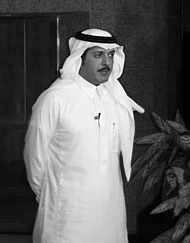
Before the start of the meeting Abdulrahman R. Al-Rashed, president, EPCCI, made a statement to Arab News: “The purpose of this meeting is to have an exchange of views and see if we can assist the businesswomen further. Any of our services that do not reach them, we’ll find out about it and we’ll work to make sure that we improve the flow of services from the chamber to our female subscribers, just like we do for our male subscribers. The chamber functions on the principle that we have subscribers. We don’t look at our subscribers in terms of gender. They are business people. There are some services and facilities that the chamber has and all subscribers should receive them. In everything we do however, we must be sure that women’s participation does not cross the boundaries imposed on us by government regulations.”
He continued, “I must emphasize that it is possible for a woman to come to the chamber and register herself and do the attestations she requires, but at the end of the day when she goes to the government agencies it is not possible for her to handle her business herself. I believe that most of the problems facing Saudi businesswomen are created by the government agencies. All the filings and the processing of papers are done with the different government ministries, and even now these ministries require that a businesswoman has a male representative. I personally, and the chamber, we look at businesswomen as investors, and one investor is equal to any other. A businesswoman, whether she wants to invest in an industry or in a service company, at the end of the day this is good for the country because it will create employment opportunities.”
There was considerable interest among the businesswomen of the Eastern Province in expressing their concerns to the chamber’s board. Nearly 600 women are registered members of the EPCCI. Many other women run their businesses under their husbands’ names. Despite the EPCCI’s inefficiency in getting out the information on the scheduled meeting, nearly 100 women came to the event. The hall designated for the meeting was quite full and could only have accommodated a few dozen more.
The meeting proceeded in question and answer form, with the businesswomen asking the questions and Al-Rashed and Ibrahim A. Al-Olayan, secretary-general, EPCCI, attempting to respond.
The strongest group at the meeting was the EP Businesswomen’s Association, led by Nabilah Al-Bassam. They presented a list of needs which included access to investment information and business intelligence, participation through closed circuit in the chamber’s events, more influence in selecting the EPCCI board members, wider access to the chamber’s services, cooperation to assist businesswomen in solving problems with government ministries, a women’s committee to take care of businesswomen’s issues inside and outside the EPCCI, and direct, efficient, official means of communication with the chamber. While the Businesswomen’s Association was aggressive in its demands, it clearly targeted the EPCCI’s areas of responsibility. However, in the course of the three-hour meeting, there were many questions and comments directed at Al-Rashed and Al-Olayan on issues that were completely outside the chamber’s purview. The men grew frustrated at being pilloried on subjects from education to loans to visas.
The meeting was beneficial in that it brought long festering agony into the open. The businesswomen want to use their funds to help improve the Saudi economy, reduce unemployment and create a better future for themselves and their families. However, they are distressed and depressed at having to struggle so hard to succeed in any commercial endeavor in the Kingdom.
Fowzia Al-Nafea, who owns a Saudi factory for readymade garments, pointed out that she could make far more money with far less trouble by operating her factory in any nearby country. She said that few women would be willing to go through all the problems she had faced in running her business and that is why the Kingdom is losing out on investment from Saudi women.
On a positive note, after the meeting there was a chance for the businesswomen to network. Business cards were passed around and a few young women who were looking for jobs were approached and offered advice and leads on employment. Also, there is some hope now that, thanks to the forum, businesswomen may see some changes for the better in their interaction with the EPCCI.
“I believe that the chamber will take the situation seriously to some extent. Abdulrahman Al-Rashed said that he hadn’t realized the women were so angry and he claimed not to know anything about the Businesswomen’s Association,” said businesswoman Mervat Mulatani. “Actually the chamber does know about it. The Businesswomen’s Association has more than 40 members and is very well organized and active. Perhaps the chamber was not clear about the function of the group. It is best to give Al-Rashed the benefit of the doubt and provide him with all the details about the organization so it may be recognized and play a wider role in the activities of the EPCCI. For the sake of our nation, I urge the EPCCI and the government agencies to quickly introduce changes in policies and procedures that produce tangible benefits for businesswomen, and in doing so benefit us all.”
Arab News Features 18 April 2003