BAGHDAD, 3 November 2004 — At least eight people were killed in a string of car bomb attacks across Iraq that targeted symbols of the US-backed government yesterday, as saboteurs blasted its vital oil industry to the north leaving pipelines in flames.
The unrest came as the United States voted for its next president after an election campaign that has focused closely on Washington’s decision to invade Iraq.
In the latest hostage-taking drama, at least four staff from a foreign company, including an American, remained missing after kidnappers raided their Baghdad offices on Monday. Prime Minister Iyad Allawi has pledged to restore order to the country ahead of Iraq’s own landmark polls, promised by January, and is prepared to use force.
To this end, US and Iraqi troops are massing around the flash point cities of Fallujah and neighboring Ramadi with expectations high of an all-out assault against militants who strike the government and its allies with a daily barrage of attacks.
At least six people were killed and another 21 wounded when a suicide car bomb tore through a line of cars outside the Education Ministry in northern Baghdad during the morning, medics and police officials said. “It was a suicide attack, we found the body of the driver inside the charred remains of the car,” said police Lt. Bassam Bahr.
The bomber attempted to ram the gates outside the heavily-protected ministry compound but was stopped by guards before detonating his charge, one of the guards on duty said. Minutes earlier another car bomb exploded in western Baghdad on a US military patrol, wounding one soldier and damaging an Iraqi truck, the army said in a statement. A similar trail of carnage was left in Iraq’s main northern city of Mosul where a double car bombing left a National Guard commander, Gen. Rashid Falih, and at least one other guardsman dead and 11 more wounded.
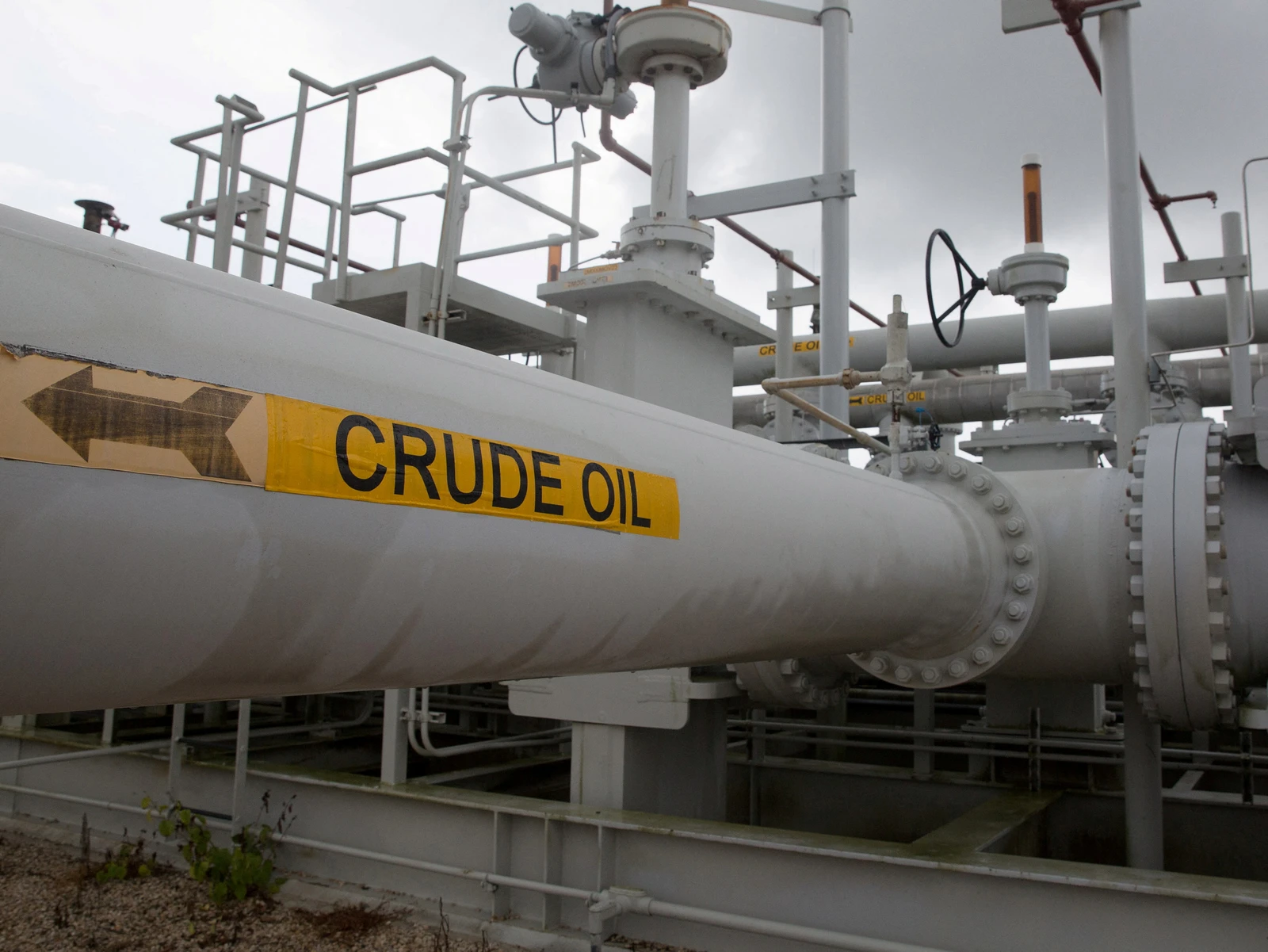
Hitting Iraq where it hurts most, saboteurs set off explosives on four sections of oil pipelines in the north of the country, igniting fires and affecting production and exports, security officials said. Firemen were battling to control the blazes into the afternoon. “All sabotage against NOC pipelines has repercussions on the production and exports of oil,” said captain Saheb Abdallah, who helps to protect oil installations.
Last month, Oil Minister Thamer Ghadban said attacks on the country’s oil infrastructure and its import of oil products due to insufficient refining capacity has cost seven billion dollars since the US-led invasion of March 2003.
In a separate crisis, four people — an American, a Filipino, a Nepalese and an Iraqi — remained missing after kidnappers raided a Saudi trading company’s Baghdad offices on Monday, another employee said.
A group led by Iraq’s most wanted man, Abu Musab Al-Zarqawi, snatched two other US contractors and their British colleague from the same neighborhood in mid-September.
All three were later beheaded. The Al-Qaeda-linked group of Zarqawi posted photos on an Islamist website showing the beheading of a Japanese hostage, Shosei Koda, who was executed last week.
The escalating violence has threatened to overshadow the elections in Iraq, where officials began Monday the process of registering voters and potential candidates.
Hoping to bolster the effort, the European Union agreed a package of financial and logistical support to Iraq ahead of summit talks this week to be attended by Allawi.
EU foreign ministers said they stood ready to release 30 million euros, already announced by the 25-nation bloc, “immediately” to support the election process.
Allawi has threatened to use military force with the support of US troops unless rebel hotspots like Fallujah and Ramadi agree to surrender the militants, such as Zarqawi.
Fearful of an imminent showdown, hundreds of people were seen fleeing Fallujah after a heavy night of US airstrikes, while one person died in a vehicle accident and four more were wounded in another day of unrest between US troops and rebels in the Sunni Muslim bastion of Ramadi.
“There are a bunch of cars leaving the city right now, about 400 cars backed up,” said US marine gunnery sergeant Brett Turck. “I don’t know if it is a mass exodus or regular traffic flows.”
Violent clashes flared on Monday in the sister city of Ramadi, to the west of Fallujah, leaving at least six people dead, including a cameraman working for the London-based Reuters news agency.
Violent clashes also flared in the city on Monday, leaving at least six people dead, including a Dhia Najim, 57, a cameraman freelancing for the Reuters news agency. In a sign of differing opinions on how to handle the Fallujah crisis, Jalal Talabani, the head of the Patriotic Union of Kurdistan appealed for a peaceful solution.
Adding to the daily bloodshed, two national guardsmen were injured when a roadside bomb exploded in the path of their convoy in Abu Ghraib, an Interior Ministry spokesman said.