GAZA CITY, 26 November 2004 — Jailed intifada leader Marwan Barghouti yesterday threw January’s Palestinian election wide open when he announced his intention to run for president. Barghouti’s decision, conveyed to Fatah leaders through his lawyer, risked a major split within the movement whose leaders have already given their backing to Palestine Liberation Organization chief Mahmoud Abbas.
The news emerged hours before the umbrella Fatah Revolutionary Council rubberstamped moderate former Prime Minister Abbas as the official candidate for the election.
Other members of Fatah’s Higher Committee, which is still officially headed by Barghouti, confirmed that the jailed leader had decided to run.
The traditionally conservative Fatah Central Committee, which is the organization’s most senior body, decided Tuesday that 69-year-old Abbas should be its candidate to replace Yasser Arafat.
The Higher Committee, however, is dominated by supporters of the 45-year-old Barghouti who is seen as the inspiration behind the intifada.
As the Revolutionary Council, which brings together both wings of Fatah, stuck with Abbas as its choice, Barghouti will likely run as an independent.
Abbas, who took over the PLO after Arafat’s death on Nov. 11, lacks Barghouti’s strong popular power base, but he is favored as a future peacemaker by Israel and the United States. Palestinian observers say Barghouti stands a good chance of winning the ballot, drawing support from mainstream voters as well as Islamists who oppose Abbas’ call to end the uprising.
Barghouti’s bid to succeed Arafat could also bring international pressure on Israel to free the West Bank Fatah leader it jailed in June for five life terms over the killings of Israelis by militants.
Israeli President Moshe Katsav, who would have the ultimate say on whether Barghouti should be pardoned and freed, did not rule out such a possibility in an interview published yesterday.
“If he applies for a pardon, I will discuss it,” Katsav told the Maariv daily.
During a visit to Israel and the Palestinian territories on Monday, US Secretary of State Colin Powell called the issue complex.
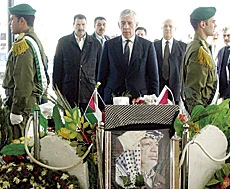
Treading where Powell did not go, British Foreign Secretary Jack Straw laid a wreath yesterday at Arafat’s West Bank grave and said talks with new Palestinian leaders gave him optimism about a revival of Middle East peacemaking.
— Additional input from agencies