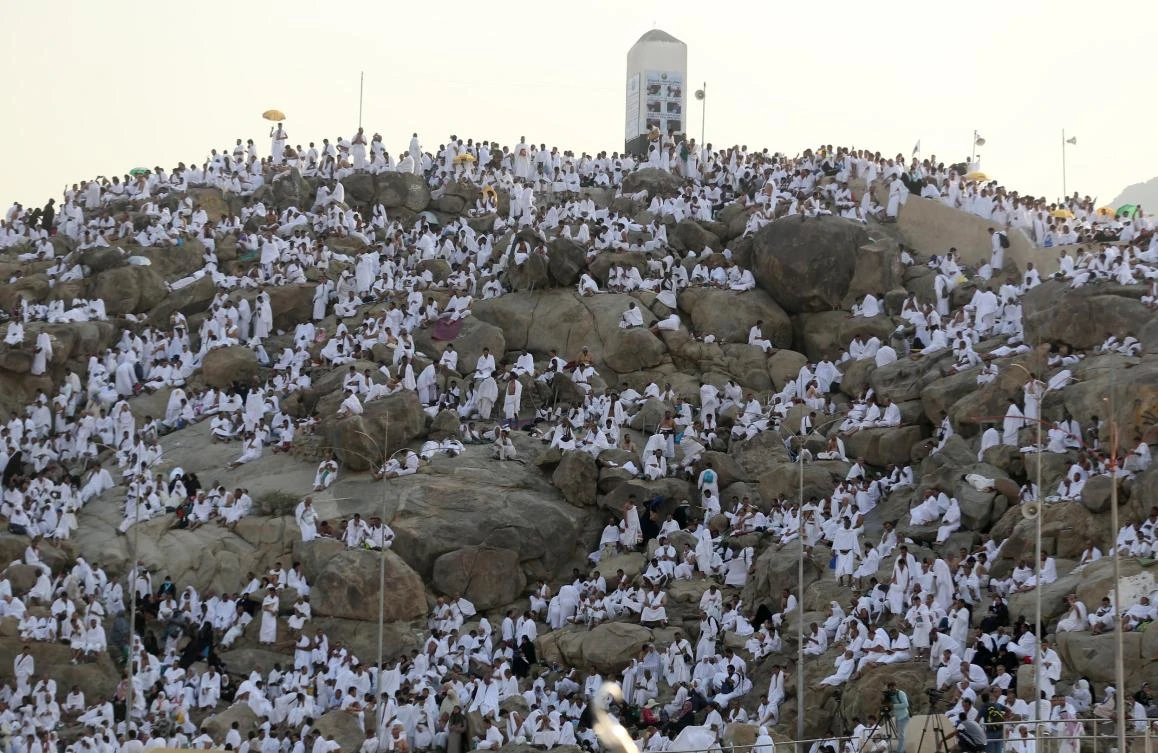
JEDDAH, 27 November 2004 — The foreign Haj missions to the Kingdom have been urged to support the action plan that has been formulated by the Ministry of Haj after long deliberations, research and studies for the safety of the more than two million pilgrims who are expected to come for Haj this year.
“We appeal to the foreign Haj missions in Saudi Arabia to enhance and strengthen their cooperation for greater safety and comfort of the Hajis. And we are confident of a positive response from them,” said Dr. Sahl A. Al-Sabban, assistant deputy minister of Haj for projects and holy sites affairs.
“We in Saudi Arabia consider the foreign Haj missions as major players in Haj plans and services. They represent the Hajis in many ways and are the best contact and source to convey the message,” he told Arab News on Thursday.
Al-Sabban said the action plan is the product of an integrated and scientific approach by the Ministry of Haj, General Security, Civil Defense, Municipality of Makkah, Haj Research Center, Ministry of Health, Ministry of Municipality and Rural Affairs, Red Crescent, and the General Secretariat for Development of Makkah and Madinah and Holy Sites, as well as the Tawafa establishments in Makkah.
“The plan is a result of many years of experience in this area,” said Dr. G. Keith Still of the UK-based Crowd Dynamics. Still, who has been conducting workshops, lectures and seminars for the last three years, said his company has been doing consultancy work for the Ministry of Haj. The company prepared several reports and has had some input in the design of the new Jamarat Bridge. He also said the plan was safety tested using well-established and reliable scientific methods and practices.
Al-Sabban said the foreign Haj missions are a strong link between the Ministry of Haj, various Haj organizations, institutions and agencies and Hajis from their respective countries and are well placed to disseminate messages and guidelines regarding stoning at the Jamarat.
“These missions can play a major role,” Al-Sabban said. “They maintain good contacts with the Ministry of Haj, attend workshops and seminars every year, and are well aware of the plans. Travel agents and group leaders can also play a significant role in the matter.”
He said a favorable response would be forthcoming from these missions bearing their duties and responsibilities to do more for the safety and security of the pilgrims. Of late, many countries have begun to educate, train and orient the Hajis coming from their countries. One such country is India, from where the second largest number of pilgrims come for Haj.
India started a program to train Hajis in 1999, stressing safety, especially at the Jamarat area. The embassy and the consulate general are the key players in the program. Audio-video orientation programs are conducted for the pilgrims in various states. The pilgrims are taught how to move, when to move, what precautions to take, and the like.