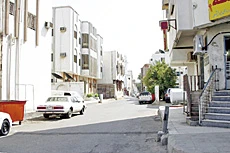
JEDDAH, 1 December 2004 — Al-Jamia, a long-established neighborhood in the city’s southeast, is one of the oldest in the history of modern Jeddah. It has also accrued a reputation as one of the city’s trouble spots.
The neighborhood was established more than 30 years ago after the King Abdul Aziz University was built. Recently, the troubled neighborhood was struck with two terrorist incidents, one in Ramadan and another a few days ago.
Few of the general public were aware that Al-Jamia neighborhood was a safe place for terrorists to hide, similar to many south Jeddah neighborhoods. For a terrorist, such neighborhoods are perfect places for them to avoid the attention of police, because within these neighborhoods are corners that police cannot reach. The warren of streets and alleys also offers safe refuge for overstayers and illegal workers.
“This place is full of problems and no one cares to solve them. They have been going out for years, with no clear solution on the horizon,” said Abu Abdul Razzak. “I put the full blame on illegal overstayers... Ever since they arrived here they started using the neighborhood as a base for their criminal activities.”
He broke into a litany of woes and accusations. “They steal everything, from cars, motorbikes and break into houses. The Passports Department does not care about this place and we rarely see them visiting the neighborhood. There are not nearly enough police present.”
Abu Abdul Razzak said that he was not surprised when some of the terrorists were found hiding here. “This is a perfect place for them. I think there are more terrorists hiding and will be as long as there is an absence of securitymen.”
Bandar Al-Oufi, an Al-Jamia resident for 25 years, recalled that the neighborhood was much more pleasant in the past. “Families were close together and everybody knew each other.”
When Jeddah began expanding, many local residents in the neighborhood started to move north leaving the neighborhood for illegal workers. “Police and members of the Commission for the Promotion of Virtue and the Prevention of Vice tried very hard to clean up the place but still there is lots to be done,” Al-Oufi said.
One of the most popular places for the sale of drugs in the neighborhood, Al-Oufi said, was Baghdad Street. “Most of the people that live in the neighborhood are overstayers. What aggravates trouble is that there are more bachelors living in the place because it is very close to the university.”
In the past, Al-Oufi said, strangers could not come and go in the neighborhood without local residents in the neighborhood asking about them. “Now criminals can come and go as they wish.”