
CAIRO, 11 December 2004 — Seeking to keep prices up without having them explode, OPEC agreed yesterday to reduce its daily oil output by 1 million barrels a day — and reserved the right to cut deeper early next year if crude turns much cheaper than now.
The move represented a decision by OPEC to go down the middle, in a bid to prevent further revenue losses amid a recent downward price trend, while trying to reduce the kind of volatility that rocketed prices up to record highs earlier this year, leading producers scrambling to meet demand.
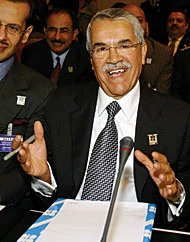
Saudi Oil Minister Ali Naimi said the cut will be implemented starting Jan. 1. He told reporters that OPEC would meet again at month’s end to review the cut’s effect on prices, which have fallen sharply recently but remain high above previous established levels.
If effective, the output reduction would scale back output to the group’s overall ceiling of 27 million barrels a day.
OPEC’s two other options — doing nothing, and risking continued losses, or reducing the quota target and precipitating a new oil crisis — were clearly not appealing to members. Their decision to try and end quota busting appeared to be a bid to reduce the risks both ways.
Still, the decision to meet again Jan. 20 was meant as a signal that OPEC was ready to defend current prices — a message driven home at the Cairo meeting by several oil ministers.
“We will implement this cut and watch the market,” Libya’s oil minister Fathi Hamed Ben Shatwan told reporters. “If there are good prices, then fine. If prices keep dropping, then we’ll take new action.”
In another bid to keep markets from roiling, the 11-nation group resisted pressure from some members to raise its target rates — the prices it sees as fair — for OPEC crudes. That band is now at between $22 to $28, below the lower $30s some members would like to see it at and far under present market prices.
Still, oil ministers made clear that the bar had been raised at least informally. Naming $32 as his country’s bottom line, Iran’s Bijan Namdar Zangeneh, told reporters: “We are concerned about prices dropping.”
“We should be very careful and monitor the market very closely,” he added. OPEC Secretary-General Purmono Yusgiantoro of Indonesia touched on the need for stability after months of “excessive speculative activity.”
He said the group would reassess its current price band at the January meeting in Vienna.
Sentiment for turning down the spigots gathered momentum earlier this week when Saudi Arabia indicated it was receptive to the idea. Naimi suggested OPEC was braced for some further drops in world crude prices, despite recent sharp declines.
Benchmark US crude futures have fallen by almost a quarter since the record prices of more than $55 a barrel in late October. The decline has been sharpest in the last week or so, spurred by increases in US petroleum inventories, mild winter weather and little sign of a slowdown in OPEC output.