RIYADH, 23 December 2004 — The Kingdom’s Communications and Information Technology Commission (CITC) formally handed over the license to UAE’s telecom giant Ettihad Etisalat, the second mobile service provider, and realized SR12.2 billion fees for GSM and 3G licenses here yesterday.
A ceremony was organized to mark the occasion because the grant of license and the conclusion of financial transaction, in fact, now pave the way for Etisalat to start GSM operations as soon as possible and expand its service network rapidly in the Kingdom, the largest market in the region.
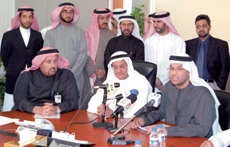
Addressing a crowded press conference at the CITC headquarters here yesterday, Dr. Mohammed Ibrahim Al-Suwail, CITC’s governor, said “this ceremony has been organized to celebrate the granting of the license. This has been a process that took some time and now we have assembled to announce that the license has been handed over and the money has been received”. A large number of Saudi and Emirati officials including Khalid Al-Kaf, managing director of Etisalat, Sami S. Al-Basheer Al-Morshid, minister’s adviser and Taha A. Al-Kuwaiz, deputy general manager of the National Commercial Bank (NCB) attended the ceremony.
Referring to the business relationship between the Saudi Telecom Company (STC) and Etisalat, Dr. Al-Suwail said that “the cooperation between STC and Etisalat represents an ideal business relationship, which will benefit both parties. But, the Saudi telecom regulatory body will be watching that this cooperation will not harm the ultimate users of the services”.
He also reaffirmed that CITC was determined to protect the interests of new local or foreign investments in the telecom sector including STC and Etisalat.
The CITC governor, while referring to the decision made by the Saudi Cabinet a few months back to opt for the Etisalat consortium’s $3.457 billion offer that includes GSM and 3G licenses, said that Etisalat was licensed to carry out various activities including the operation of the Kingdom’s second GSM, financing, designing, construction, maintenance and supply of equipment and materials. The licensing provisions call for ensuring fair competition between STC and Etisalat and achieve clarity and transparency in procedures.
“We would like to make sure that the new service providers are aware of the potential competition ahead of time, so that they can prepare their business plans accordingly”, said the CITC official adding that the CITC will apply certain regulatory provisions while keeping a watch on the operations.
Etisalat, the newly established SR5 billion Saudi joint stock company, has plans to raise its capital to SR7 billion in the near future. The company’s initial offering last month was oversubscribed 51 times, reaching a whopping SR51 billion; representing the biggest IPO in the history of the Saudi stock market.
Speaking on the occasion after receiving the license, Etisalat Managing Director Al-Kaf said: “We are actually promising now that we will be launching the services before time. Etisalat has devised plans to meet the requirements, including deploying the most advanced technologies and providing the latest services in line with the CITC guidelines and the Saudi market’s specific requirements”.
“Our initial focus will be on expanding the reach of GSM services to ensure that we are moving forward as quickly and efficiently as possible”, he said.
The Etisalat official said “we will be covering more than 20 to 30 Saudi cities within the next few months”.
Taha, speaking on behalf of the NCB, said “the NCB facilitated the transaction and paid SR 12.2 billion to the CITC today for the license”.
Saudi Etisalat joint stock company, which is 35 percent owned by Etisalat of UAE, has five Saudi partners. With a current GSM penetration level of less than 35 percent in the Kingdom, Etisalat’s focus is on that 65 percent remaining market. In fact, there is a tremendous potential for the entire Saudi telecom market to grow with overall telephone penetration standing at 15 percent.