RIYADH, 22 December 2005 — Saudi Arabia and Britain yesterday signed a memorandum of understanding for Saudi Tornado and other combat aircraft to be replaced by Eurofighter Typhoon aircraft, the British Embassy here said.
It gave no details on the size of the deal and set no timeframe for the delivery of the new aircraft. “Under the terms of the signed document Typhoon aircraft will replace Tornado Air Defense Variant aircraft and others currently in service...,” it said.
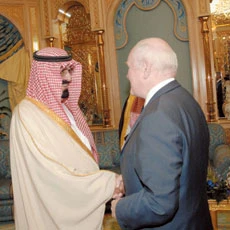
The memorandum was signed after visiting UK Defense Secretary John Reid met Custodian of the Two Holy Mosques King Abdullah yesterday. Earlier, he had held talks late on Tuesday with Crown Prince Sultan, deputy premier and minister of defense and aviation.
Prince Sultan and Reid discussed the deal to purchase British fighter jets, an official statement carried by the Saudi Press Agency said. Prince Sultan had told reporters after the meeting that the two countries would soon reach a deal on purchasing modern aircraft but he did not go into details.
The deal “is intended to establish a greater partnership in modernizing the Saudi Arabian Armed Forces and developing close service-to-service contact especially through joint training and exercises,” the British Embassy said in a statement.
Sources close to the talks have said the deal is likely to involve Saudi Arabia buying at least 48 Eurofighter Typhoon jets, with an option to buy up to 72. “The specific details of these arrangements are governed by the existing confidentiality agreement,” the embassy said.
London will also support Riyadh in developing what the statement called “a regional defense industrial center of excellence.” Prime contractor BAE Systems will invest in local training for thousands of Saudi nationals, it added.
“This (Document of) Understanding is good news for both UK and Saudi industry. BAE Systems, as prime contractor, and its many UK sub-contractors will benefit from the work envisaged under this understanding, which will help sustain several thousand UK jobs over the next 10 years,” Reid said in the statement.
In addition, the associated technology transfer, training and inward investment packages will generate many skilled jobs in Saudi Arabia, he added.
Prince Sultan’s meeting with Reid took place at his Azizia Palace. British Ambassador Sir Sherard Cowper-Coles and Prince Khaled ibn Sultan, assistant minister of defense and aviation for military affairs, were also present.
Addressing a joint press conference with Reid after the meeting, Prince Sultan highlighted the close relations between the two countries, “There are no problems between the Kingdom and Britain. Visits between friends are intended to remove outstanding problems, if any.”
Prince Sultan said his talks with Reid focused on the continuation of the Al-Yamamah Project, which is deemed one of the successful projects in the armed forces.
Prince Sultan denied reports that the Kingdom had linked the jet purchase to the extradition of Saudi dissidents from the UK. His statement found support from Reid who described British media reports as misleading. Asked if Saudi defense personnel were facing any problem in the UK, the crown prince replied in the negative.
As for the future of Syrian-Lebanese relations, Prince Sultan said: “I am confident that the two countries will never disagree, whatever the circumstances.”
Reid said the relationship between the two countries was strong and friendly, adding that the number of Saudi students in Britain outnumbered that in the US.
Stressing the need for continued cooperation between the two countries, he said such a common stance was necessary to confront terrorism. “Both our countries have shared perceptions on issues of mutual concerns. We are also working closely for developing the Saudi armed forces,” he said, adding that there was also ongoing cooperation in the fields of education and human resource development.