
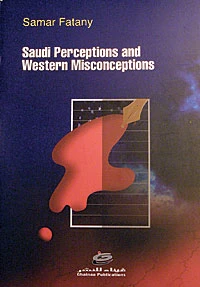
In her new book, “Saudi Perceptions and Western Misconceptions” (Ghainaa Publications), veteran broadcaster and columnist Samar Fatany takes a concise and documented look at the pace of change in the Kingdom in hopes of correcting the jaded view of the country that Western media has constructed.
The introduction explains that the focused chapters originally were written as newspaper columns she created since the Al-Qaeda attacks on the United States on Sept. 11, 2001.
As many people in both hemispheres observe, Fatany notes the generally negative coverage of all things Saudi that Western news services, broadcasters and newspapers have presented about the nation, branding it as a hotbed of terrorism and intolerance, a place of wealthy sheikhs and radical clerics hellbent on death and destruction in the name of Allah. Isolated incidents in which terrorists battle with security forces make the front pages; the massive efforts of the government, business, academia and religious leaders to effect positive change do not.
In 11 chapters, Fatany details what has been and is happening in Saudi Arabia so that people can get a clearer picture of this longtime US ally. Most of the content deals with Saudi reforms across a broad front with specific examples of progress that can be further substantiated and explored by readers wanting the whole story. Changes in the role of Saudi women and government and private-sector efforts to encourage those changes are discussed, as are the Kingdom’s carefully planned introduction of democratic institutions.
Fatany also laments the recent unilateral militarism of the United States and concludes that it has contributed to a great erosion to the country’s reputation in the Middle East. She also notes, as have many commentators, that the lack of resolution of the Israel-Palestine issue contributes to the region’s volatility and provides an excuse, however lame it may be, for hotheads and kooks to make misguided calls for terrorism. All the while, the careful efforts to transform the Kingdom go on despite the obstacles the superpower creates through its continued acquiescence regarding a problem that should have been resolved decades ago.
Moreover, the author makes clear that Saudi reforms are geared toward creating the best possible society and economic environment for Saudis in the years to come, more as a response to global trends in an increasingly competitive environment than as a response to American calls for reform.
If one of Al-Qaeda’s goals in the 9/11 attacks was to drive a wedge between the American and Saudi peoples, it has succeeded in part because of a media that opts to vilify Saudi Arabia rather than dig deeper into the true nature of Saudi Arabia and the true nature of Islam as a religion of peace. Fatany has done the digging here, and readers of “Saudi Perceptions and Western Misconceptions” will get a far more positive view of the Kingdom and Islam that demonstrates that the reality is much brighter than the perceived darkness of the biased, sloppy reportage being served to the peoples of the West.
One could argue that if Western media was more interested in accuracy than sensationalism, there would be no need for Fatany’s book, and if there is any criticism of the book at all it is that it is being published in Saudi Arabia rather than the United States where its intended audience resides. That being said, “Saudi Perceptions and Western Misconceptions” is a book that can advance the understanding of the reality of Saudi Arabia for American college and high-school students as well as others with a thirst for the truth. For policy makers and officials, it can provide a snapshot of reform well-enough documented to explore a variety of Saudi societal issues further — both here and abroad.