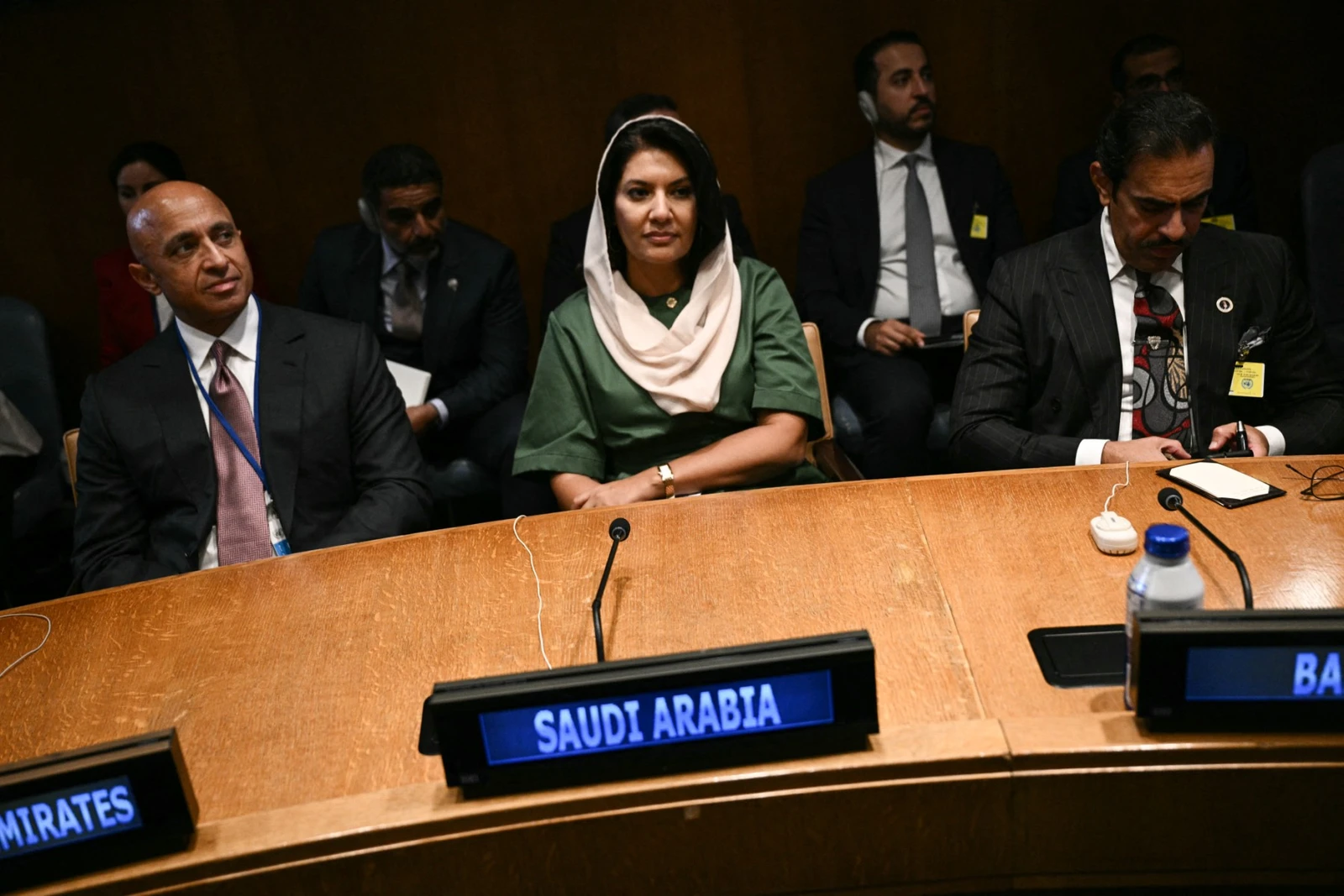
The visit of Custodian of Two Holy Mosques King Abdullah to the Far East and the Indian Subcontinent has far greater significance than might be initially grasped by either the general public or political analysts. The visit is King Abdullah’s first to the region. It reflects the formulation of a pragmatically mature foreign policy, based on present, and probably future, geopolitical realities, in the aftermath of the breakup of the Soviet Union. This foreign policy also takes into consideration changes in Europe, the stalemate in Israeli-Palestinian relations, instability in Iraq and the unsettling jingoistic rhetoric coming from Washington concerning Iran.
Neutrality has always characterized Saudi Arabia’s foreign policy. Ever since its founding, the Kingdom’s rulers have consistently tried to heal rifts and differences between Arab and Muslim nations. As an honest broker and as the home to Islam, Saudi Arabia has made its influence felt in both regional and world politics. As one of the most important members of the Organization of the Petroleum Exporting Countries (OPEC), the Kingdom has played a vital role in keeping oil prices steady by acting as a swing producer. This should not be forgotten or overlooked by developing countries as higher oil prices would have considerably slowed their progress and development.
Today’s world is far different from the one we knew even 20 years ago. There is now one country — the United States — which claims to be, and is, the only superpower. Nonetheless, there are others who by the sheer dint and force of hard work, utilizing natural resources scientifically and taking advantage of the best capital of all — knowledge power — have managed to propel themselves into the premier league of nations.
Three of those nations are India, China and Malaysia. It is important for Saudi Arabia to improve the relations already existing with them and, by adding a cultural, educational and political dimension, cement bonds that will not only be beneficial to the nations themselves but also to the Kingdom and the rest of the Arab world.
In terms of economy and economic growth, China is fast catching up with the US. Last year, its GDP grew by a phenomenal 9.8 percent. It has a growing middle class. It has political clout and it is looked at with awe and amazement by its neighbors in Asia and by the rest of the world. It has an immense appetite for all kinds of consumer goods, many of which it produces cheaply and efficiently in response to both internal and external demand.
Malaysia is viewed by the Muslim world with great respect. It is perhaps the only Muslim country which has turned itself around and assumed a prominent position on the international stage. Its leaders have played key roles in the affairs of the Muslim world; its democracy, its educational system and its streamlined bureaucracy have resulted in unprecedented economic success which is seen by much of the developing world, Muslim and otherwise, as an example of how obstacles can be overcome by hard work and determination.
When we look at India, we see at once a country in the midst of a boom. Its economy has attracted venture capitalists from all over the world and, according to a report published last week by a subsidiary of the World Bank, the International Financial Conference, India is set for a “banner year” in 2006.
Saudi Arabia itself has not remained the same. It is progressing. One can feel a new pulse of dynamism and possibility. Economic growth is not only being fueled by oil prices but by an inbuilt resolve to progress, to move forward, to leave certain aspects of the past behind. There have already been changes. Local, municipal and guild elections have not only been proven successful but they have also seen a new and emerging social pattern — women’s participation and empowerment.
No society which genuinely wants to be successful can afford not to make full use of the abilities, the talents and the skills of its women. If it does, it does so at its own peril. There can be little doubt that the women of Saudi Arabia will be key players in the Kingdom’s future development. Respect for law, human rights and accountability are the hallmarks of King Abdullah’s government. And they put us on a par with other nations.
King Abdullah’s visit to India is the first by a Saudi monarch in 51 years. The politicians and mediapersons I talked to in Delhi last week asked why it had taken so long for the second visit. My answer was that for everything, there is a time and that time had now come.
The world has seen that Indian expertise and Indian entrepreneurs have made their marks in their own country and abroad in fields ranging from IT to medicine. Both India and China now rank above the US as the most preferred destination for foreign direct investments. Unlike China, India is a well-regulated market with a reliable and up-to-date banking system. The growth in the country’s economy, along with the government’s decision to persist with favorable tax policies, has spurred considerable enthusiasm for investment. Strong economic ties between Saudi Arabia and India will benefit both sides; at the same time, economies cannot prosper to the limits of their potential unless there is a favorable domestic and regional political climate.
It is thus of the utmost importance that India and Pakistan, the last country on King Abdullah’s tour, resolve their differences. A peaceful Subcontinent would be a bonanza for everyone.
Pakistan has long been, and will no doubt remain, a key ally of Saudi Arabia. There are historical, social and religious links and connections between the two countries. The Kingdom is very sensitive to the contentious issue of Kashmir and its attendant tensions and works for a speedy and satisfactory solution.
There have been reservations in the past on the Saudi side about India’s policies in Kashmir and there is a belief in the Kingdom that there should be a policy of engagement vis-à-vis India. The better and stronger our relations with India, the greater the likelihood of promoting a peaceful dialogue between Delhi and Islamabad. The billion and a half people of the Subcontinent deserve a better fate than the omnipresent threat of a mushroom cloud and Saudi Arabia will work ceaselessly to remove such a threat and replace it with genuine security and trust.
King Abdullah knows the meaning and the worth of stability and security. He is a good listener. He is a man of few words but he means what he says and says what he means. He knows that the most desirable adjunct of peace is economic progress. He is well aware that the Indian Subcontinent is barely a two-hour flight from the Eastern Province and that it is possible to travel by land from India through China all the way to Korea.
True, we may not have a long history of high level visits to that region but we have always been connected. We are now looking to the East where in the past, we looked almost exclusively to the West. The importance of both are now openly recognized and frankly acknowledged. In the light of international changes which have led to political and economic readjustments, we in the Arab world, in common with citizens of every country, must make the necessary political, economic and diplomatic changes so that we can play our part in — and be taken seriously by — the world in the 21st century.