
ALKHOBAR, 7 February 2006 — In a briefing paper on “Straightforward Transportation Security,” SITA INC, an international authority in the aviation industry, detailed the necessary steps for ensuring security in the skies. Focusing primarily on matters regarding immigration, organized crime and international terrorism, in the report SITA stated that the real challenge facing the aviation industry is simplifying passenger travel, while ensuring an accurate and timely response in higher risk situations.
SITA is a global provider of information technology and telecommunications solutions to the air transport and related industries. Founded in 1949 as the “Societe Internationale de Telecommunications Aeronautiques,” SITA now has around 3,400 staff of more than 140 nationalities, proficient in 70 different languages, furnishing services to 1,800 customers in over 220 countries and territories. It’s fair to say that SITA has an unparalleled understanding of the many facets forming the global aviation business.
According to SITA, terrorism, illegal immigration and crime are serious threats. As passenger numbers grow, airlines and airports want to offer consistent passenger processing around the world, while governments need to manage risk as early and as far from their borders as possible. What’s more, airports need to improve capacity while adopting improved security technologies and processes. Few of the millions of passengers who fly each year warrant any kind of special attention. But finding the ones who are a concern requires better passenger data collection, storage, processing and analysis than is currently in use in most airports today. ICT applications are available to enhance every step in the vital passenger data management process, but for a variety of reasons these applications aren’t being implemented.
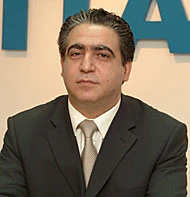
“Today people all have documents in hand when they travel but the information on the documents is not available in a system that allows the relevant airline and government authorities to have access to the information from the time the ticket is purchased to check-in, boarding and even after arrival at the destination. This is extremely important,” explained Jamal El-Hoss, Regional VP Sales for ME, Africa and South and Central Asia, SITA INC.
The International Civil Aviation Authority has recommended enhancements of air transport security. Unfortunately, there is no single country in the Middle East that has all of the recommended security measures in place. For some governments it is a matter of red tape slowing the process. For other countries finding the funds is the problem.
“The cost of implementing improved security systems is an issue but it is one that airlines and governments must address as they comply with certain regulations to strengthen air transport security,” said El-Hoss. “We are seeing that airports, airlines and governments are often choosing to pass along the costs of these new security measures to the individuals who are benefitting from putting such systems in place. Airport services taxes, airport security taxes and visa issuance fees are all ways that security costs can be recovered without impacting the general population.”
It is not simply the technology that needs improvement at regional airports. It is essential to upgrade both the applications and the network resources. Moving to a completely digital environment for a nation’s air transport security necessitates a fully redundant system. Disaster recovery measures for air transport security systems are a vital part of the original implementation plan and require regular review. The reliability and scalability of the system are important considerations when choosing any application. Due to the sensitivity of the data being handled, SITA advocates the use of a secure private network for data transfer, process and storage. Additionally, there is no doubt that biometric data can enhance passenger identification and tracking. However, the rapid transfer of such data requires a dramatic increase in available bandwidth between the different stakeholders involved in air transport security. This is currently a bottleneck. It’s no surprise that all the deficiencies in the collecting and sharing of passenger data are being exploited by criminals.
“It is essential that every country capture, store and integrate passport information and biometric data in accordance with the International Civil Aviation Organization standards,” advised El-Hoss. “These standards for capturing and displaying information when used globally will enable the data collected in Country X to be easily and rapidly shared with Country Y, or any other country. This is the foundation to enable adequate analyses of the data. Ideally, implementation of interactive Advance Passenger Information (iAPI) systems would make available all the data on a passenger in real time. Now, intelligence agencies are at a disadvantage both in barring suspected terrorists access to a nation’s borders and in performing pattern and trend analysis on individual traveling behavior.”
Biometric data is increasing important to air transportation security. But collecting that data is far from straightforward. More education is needed to help the traveling public understand the reasons for, technologies used in and processes involved in collecting biometric data, such as an iris scan or fingerprints. It may be necessary to work around sensitivities in the data collection techniques. Especially in the Middle East, where women are particularly careful about exposure of the physical self, it can be quite disconcerting to unexpectedly encounter equipment that requires or results in such exposure.
For example, many women traveling out from London Heathrow’s Terminal 4 during the recent winter vacation season were startled when they discovered that a security scanner which “sees” through clothes and produces a nude image of the passenger being scanned, had made its trial debut. Passengers approaching the main pre-flight checkpoint were randomly chosen by airport security staff for screening by the new equipment. Any passenger who objected to using the body scanner had to submit to a hand search rather than simply stepping back into line and being scanned by the standard metal detector. For women unfamiliar with such equipment the level of anxiety and/or discomfort created by such an encounter could be significant.
“SITA INC has done some market research to find out how women who veil their faces will accept uncovering the face for an iris scan,” remarked El-Hoss. “We found that some people resisted taking such an action and for others it was acceptable. This shows that ways must be found to introduce new security equipment and procedures for air transport security to the traveling public before they reach the airports. In this manner people can be made aware of the new security measures, have an opportunity to ask questions and then be at ease when the time to travel comes.”
There is also a need to ensure that air transportation security is not perceived as humiliating. Security staff coming into contact with passengers must be well trained to implement security measures in innocuous ways. After all, there is no disrespect in any of the security technologies themselves. It is when the technologies are utilized without sensitivity for the dignity of the passenger that difficulties may arise.
Many countries either are already prescreening passengers or are working to create the legislation to mandate such a policy. Saudi Arabia must move toward the e-future in airline transportation security for the good of the nation. By implementing integrated electronic systems right from the ticket booking and visa application stages many benefits could be achieved. Costs would be reduced overall. The Kingdom’s tourism and trade would be facilitated. Arrival and departure processing of passengers would improve. The opportunity to reduce threats would be enhanced. Available facilities and staff could be better utilized.
“In Bahrain for the Formula I event they have shown how effective a modern Advance Passenger Information system can be,” said El-Hoss. “Just imagine the processing of the thousands of passengers coming in for this event, in a very short time frame, without such a system. But in Bahrain’s case every passenger has been pre-screened before arriving at the airport. In Manama, the immigration officer either enters the passport number or scans the passport, if it is machine readable. All the passenger information appears and in just minutes the passenger is processed through to the customs area. Nothing could be easier.”
If you are interested in understanding more on this issue please click to: http://www.sita.aero/Solutions/Simplifying_Travel_and_Transportation/Straightforward_transportation_security.htm.
SITA SC and SITA INC to Merge
As a company, SITA is currently made up of several components. In January, the SITA boards unanimously endorsed a plan to consolidate SITA SC and SITA INC into a single SITA organization.
Paul Coby, chairman of the boards of SITA SC and the SITA Group Foundation, said: “The boards took the view that by consolidating the companies into a ‘Single SITA,’ we would strengthen our existing businesses and be better positioned to provide our wide range of complementary telecommunications and IT products and services to the Air Transport Industry (ATI). The integration of the communications services business (SITA SC) and the IT systems, solutions and services business (SITA INC) with the Group Services into a single organization, will make it much easier for our customers to do business with SITA. It will also make SITA easier to manage and should also save significant costs which will be passed onto our customers.”
It is anticipated that SITA will become a single organization from July 2006.