JEDDAH, 11 February 2006 — A workshop on crowd control organized by the Ministry of Municipal and Rural Affairs has called for setting up a high-level committee to oversee management of the hundreds of thousands of pilgrims at Jamrat in Mina.
Habeeb Zainul Abideen, deputy minister of municipal and rural affairs, expressed his hope that the new Jamrat expansion project, would help end stampedes in Jamrat.
He said the workshop, which was attended by some 60 experts, urged the Haj Ministry to sign agreements with foreign Haj missions on the departure of their pilgrims from Mina, letting only half their pilgrims to leave after the stoning ritual on the 12th of Dul Hijjah and the other half on the 13th.
The workshop urged authorities to make use of the expertise of crowd management specialists to organize the stoning ritual in cooperation with Saudi security forces. It emphasized the need for training Haj and security personnel on how to deal with pilgrims at the new bridge.
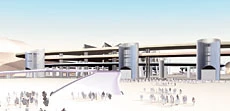
Work on the new multitier Jamrat Bridge, the scene of a stampede that killed over 360 pilgrims this Haj season, began last month. The first phase of the SR4.2-billion project, being carried out by the Saudi Binladin Group, will be completed before the next Haj.
“The new project includes two helipads which will help in the speedy evacuation of casualties in case of accidents. One of the six towers of the complex will have a large escalator to take ambulances to the top level of the bridge,” Zainul Abideen said.
The new bridge will have 10 entrances distributed on the four levels plus the ground floor to accommodate the pilgrims coming from different directions. The ground and first floors of the bridge are for pilgrims coming in from east Mina, which accounts for the bulk of the traffic.
The second level is for pilgrims coming in from the direction of Makkah, the third level for those from north Mina and the new pilgrim camps, and the fourth level is for pilgrims coming from south Makkah through King Abdul Aziz Road.
There will be three main tunnels for transporting vehicles. These tunnels will be connected to service towers for garbage collectors, ambulances and other services. There is also a tunnel to be used by special delegations and VIPs.
Zainul Abideen said the proposals would be presented to higher authorities for consideration. They included measures to encourage pilgrims to follow schedules for stoning and stop them from rushing toward the Jamrat at noon on the 12th day.
The workshop called for a study on how to prevent squatting of pilgrims near the Jamrat Bridge.
Especially after the Jamrat stampede this Haj, authorities are under pressure to take firm action against pilgrims coming without permits in order to put an end to the phenomenon of squatting in Mina.
Osama Al-Bar, director of King Fahd Haj Research Institute which designed the new bridge, said the first phase of the project would include the ground floor and first floor in addition to the basement, which will be used only for support services. “In the following year, all four floors will be ready,” Al-Bar said.