
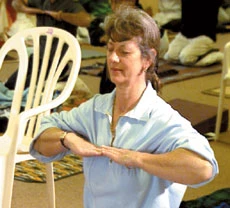
IN a world of consumerism in which we are often stressed, living in a computer-driven virtual reality and surrounded by greed and superficiality, it is soothing to discover something as genuine and enduring as chi kung.
Although many have no idea about chi kung, the fact is that a growing number of people around the world are practicing these gentle movements combined with calm breathing. Chi kung originated in remote antiquity but, says one modern devotee, “It is also a wholly modern activity and, at times, seems almost tailor-made for the typical Western lifestyle as more and more people seek a means of dealing with the stress and strain of modern life.”
Chi kung — often written qi gong — can be defined as energy breathing whereby the arms and, in some cases, the feet move gently in time to the breathing in order to encourage the circulation of vital energy or bioelectric circulation in the body which is known in Chinese as “chi.” These exceedingly simple movements hide an amazing complexity.
In other words, the exercises are easy to perform badly and difficult to do properly. When they are understood and done properly on a regular basis, however, people can expect a real improvement in their overall wellbeing. As the body begins to relax, physical processes such as digestion, breathing and circulation begin to function more smoothly and, in a sense, help the body to nourish itself from the inside out. This is why chi kung is often referred to as an ‘internal’ exercise. The actual physical activity involved is very slight, with just small circular movements of the arms, or a gentle rocking to and fro on the feet. Therefore these gentle exercises can be performed by the elderly or disabled and in certain hospitals, chi kung is used as a therapy, allowing patients to assume a far more active role in their own healing process.
Chi kung is an amazing form of preventive medicine which is delivered not through strenuous exercises, exhausting our energy, but by strengthening the body from inside through slow, gentle movements combined with calm, regular breathing that leaves us feeling more energized afterward than when we began: “This again, is often a difficult concept for us to grasp here in the West. People are conditioned to believe that if the heart is not pounding and there is no puffing and sweating when we exercise, that it cannot be any good to us. No pain, no gain is the current catch-phrase. Unfortunately such exercises might well boost the cardiovascular system, heart and lungs but at what cost to the rest of the body and to vital organs such as the kidneys! People can literally wear themselves out in their bid to keep fit. With chi kung, you exercise the cardiovascular system and the rest of the body in equal measure without forcing anything,” says one devotee.
One of the most visible benefits of chi kung is the gradual elimination of stress which affects our mental and physical abilities. Modern research into the ageing process confirms that stress is a major cause of illness and physical deterioration because it wears down the body’s resistance to disease. Stress constricts the circulation; the joints become tight; the spine loses its mobility; and the circulation of blood and vital fluids becomes inhibited through muscular tension. One of the aims of chi kung is to slow down this tendency and even to reverse it. For example, many people suffering from arthritis take medicine to reduce pain. It might reduce the pain but it does not cure the problem. When the medicine has been totally absorbed, the suffering resumes. Chi kung helps a patient suffering from arthritis rebuild the strength of his joints. The patient is taught how to increase the bioelectric circulation in his body through slow, easy exercises, and how to massage the joints and strengthen them.
Moreover, as we grow older, the length of our breath becomes shorter and shorter, and less vital energy is led to the skin and the bone marrow. As a result, the skin starts to wrinkle, the hair turns gray or drops out. In addition, fewer blood cells are produced, and those that are not as healthy as the ones produced when we were young. Since blood cells carry nutrition and oxygen to the entire body, problems begin. In other words, we get sick more often, and start to age faster. Thus the key to maintaining a youthful body is to learn how to regulate our breathing.