JEDDAH, 28 April 2007 — At least 172 suspects have been arrested in various parts of the Kingdom and seven armed militant cells dismantled, the Interior Ministry announced yesterday. Some of the arrested are foreigners.
“Some (of the suspects) had begun training in the use of weapons, and some were sent abroad to study aviation in order to carry out terrorist operations inside the Kingdom,” a ministry statement said. “One of their main targets was to carry out suicide attacks against public figures and oil installations and to target military bases inside and outside (of the country).”
Government officials did not say when or where these arrests were made, citing security concerns and ongoing investigations in the fight against militant extremism in the Kingdom.
Interior Ministry spokesman Mansour Al-Turki said the government believed these cells were working independently and did not fall under one organization.
Nationalities of the foreigners arrested will not be revealed until the countries of their origins are notified, he added.
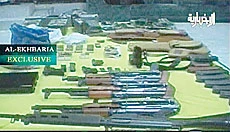
Saudi TV yesterday showed undated footage of agents digging in desert areas and inside buildings bringing out weapons wrapped in plastic sheeting, including grenade launchers, plastic explosives, ammunition cartridges, handguns and rifles. Computers and stacks of Saudi riyals were also seized.
Security investigators were shown breaking tiled floors with hammers uncovering pipes that contained weapons. In one scene, an official upends a plastic pipe and bullets and little packets of plastic explosives spill out.
The ministry said in its announcement yesterday that the members of one cell was allegedly planning to raid a prison and free comrades. Authorities said many of the suspects planned to carry out terrorist activities “abroad”.
Some foreign wire services incorrectly reported that the suspects were all arrested yesterday and that $32.4 million in cash had been confiscated. Saudi officials said the arrests had been made over an unspecified period of time in recent months and that a total of SR20 million ($5.3 million) had been confiscated. Other confiscated items included documents, telecommunications equipment and electronic files containing militant propaganda and assault plans.
Out of the seven cells that were dismantled, 120 of the suspects came from two cells. The other five cells included the following number of suspects: 16, 13, nine, nine and five. The ministry did not specify how many of the suspects were Saudi.
The largest cell had 61 members, some of whom swore allegiance to its leader in front of the Kabaa. He sent some of the members outside the Kingdom to be trained as pilots so they can carry out terror attacks inside Saudi Arabia. Regarding the group’s funding, the ministry statement said that their leader misled a lot of people to invest in bogus companies.
The second largest group of 59 members was made up of mostly Saudis and were linked to outside terrorist organizations and camps.
One of the groups of nine suspects is accused of burying weapons caches in remote areas near their targets. The group of five suspects is believed to have been involved in the Feb. 24, 2006 attack on the Al-Abqaiq oil refinery.
The ministry said one of these men took pictures and participated in the shooting at the site while the other four played supporting roles, including reconnaissance.
Officials said without elaborating that they believe some or all of these cells are affiliated with outside organizations whose members went to training camps and who were helped in their return to Saudi Arabia with the intention of carrying out attacks.
Saudi authorities said all of these suspects had adopted the takfiri ideology (Muslims branding other Muslims as infidels) in order to justify their plans to commit murder and mayhem inside the Kingdom.
The ministry said that Saudi security forces were able to track suspicious movements, which included recruiting others and covering up financial operations.
Militants swearing allegiance to Al-Qaeda launched a violent campaign to topple the government in 2003, carrying out suicide bomb attacks on foreigners and government installations, including the oil industry. Militants in February killed four French expatriates working and living in Saudi Arabia in the latest attack on foreigners in the Kingdom.
Saudi Arabia warned foreign embassies last month that a group blamed for the killings could strike again.
Riyadh was calm and peaceful yesterday as the news of the arrests broke with the usual traffic for a Friday. The three checkpoints on the roads leading to the headquarters of the Ministry of Interior were functioning normally with no noticeable increase in security. Cars were stopped as usual at random and drivers asked to provide ID.
Some of the five-star hotels with underground and adjacent car parks did appear to be a little more cautious in their vehicle inspection, with security officials not only checking the undercarriages of vehicles with mirrors, but also the boots and beneath the hood.
An official who lives in the diplomatic district of the capital told Arab News that things were normal within the enclave.
In Jeddah, police at one checkpoint were seen jotting down license plate numbers of the vehicles they were stopping.
The United States welcomed the arrests. “I think this shows that the Saudis are continuing their efforts to be a good partner with us in the war on terror,” State Department spokesman Tom Casey told reporters in Washington.
“It’s important that they and other countries continue to do everything they can not only to try and deal with those who are responsible for acts of violence, but to break up those cells and break up those individuals who are intending to commit acts of violence or who in any other way — whether through financial means or otherwise — are supporting terror networks.”