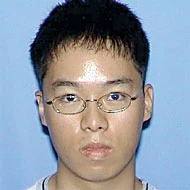
WASHINGTON, 18 April 2007 — The gunman suspected of carrying out the Virginia Tech massacre that left 33 people dead was identified yesterday as an English major whose creative writing was so disturbing that he was referred to the school’s counseling service.
News reports also said that he may have been taking medication for depression, that he was becoming increasingly violent and erratic, and that he left a note in his dorm in which he railed against “rich kids,” “debauchery” and “deceitful charlatans” on campus.
Cho Seung-hui, a 23-year-old senior, arrived in the United States as a boy from South Korea in 1992 and was raised in suburban Washington, D.C., officials said. He was living on campus in a different dorm from the one where yesterday’s bloodbath began.
The Saudi Arabian Embassy said all Saudi students enrolled at Virginia Tech are safe.
Police and university officials offered no clues as to what exactly set Cho off on the deadliest shooting rampage in modern US history.
Professor Carolyn Rude, chairwoman of the university’s English department, said she did not personally know the gunman. But she said she spoke with Lucinda Roy, the department’s director of creative writing, who had Cho in one of her classes and described him as “troubled.”
One law enforcement official said Cho’s backpack contained a receipt for a March purchase of a Glock 9mm pistol. As a permanent legal resident of the United States, Cho was eligible to buy a handgun unless he had been convicted of any felony criminal charges, a federal immigration official said.
The most powerful US gun lobby offered condolences for the massacre but would not comment further until more facts were known about the shooting.
“The National Rifle Association joins the entire country in expressing our deepest condolences to the families of Virginia Tech University and everyone else affected by this horrible tragedy,” the NRA said in a brief statement on its website.
The shooting is likely to renew the debate over gun control and gun rights that has surfaced regularly over many decades. Some foreign commentators were already blaming the lack of gun control laws for the deaths.
Investigators stopped short of saying Cho carried out both attacks. But ballistics tests show one gun was used in both cases, police said. Col. Steve Flaherty, superintendent of the Virginia police, said it was reasonable to assume that Cho was the shooter in both attacks but that the link was not yet definitive.
“There’s no evidence of any accomplice at either event, but we’re exploring the possibility,” he said.
“The latest information we have is that there are no Saudi students among the casualties. The Saudi Cultural Mission has been in contact with all the students to confirm that all the Saudis are well, and to provide assistance to any Saudi student who may need it,” said Nail Al-Jubeir, spokesman for the Saudi Embassy.
“The Saudi cultural attaché, Mazyed Almazyed, is currently heading to Virginia Tech to personally check on the wellbeing of the students,” said Al-Jubeir. “There are 45 Saudis students at Virginia Tech,” said Al-Jubeir.
Arab News spoke to two Saudi students at Virginia Tech, confirming that they were all safe, but they said they had lost lives “within the community.”
“I was at home, in the north part of Blacksburg. I knew about it from the TV and the Internet. The first thing I did was to contact my fellow Saudis here where I live. Some of them go to the university, and some to the language institute, which is part of Virginia Tech, but based outside the campus,” Abdulsalam Al-Sulaimani said, adding: “I’m from Jeddah, and in my 5th year of studies, I’m preparing to leave in June, when I get my Ph.D. in sociology.”
“We all called each other to make sure everyone was safe,” said Al-Sulaimani.
It was while he was watching the news that he discovered there was a Palestinian student, Jamal Al-Barghouti, who had filmed some of the incidents on his cell phone camera.
“He is part of our community, but he lived his life in Saudi Arabia,” said Al-Sulaimani. “We have a sad story. One of the victims is a Lebanese girl, Reema Samah, who was killed in the attack.”
Just one day before the attack, the university arranged International Day, which is a tradition of Virginia Tech, and Reema took part in a Lebanese folklore dance called “debka.”
Hussam Al-Mulhim, from Al-Ahsa, came to Virginia Tech in August 2006, where he is studying for a Master’s degree in Information Systems.
He said that when the attacks occurred he was at his home, off campus in Blacksburg. “I learned about the attack from many phone calls I received, and then I switched on the TV.
“All the Saudi students are safe, but there is an Egyptian brother that we lost, Walid Shaalan. We’re not sure what happened to him, but he’s still missing,” said Al-Mulhim.
“He was in one of the classes where shooting took place, and now we don’t have any news about him. He was part of our community.”
In a gesture expressing the nation’s sorrow, President Bush ordered flags flown at half-mast yesterday in honor of those killed. “Our nation grieves with those who have lost loved ones at Virginia Tech,” Bush said in a proclamation. “We lift them up in our prayers and we ask God to comfort those who are suffering.”
South Korean President Roh Moo-hyun offered his condolences, and South Korea’s Foreign Ministry said South Korea hoped that the tragedy would not “stir up racial prejudice or confrontation.”
Classes were canceled for the rest of the week. Many students were leaving town quickly, lugging pillows, sleeping bags and backpacks down the sidewalks.