JEDDAH, 3 May 2007 — The cancer awareness program organized for the public by King Faisal Specialist Hospital and Research Center in Jeddah on Tuesday drew a large crowd, reflecting the growing concern among Saudis and expatriates about cancer, one of the world’s primary killers.
Princess Aliaa bint Abdullah, chairperson of the Disabled Children’s Association’s Social Service Program, opened the event which saw leading oncologists in the Kingdom answering questions raised by the audience, mostly women. The question and answer session made the program informative and lively.
Cancer is growing in Saudi Arabia where 7,000 new cases are reported each year. The figure will reach 30,000 in 15 years, according to one expert.
In her opening address, Princess Aliaa commended the outstanding role being played by KFSHRC in enhancing cancer awareness and providing the most advanced diagnosis and treatment facilities to treat the disease. She emphasized the need for providing better care and treatment to cancer patients.
Princess Aliaa announced the launch of a charitable society named “Ayadeena Lakum” (Our Hands for You) to support patients suffering from cancer and other chronic diseases. The charity will soon open a cancer awareness center in Jeddah. “We’ll open similar centers in other parts of the country at a later stage,” the princess told Arab News.
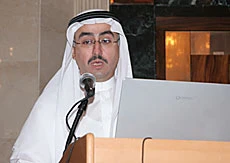
Dr. Ezzeldin M. Ibrahim, chief medical officer at KFSHRC, made a presentation on how to make use of Internet websites set up by renowned medical organizations for enhancing knowledge about cancer and taking preventive measures. Some of these sites are: www.cancer.org/docroot/home/index.asp, www.bccancer.bc.ca, and www.patient.cancerconsultants.com.
The Internet is the second most important information provider for patients and relatives, after doctors and medical personnel. “Only 13 percent of patients and their families make use of this information resource,” he said quoting a study.
In his presentation, Dr. Mouhammed Kelta, acting chairman of the Department of Oncology, said common disorders such as heart disease and most cancers arise from a complex interaction between genes and environmental factors.
“Breast cancer represents almost 20 percent of all cancers diagnosed among women in the Kingdom,” Kelta said.
Genetic mutations make some individuals more susceptible to developing certain types of cancer. Women with breast cancer susceptibility genes have an 80 percent chance of developing breast cancer by the age of 65. Women with an altered BRCA1 or BRCA2 gene are three to seven times more likely to develop breast cancer than women without alterations in those genes, he added.
Dr. Abbas Zagnoon, consultant gastroenterologist, emphasized the need to conduct more scientific studies and research on herbal medicines before using them by patients in order to avoid complications. About 60 percent of cancer patients in the Kingdom use unconventional medicine, he said. “Most herbal therapies are based on just claims without conducting any scientific study,” he added.
A panel comprising Dr. Tariq Linjawi, CEO of KFSHRC, Jeddah, Dr. Ibrahim, Dr. Kelta, Dr. Zagnoon, Dr. Dahish Ajarim of the King Faisal Specialist Hospital and Research Center in Riyadh, Dr. Yassir Bahadur of the King Abdulaziz University, Dr. Fawaz Yassin, head of pediatric oncology, Dr. Ayman Linjawi, head of surgery, and Dr. Ahmed Saadeldin of the RKH Project, Riyadh, fielded questions from the audience.
The event also witnessed the announcement of a cancer research prize (SR100,000) by Roche International.