
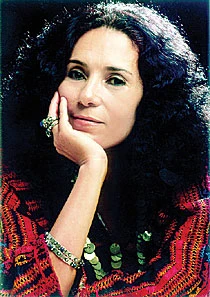
The recent launch of Azza Fahmy’s beautiful book “Enchanted Jewelry of Egypt” brings to mind, once again the incredible success story of one of the top jewelry designers in the Arab world.
In the preface, Fahmy explains why she decided to write a book: “After more than 30 years of hard work and technical experience, I want as many people as possible to share the experience of discovering the treasures of Egyptian jewelry and the beauty inherent in the unique pieces I have managed to collect over the years. I want them to understand the various skills of those who fashioned such pieces and to tell them what I have been told by the old masters of this art.”
Fahmy dedicates an entire chapter to the jewelry worn by the majority of Egyptians — that is the peasants and the ‘sha’bi class’ which include the lower middle classes of Cairo and other Egyptian cities — beginning at the end of the 19th century. Upper-class women in Egypt in the past were generally not interested in traditional Egyptian jewelry.
Their preference for European-style jewelry originated during the reign of Khedive Ismail in the 19th century. In those days, Egypt’s ruling classes were strongly influenced by European trends and products of the Industrial Revolution. As a result, they sought Armenian jewelers who were more interested in making Turkish or European-style jewelry.
The peasants and the ‘sha’bi’ classes, on the contrary, have always been attached to their heritage and the traditional jewelry they proudly wear is made by the country’s best craftsmen.
Jewelry-making is a subject Azza Fahmy knows well. Unlike most jewelry designers who merely design jewelry, Fahmy can also make jewelry: she mastered the techniques and the skills involved in their production. She was the first Egyptian woman to learn silver-smithing as an apprentice in the iconic Khan Al-Khalili.
Her rise to fame began in a little workshop she rented for half a dollar a month: “I then bought a small wooden table, a gas bottle, some tools and a torch and set to work. I began with simple designs for earrings and rings which I sold to my friends whose enthusiasm surprised me” explains Fahmy.
Her very first silver pieces inspired by Egyptian folk heritage gradually gave way to her signature style in which she reinterprets traditional motifs such as houses, dovecotes, palm trees, birds or crescents. She became famous internationally with her pendants combining silver and gold with calligraphy in which she uses quotations from great writers and poets such as Ibn Hazm, Rumi and Khalil Gibran. One of her best-known clients is Queen Rania of Jordan. For a number of years, Azza Fahmy ran a one-woman show. She bought the raw materials, designed, made and sold the jewelry. This enabled her to meet some of the most interesting people in the business such as the best Nubian jeweler in Cairo, Hagg Awad Gasser, and Hagg Muhammad Makkawi, the dean of silver merchants since the 1940s. His grandfather came to Egypt from Makkah.
In the interesting chapter about little-known Nubian jewelry, she acknowledges her debt to Hagg Awad: “He helped me discover the great differences between Nubian and peasant jewelry in both form and technique and thus contributed to my expertise.”
Nubian jewelry reflects the customs and the traditions of the Nubian people. The designs carved on the pendants echo the triangular, round or fish motives found on the woven straw or the crescents and stars decorating their homes. After the 1940s, silver Nubian jewelry gave way to gold as the younger generations of Nubian women preferred gold ornaments. Nubian designs were gradually pressed into molds; as a result, the traditional Nubian techniques used for centuries became obsolete.
Nubian jewelers were known for their extraordinary ability to hammer gold into thin sheets and decorate it with beautiful designs. In the past, Nubian jewelers traveled from village to village, carrying all their tools in a bag: “This traveling craftsman would do the work on the spot; he would sit and spread his tools on the floor and proceed to the casting by heating the metal to melting point, transforming it into an ingot then hammering it into the required shape and size,” explains Fahmy.
In the chapter on desert jewelry, the reader is introduced to the jewelry worn in Egypt’s Eastern and Western Deserts and oases. Ever since her first visit to Siwa in 1965, Fahmy has loved its magical beauty. She also states unequivocally: “In the making of jewelry, Siwa is, without doubt, the queen of all Egyptian oases.” Siwa jewelry echoes the Berber origin of the oasis and in addition, its artistic beauty is reflected in intricate and fine engravings, a technique done by hand with a chisel.
The Sinai Peninsula is known all over the world for the beauty of its turquoise. The Bedouin tribes who originally came to Egypt from the Arabian Peninsula and Palestine know where to find the turquoise mines. However, the turquoise is rarely seen on traditional Sinai jewelry. As a result of intermarriage and a flourishing trade with Palestine when the borders were open, the jewelry worn by the tribal women of the Sinai is similar to Palestinian jewelry. Enchanted Jewelry of Egypt is a delightful book to read and to look at. The text is informative and devoid of technical verbiage. The photographs are superb, and most of the jewelry pieces come from the author’s private collection. Azza Fahmy’s passion for jewelry is clear throughout the book. And she succeeds in communicating her enthusiasm to readers.