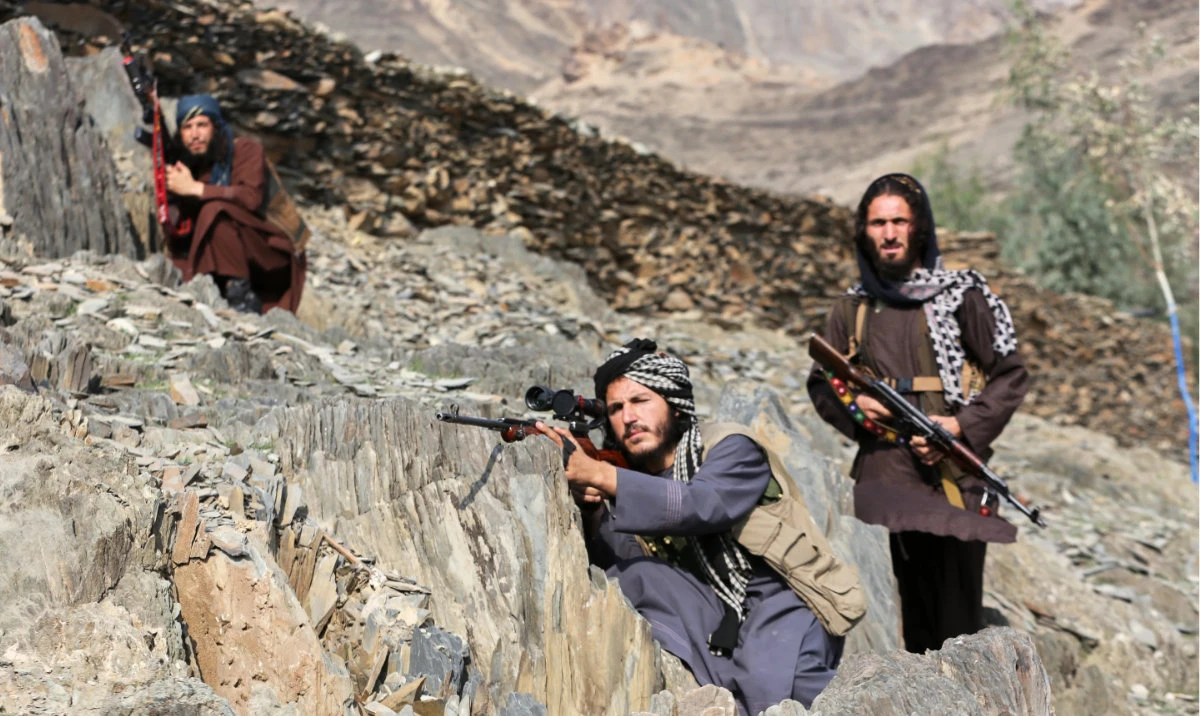
GAZA CITY, 14 June 2007 — Nine people were killed as fierce battles over key security positions spread to central Gaza early yesterday, with Hamas fighters wresting control of the coastal strip’s main north-south road from Fatah. Hamas men were now in position to cut off reinforcements to beleaguered Fatah forces.
Late last night, Hamas denied a television report that Prime Minister Ismail Haniyeh had agreed a Gaza truce with President Mahmoud Abbas of Fatah, saying the two were in preliminary talks only.
Palestine Television, a pro-Fatah station, had reported there was a deal on a truce but then changed its report to say that Haniyeh and Abbas had agreed by telephone on “the need to end the fighting and return to the language of dialogue.”
Earlier, in the southern town of Khan Younis, a one-ton bomb planted in an underground tunnel tore through the headquarters of a security force loyal to Fatah, said Ali Qaisi, a presidential guard spokesman. At least one person was killed and eight others were injured, medics said.
Security forces said they had lost control of the town. “Khan Younis is finished, but we are still holding on in Rafah,” said Ziad Sarafandi, a senior security official, referring to a town south of Khan Younis.
Before the blast, Hamas fighters called on the officers inside the building to come out or risk the building blown up, witnesses said.
At least seven other fighters died in fighting elsewhere in Gaza, and two people died of wounds sustained earlier. An unidentified young man who joined a protest against the violence in Gaza City was killed by Hamas gunmen who opened fire, witnesses said. The bloodletting kept Gazans cowering in their homes and forced the UN agency that distributes relief aid in the strip to scale back its operations.
An announcer on a Hamas radio station said the offensive would proceed to the presidential compound and the national security headquarters in Gaza City.
Meanwhile, former Prime Minister Ehud Barak won the leadership of Israel’s Labor Party yesterday, putting him in an influential position to decide the fate of Prime Minister Ehud Olmert and his coalition government.
The 65-year-old former army chief will replace outgoing Labor leader Amir Peretz, the defense minister.
— With input from agencies