BEIRUT, 14 June 2007 — Prominent anti-Syrian MP Walid Ido, his eldest son and two bodyguards were killed along with two other people in a seafront blast in Beirut yesterday, his party’s television station said. Ido, the Sunni Muslim chairman of Parliament’s defense committee, was a member of the Future Movement of Saad Hariri, whose father and former Premier Rafik was assassinated in a similar blast two years ago.
The killing was promptly condemned by the White House, which strongly backs the government of Prime Fouad Siniora, a Hariri ally. “The United States deplores this latest attack in Beirut that led to the death of a respected member of Parliament, Walid Ido and his son,” National Security spokesman Gordon Johndroe said in a statement.
The blast came as the Lebanese Army continued to besiege extremist Fatah Al-Islam militants holed up inside a northern refugee camp, who have repeatedly threatened to attack targets elsewhere in the country.
Pieces of flesh and splashes of blood stained the ground as relief workers rushed to transport the wounded to hospital and to treat passers-by for shock, an AFP correspondent on the scene said.
Troops cordoned off the area where there are a number of popular cafes and beaches, including the military beach club. Ido is the third member of the Hariri-led parliamentary majority to be killed in a car bombing in the past two years.
His killing was the latest in a spate of deadly bomb and grenade attacks in and around the capital that members of the ruling coalition have blamed on neighboring Syria. Meanwhile, two Lebanese soldiers, one officer, were killed by sniper fire from inside Nahr Al-Bared, the site of the deadliest fighting in decades that has ignited fears about wider civil strife in the deeply divided country.
The deaths in Beirut and of the two soldiers brought to 136 the number of people killed, including 63 soldiers and 50 militants of Al-Qaeda-inspired Fatah Al-Islam since fighting broke out in the camp and nearby Tripoli on May 20.
They came a day after intense fighting during which the army said it had progressed along the seafront at the northern side of the camp, approaching positions where the extremists are entrenched.
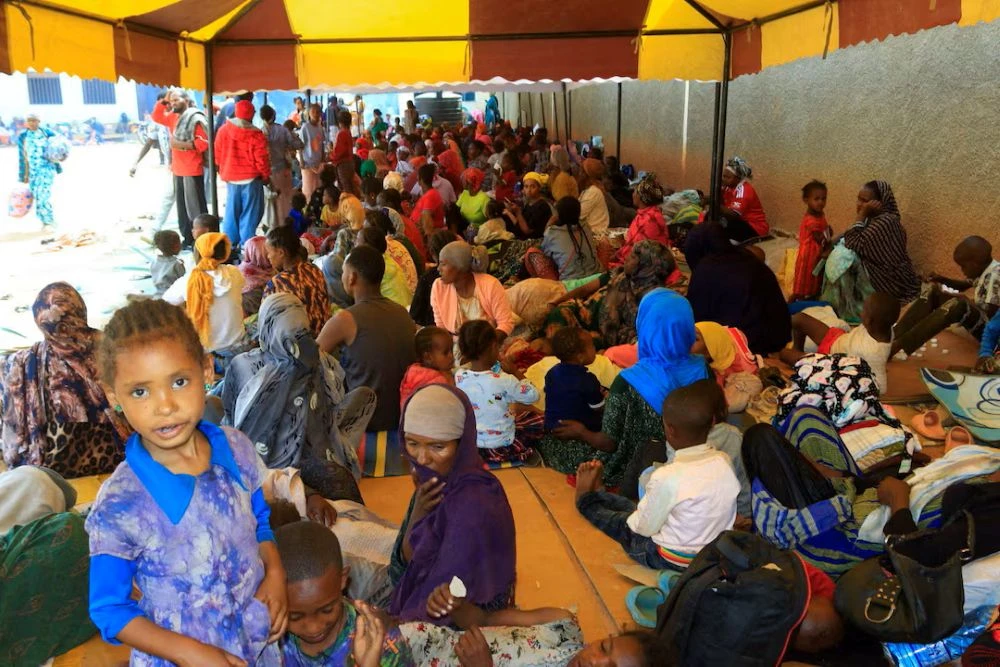
On Tuesday, the army arrested four Fatah Al-Islam fighters, and about 200 refugees escaped from the camp during lulls in fighting. “Our teams, along with those of the Lebanese Red Cross and the Palestinian Red Crescent, are waiting like every day at the southern entrance of the camp to evacuate civilians,” a spokeswoman for the International Committee for the Red Cross (ICRC) told AFP.
Before Tuesday’s escape, about 3,000 civilians were thought to remain stranded in increasingly desperate conditions inside the camp, one of 12 that are home to more than half of the estimated 400,000 Palestinian refugees in Lebanon. US-based Human Rights Watch has accused the Lebanese authorities of physically abusing civilians fleeing Nahr Al-Bared through illegal detentions and ill-treatment while interrogating them about Fatah Al-Islam. An army spokesman declined to comment on the allegation.
As the siege continued, the UN Security Council voiced deep concern at continuing reports of arms smuggling across the border from Syria, amid fears of escalating strife in a country battling deep sectarian and political divisions. UN Middle East envoy Terje Roed-Larsen drew an “alarming and deeply disturbing picture” of the situation, citing Lebanese Army reports of “a steady flow of weapons and armed elements across the border from Syria.” A senior Syrian Foreign Ministry official was quoted by the official SANA news agency as calling Roed-Larsen’s claims “false.”
Members of Lebanon’s ruling majority have pointed the finger at Syria over the fighting, which briefly spread to the refugee camp of Ein El-Hilweh in southern Lebanon, and a series of bombings in and around the capital.