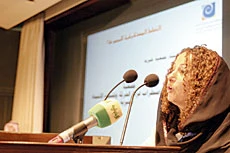
RIYADH, 20 June 2007 — In an attempt to help decrease the percentage of children suffering from Attention-Deficit/Hyperactivity Disorder (ADHD), the ADHD Group at King Faisal Specialist Hospital & Research Center (KFSHRC) held a meeting to spread awareness regarding the issue.
In the event the group urged cooperation and help from the Ministries of Education and Health.
The event was held at KFSHRC here on Monday.
Dr. Suad Al-Yamani, consultant in pediatric neurology and director of the ADHD Group at the KFSHRC in Riyadh, said she treats around 200 children with this disorder.
“We can assume that ten percent of the 55 percent of the Saudi population that’s under the age of 15 is suffering from this disorder here so that makes up a huge number and urges for a serious action from us,” she said.
Researchers here think that ADHD may be more prevalent in Saudi society due to the prevalence of consanguineous marriages (marrying cousins), which increases the chance of recessive genes appearing in offspring.
Speaking about the future of these children, Yamani said if these kids do not get the right treatment, 60 to 80 percent of them continue to suffer into adulthood.
This hinders the children’s concentration and comprehension in school, and is opt to force them to stop studying or quitting school. With grown ups the hyperactivity lessens.
“But they may divorce their wives in a moment of anger without realizing what they did,” she said. “They could say things they regret.”
Yamani described three types of ADHD: when a child had attention deficiency but not the impulsive and hyperactive behavior; when the hyperactivity and impulsiveness is apparent but not the attention deficit; and when all characteristics are apparent.
The ADHD group printed posters to raise awareness of the problem that were distributed in schools, but Yamani says she would like to see more cooperation from the Education Ministry.
When the door was open for discussion Umm Yasin rose in anger to complain about the medication that have been given to her son.
“My son has been to many doctors and no one has helped. He now tells me he hates them and the pills keeps him awake,” she said.
Umm Yasin says her 15-year-old son is suffering in school.
“Because of his hyperactivity his teacher forces him to go up and down stairs to expend some of his energy,” she said.
One teacher at the event who didn’t want to be named in this report said parents often react defensively when it is suggested their child is suffering from the disorder.
“Whenever we face a parent, they never admit their child’s disorder but rather blame us for problems,” said the teacher.