DHAHRAN, 27 July 2007 — Saudi Arabia’s King Abdullah University of Science and Technology (KAUST) and the Indian Institute of Technology, Bombay (IIT Bombay), recently signed a Memorandum of Understanding (MOU) to work together to foster world-class programs that will advance scientific research, graduate education and technological development in fundamental and applied chemical sciences.
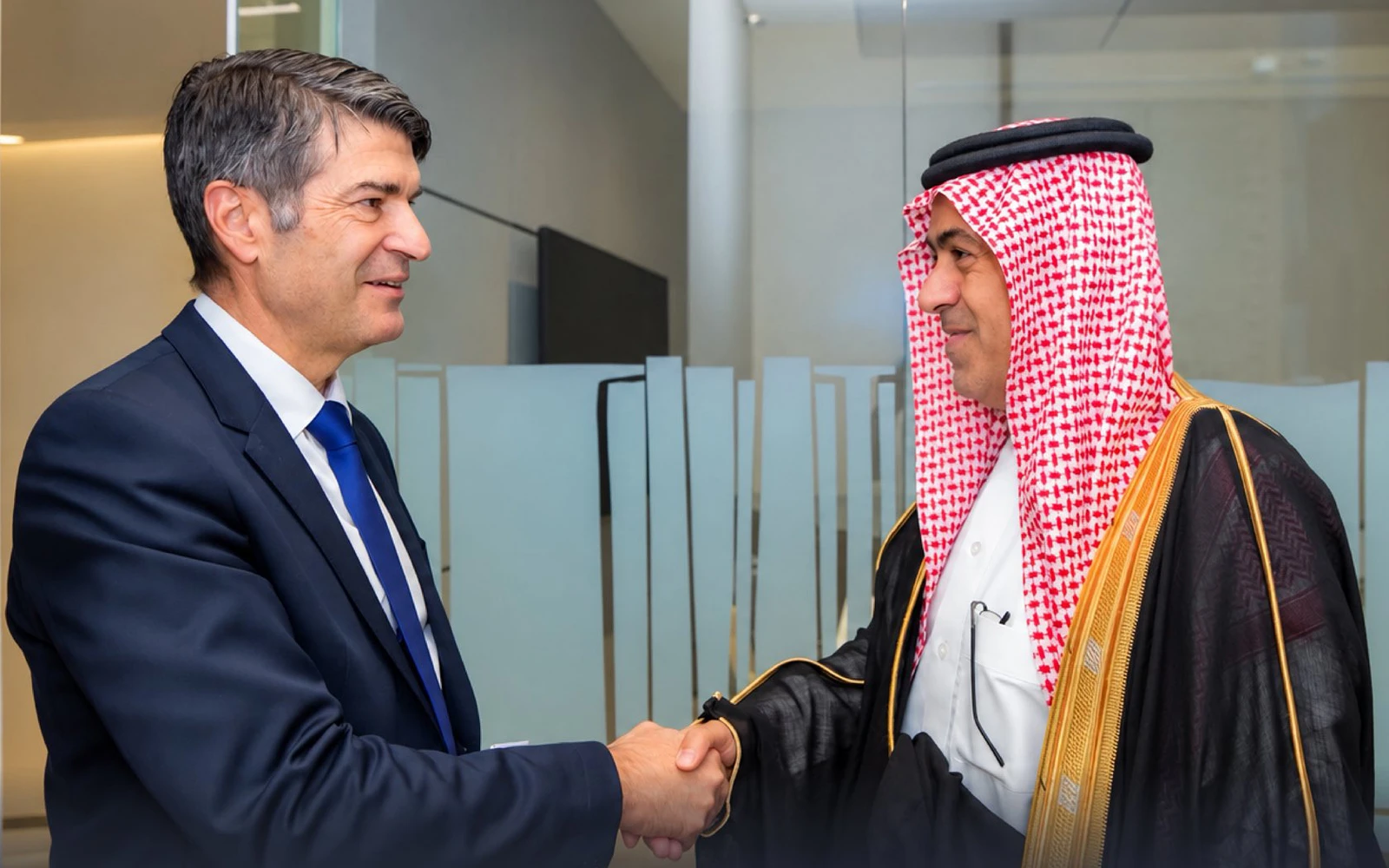
Nadhmi A. Al-Nasr, interim president of KAUST, and Professor Ashok Misra, director of IIT Bombay, signed the nonbinding pledge to establish a solid base of research that will be internationally competitive across a broad range of disciplines and in many multidisciplinary areas.
“We are gratified by this new relationship with IIT Bombay as a further extension of our collaborative arrangements with other world-class research institutions,” said Al-Nasr, referring to recent agreements to promote research partnerships with the US-based Woods Hole Oceanographic Institution, Institut Français du Petrole in France and the National University of Singapore.
“We believe the results of these shared activities will benefit both parties — and indeed, all of mankind — by bringing us together to work on scientific and technological projects that are of interest to us all. Likewise, we are counting on this type of collaborative exchange of ideas, faculty and students, and formal research activities with KAUST,” Misra said.
KAUST and IIT Bombay agreed to establish research projects or programs planned and executed by either organization individually or by both collectively.
The principal areas of research and collaboration to be developed and supported include chemical and energy sciences and engineering, materials sciences and engineering, research in biosciences and the environment, and applied mathematics and computational sciences.
Designated representatives of both KAUST and IIT Bombay will meet at least once a year, alternating the site between the two organizations to review the progress of research then under way and other cooperative matters.
Both parties also agreed that new projects may be proposed by investigators and researchers at either institution.
Additionally, the MOU also calls for KAUST and IIT Bombay to make reasonable efforts to make research results publicly known to the scientific community and to make definitive agreements on matters concerning intellectual property rights and other commercial or legal aspects of cooperative programs.
Both parties agreed to safeguard confidential information acquired in the course of activities under the MOU or any collaborative project or program without the prior written consent of the other party.
The MOU, effective at its signing earlier this month, will remain in force for a period of five years, after which it will automatically renew for successive periods of five years unless either party to the agreement notifies the other not to extend the relationship.