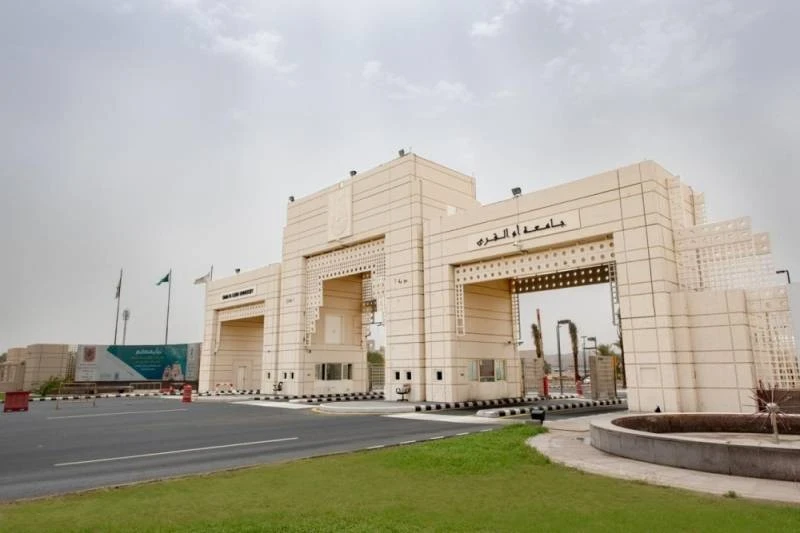
JEDDAH, 5 August 2007 — No one in the neighborhood seemed to know the exact location of the Jeddah Public Library. Arab News roamed around for 45 minutes to find the pale yellow-and-white building with its broken windows that surely did not look like a house of knowledge. At last we managed to get to the main gate of the library, but that proved of no avail as our entry was still blocked. The guard told us it was closed and the entrance to the library is from the gate at the back. Not a single sign led us to the mysterious back entrance that was almost hidden by overgrown bushes and trees.
Finally a rusty lonely sign welcomed us: “Jeddah Public Library”. There was no sign of life in that deserted area behind the old Saudi TV and radio building, except for three cars parked in front of the back entrance.
On entering the building, an empty dusty desk welcomed the knowledge-seekers in a dark corridor. A huge children’s picture blocked the stairs. A printed-paper sign attached to the wall indicated that the staircase led to the theater. Silence pervaded the place.
Two doors at the end of the corridor — one at the left and the other at the right — was the only possible way to go. The door on the left had a sign that said “Children’s Books” while on our right no signs were seen at all. But there was light coming out from under the right door. Instinct told us to follow the light for that might lead to some books at the end of the tunnel.
The door opens to a huge room where two men were sitting at their desks at the corner of the hall.
“Where are the books?”
“Here follow me,” said one of the men.
He led us to another bigger hall centered by a big counter, one computer, a big signing-in record book, a broken copying machine and shelves with some books and magazines.
“Yes, but where are the books?”
The man pointed his finger up and said they were in the second and third floors. We looked up and finally we saw the books.
Walking the stairs to the first floor we saw all the encyclopedia and thick reference books. On the third floor were all the arts, history and geography and science books. The air conditioning was not working on both floors, which were covered with dust and dirt.
The books were scattered all over the place: on the desks, the deserted counters, on the floor, on the trolleys, on the corridors and halls, in boxes.
The heat and the amount of dust that covered the whole place made it impossible to stay inside for very long. The only air movement in the large hall came from a tiny fan at one end. When asked when or if the library would ever be turned into, well, a library people would use, the response from librarian Ibrahim Al-Khuraif was: “Inshallah, things will be better...Talk to the administration in Riyadh. We don’t talk to the press.”
Al-Khuraif was helpful enough to guide Arab News to the Saudi literature section. We told him we wanted to see the modern literature section.
“All Saudi literature is modern,” he said, smiling.
Reaching the section, we could not find a single contemporary novel, poetry collection or collection of short stories. The collection seemed mainly to comprise obscure works of social criticism published in the 70s and the 80s.
Arab News asked Al-Khuraif to provide a book on domestic violence. He left for a few minutes and returned with some small paperbacks that looked, telling from their covers, to have been published in the 70s.
“That’s what we have on women,” he said.
One of the books read like a primitive user’s manual on how to deal with women.
“Women use their feminine wiles in all ways to seduce men,” the book said, adding that women are guided by only two emotions: One for men and one for children.
Deputy Minister of Culture and Information Abdul Aziz Al-Sebail said the Jeddah library, as well as others, are on the to-do list for renovation. Two years ago the public library system was moved to the administration of the Ministry of Culture and Information. Before that the Ministry of Education handled the library system.
He said there are so many things that have to be kept in mind concerning the Jeddah library.
“The strength of librarians there has to be boosted and the budget increased,” he said. “All these require time.”
When we asked him about the poor state of hygiene in the library — we found only one part-time worker to take care of the cleaning of the whole building — he said: “We hired a private establishment to take care of the cleaning and the maintenance but the Labor Ministry sometimes slows down their work by delaying recruitment of manpower.”
Arab News managed to get into the seminar and theater hall whose entrance was blocked with a huge wooden poster. It was no better than the rest of the building; the hall was covered with dust, the equipment at the backstage were facing the broken windows.
“There will be a quick renovation process to the theater in the next few weeks, that will be the first step,” said the deputy minister.
“The theater will be used for all sorts of cultural activities.”
After visiting the library on three different days and at different times last week, we did not notice any change. We saw the same books on the same desks, carelessly scattered. In the bathroom a pigeon was resting on a nest that had been built on the toilet.