CASABLANCA, 4 April 2008 — Though she is the Minister of Sports and Youth in Morocco, Nawal El-Moutawakel, continues to live a simple life surrounded with the athletes from all ages and enjoys being among the spectators at sporting events. For she lives her philosophy of being close to all, and this is what gains her the love and respect of her nation and Arab nations as well.
El-Moutawakel, born in April 15, 1962, rocketed to fame at the 1984 Los Angeles Olympics with 54.61 seconds burst in the 400-meter hurdles to become the first Muslim, Arab and African woman to win a gold medal. Her victory caught everybody’s imagination, including the Western media, who thought she came from Monaco. But she soon set them right to set off the media’s focus on Morocco and its golden athletes.
After finishing school in Casablanca, she flew to the States to continue her studies at the Iowa State University. In 1995 she was a member of the International Amateur Athletic Federation (IAAF), and in 1998 she became a member of the International Olympic Committee (IOC). She was then named the Secretary of State for Sport and Youth since 1997, and in 2007 she became the Minister of Sports and Youth.
Since her appointment as minister she has held several workshops for sports including a national debate to study the youth concerns regarding sports in the country. She also held workshops on doping, sports professionalism awareness, and enhancement of sports in all the Moroccan cities.
Though she is not an active athlete now, El-Moutawakel believes athletes are like soldiers who train day and night, and lead a disciplined life. “That is why it is better that our youth take up sports.”
She tells athletes to practice hard and try out different sports because she believes it develops a person’s all-round abilities. She says sports can be called the dictionary in the school of life, a medicine that cures many things and also enable one to become the best ambassador of his country.
El-Moutawakel, a mother of two, is as humble as they come. And this was evident as she took time out of her busy schedule to give some time to Arab News.
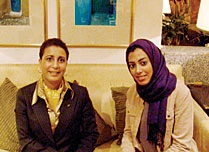
Forced to postpone the scheduled interview following a last-minute ministerial obligation, El-Moutawakel called this reporter personally on Friday, March 28, at 6:30 p.m. to set up an unscheduled interview. She said that she the meeting would take place in 10 minutes at the hotel. And in 10 minutes she was there with her gentle smile and ready to get off the blocks.
El-Moutawakel, a sophisticated personality fluent in Arabic, French and English, proved that she still is the darling of the crowd when people repeatedly broke in while being interviewed. The charming lady did not break a stride as she continued to greet the people, introduce the reporter as a Saudi newspaper representative while expressing her delight at Saudi women entering sports even if it is through journalism.
Excerpts of the interview:
Q: What do athletes need to do in order to reach Olympic levels?
A: My road was set. I was born in a family where my mother played volleyball, father judo and four brothers who were athletes. It is always parental care and support that allow children to indulge in their favorite sports and carry on no matter what. Concentrating on our youth is important because it is through them the strength of countries is measured. Through sports they learn many noble principles, loyalty to nation. With maturity and knowledge, of course, they will become more open to learn and to benefit from one another and to become the national assets capable of competing in any event with honor, and persistent in achieving high goals.
Q: Do you believe the principles are close to our Arabic and Islamic culture?
A: Of course we want to build a strong generation mentally and physically. Sports principles such as patience, dedication, and discipline...etc are in our Islamic culture and that is why our Prophet Muhammad (pbuh) advised us to teach our children archery, swimming and equestrian without specification to a gender due to its importance. Now, athletes in the Arab world have a presence in international levels. Arab athletes are no longer there to watch or participate. They are there with a goal of aiming for the best and nothing less. This makes their future very promising.
Q: How important is it for officials in clubs and federations to communicate with the players?
A: It is important. Athletes always need their officials’ support, care, and advice. Sports can have a downside too, especially when athletes turn professional and money starts to flow. This could easily make the athlete go off track. It is here the roles of the parents, instructor, coach, physicians, president of the clubs and federations, and journalists close to the athlete come in to assist and advice.
Q: Is that why you like to sit among the spectators and mix with the athletes?
A: Exactly, if we continue to put gap between us, athletes will not listen or cooperate. This is my philosophy. It is based on being in the field and supporting them in their most important moments instead of watching from a distance.
Q: What are the athlete’s obligations toward their country?
A: Each athlete has obligations toward his country. When he reaches the top, he did not arrive there alone. There were people supporting him or her. They have to think of ways in which they could be useful to their community and nation. There are people and fans that cherish seeing him or her on TV, but it should not stop at that point. They need to get closer, mingle and be useful via running projects to develop youth skills in any possible way.
Q: You views on professional athletes abroad?
A: Now most look at sports from the financial point of view especially that making a living has become harder, so they tend to travel and stay there. It’s beneficial and it is their right. But it is discourteous to go by leaving everything behind. They need to share their experience and knowledge with those who stood by them since their childhood and their country. They need to contribute for their nation’s new generations.
Q: What about retired athletes?
A: I try to get retired athletes, man or woman, to share their experience and ensure they are still in need during our workshops and sporting events. They have huge experiences to share and other should benefit from their knowledge.
Q: How could we shift the interest and support from football to other sports?
A: It depends on each country’s priorities. For example in Eastern Europe you get to see boxing treated in a more traditional way, while here athletics is most popular. We have 28 disciplines in the Olympics and around 44 in the Asian Games, and what matters in the end is that we encourage our youth to get into sports and choose the one most suitable for them.
Q: Your view on Saudi sports?
A: I’ve been following Saudi sports since the late Prince Faisal ibn Fahd gave it a major lift – this was when I won in the gold. He held a reception at his house for Said Aouita and me and said, “Though these (Olympic golds) are Moroccan medals, we also have a share in it as Arabs.” I was overwhelmed to receive his appreciation and unlimited support ever since. Now I am pleased to see his brother Prince Sultan ibn Fahd, president of the Saudi Youth Welfare, and his deputy Prince Nawwaf ibn Faisal following his footsteps and boosting Saudi sports. I’ll always remember the invitation I received from Prince Sultan to attend a football match when the Prince Fahd Stadium was inaugurated, it was such an honor. Thanks to Prince Nawwaf ibn Mohammed too who has been very generous and helped Saudi athletics enter the world stage. All this makes us as Arab very proud.
Q: What about Saudi women in specific?
A: Well since 2005 we were hoping our percentage in IOC decision-making bodies would exceed 20 percent, but it did not. Many countries still do not have enough women participation in sports and Saudi Arabia is among them. Of course it will take time and we wish to see them compete in the near future. Having influential sport personalities such as Othman Al-Saad, general-secretary at the Arab Sports Confederation and a man of unique intelligence, is beneficial. His knowledge will ensure the presence of women athletes in Arab countries.
Q: You said the 4th IOC International World Conference on Women and Sport held in Jordan in March was a success. What was so special about it?
A: First of all it is an international event organized by Arabs. Jordan’s King Abdallah and IOC President Jacques Rogge attended. There were 600 delegates from different countries, religion and languages gathered under the theme of sports and women. Recommendations to support women and increase their participation in all sports organizations were those among the recommendations that were tabled and accepted.
Q: Finally, what is the motto you live by?
A: Each one teaches one, and each one, reaches one. Sports is a school, and for me my 400 meters hurdles success was the biggest lesson I took from that school. We don’t jump haphazardly; we have to do it the right way, at the right time, and at the right age to achieve success. Wanting to be No. 1 has to burn in one’s heart. This is what I try to teach the athletes here.