
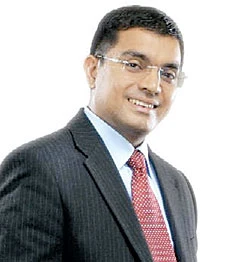
CIMB Group is one of Malaysia’s major banks. The group has a major Islamic finance mandate and its CIMB Islamic Bank franchise is one of the most proactive Islamic banks in the country, the region and globally. CIMB, for instance, has led the market in Islamic retail, asset management and capital markets products and services. It is still the number one entity in the global Sukuk lead arranger table ahead of HSBC and Citigroup. Badlisyah Abdul Ghani, CEO of CIMB Islamic Bank and a major figure in Malaysian banking is the youngest CEO at 34 years old in the sector. He discusses with Mushtak Parker the bank’s Islamic banking strategy, especially developments in the retail sector and the how Malaysian Islamic banks have managed to mitigate the impact of the global financial crisis. Excerpts:
How is the Malaysian Islamic finance sector coping with the contagion effect of the global financial crisis and the credit crunch?
There has been a definite knock-in effect on the general economy of Malaysia. There has been a contraction in the economy and at the end of the day we see Malaysia going into a technical recession. The government economic stimulus package was introduced earlier this year to pre-empt this. When there is a slowdown in economic activities, then there is a slowdown in banking activities as well. There has been a slowdown in our business at CIMB Islamic Bank and there is general concern on non-performing financing (NPFs). However in the last few months the NPF’s have been fairly stable and in fact have been improving. It is business as usual and there is growth in the market, but instead of double digit figures we are expecting about 8 percent growth industry-wide in Malaysia. There is ample liquidity in the market. Bank Negara Malaysia, the central bank, has injected RM250 million in the market and this liquidity needs to find assets.
Where will this growth come from in terms of assets and market segments? Do you have any problems with banks not financing customers like in London and the EU?
No we do not have this problem in Malaysia. We have never stopped lending, even at the height of the financial crisis in the US and EU. But we remain cautious because when we finance, we only do so with good credits. People who come to us for financing must come to us with their eyes wide open and complete with business plans, projections and assessments of the businesses going forward. There is growth in all segments albeit it is somewhat slower than before. The small and medium enterprises (SMEs) will be most impacted because they are subject to export market conditions. Government incentives in the form of guarantees and lower cost of financing to SMEs should help to mitigate some of these effects.
What are the core segments of CIMB Islamic Bank’s business activities? Do you have a high SME portfolio?
The bulk of our business at CIMB Islamic Bank is retail. More than 35 percent of assets is retail; another 35 percent is corporate; SMEs account for about 20 percent and the remainder mainly Treasury assets. This is a good mix.
The Islamic retail banking market is well-established and diversified in Malaysia. Where is the value added, the innovation and product development coming from if you maintain the competitive edge? Or is it merely a consolidation of existing products such as Islamic mortgages, credit card business, car financing?
The Islamic finance share of the total banking market is about 17 percent in Malaysia. But in terms of retail banking, it is not as big in terms of market share. It is about 14 percent which is not too bad. Malaysia has traditionally led in introducing Islamic products especially structured products in the market. At CIMB, for instance, we do not do conventional structured products anymore unless there is a demand from a business perspective. In general, all our structured products within the group are Shariah-compliant. In terms of the deposit products, it is the Islamic space that introduced various new things such as “Deposit with Upfront Payment,” which is essentially done under the principle of Murabaha, which utilizes commodities to facilitate the deposit taking activities. This was the first time that a commodity Murabaha structure was used for a retail time deposit product. Later on the conventional banks followed this product. Then we also have the paperless deposit products, which has no physical paying in books or statements. Everything is Internet based.
Are Islamic banks in Malaysia holding their own in terms of price and other competitiveness?
Like in any other sector, customers have to shop around for the best products and deals.
In terms of your Islamic mortgages, do you still concentrate on Al-Bai Bitahman Ajil (ABBA) contracts? What about other contracts such as Diminishing Musharaka?
We still have the ABBA mortgages, but we hope to soon introduce Istisna-based mortgages for new housing developments. We have decided not to introduce Musharaka-based mortgages because it does not give us the kind of credit risk which is acceptable to us. This is purely from a credit risk point of view and nothing to do with the efficacy of the Musharaka contract. I do not have enough security under this arrangement.
What are the payment default histories and the rate of repossessions in the Islamic mortgage market in Malaysia?
I cannot give you a specific figure, but it is the same in general as in the conventional market. Yes we have had some repossessions but in general we at CIMB Islamic try our best to restructure the mortgage facility to pre-empt foreclosure. In this very difficult time when some people have lost their jobs, we have agreed a moratorium on repayments for one year. At the end of the day, banks are responsible to shareholders and depositors. This responsibility overrides all other responsibility. Having said that, there is always a balance. If a bank goes after a customer at all costs as soon as the customer is down on his luck or the business is not doing well, then that might not be in the long-term interest of the Bank. Balancing the ethos of shareholder and deposit value with the ethical principles of Islamic banking can be easier done in markets that are well-regulated.