
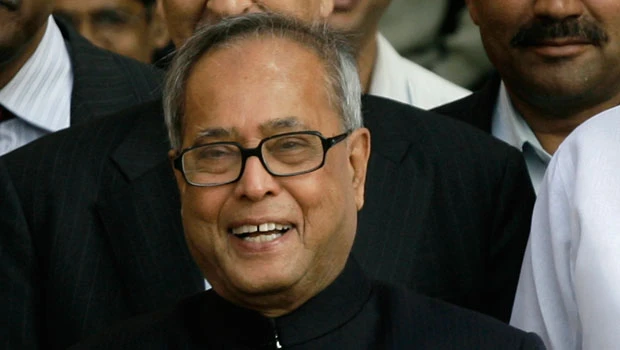
- NEW DELHI: India's government said on Friday it would increase borrowing next year to a new record level, putting pressure on the central bank to be more aggressive in its monetary tightening this year.
Finance Minister Pranab Mukherjee told Parliament the government plans to increase market borrowing by 1.3 percent in his $239 billion budget, pushing bond prices lower as investors feared a flood of fresh debt supply.
Analysts said the borrowing plan cements the likelihood that the central bank will raise interest rates at its next meeting on April 20 as policymakers scramble to keep surging food inflation from spreading to the wider economy and fueling social unrest.
Mukherjee announced plans to hike spending on social and agricultural programs popular among voters, but moved only tentatively to cut a fiscal deficit that is worrying investors.
Some market watchers said India had missed a chance to take more aggressive fiscal measures as Asia's third-largest economy gathers speed, reinforcing perceptions that the coalition government may not have the heart to make tough decisions about liberalizing the economy.
"Given that the fiscal stimulus withdrawal was not strong, the Reserve Bank of India (RBI) may have to be more aggressive in its policy tightening," said Robert Prior-Wandesforde, HSBC senior Asian economist in Singapore.
The budget focused on keeping the economic recovery robust, but there was little mention of reforms, such as freeing state fuel and food subsidies, that investors say could help India rival China's years of double-digit growth rates.
Some heavy economic stimulus spending brought in last year was trimmed, but not chopped.
"The first challenge before us is to quickly revert to the high GDP growth path of 9 percent," Mukherjee told Parliament.
The 74-year-old minister is known for deftly appeasing India's myriad of caste and ethnic groups rather than pushing visionary reforms. The decision to spend more on agriculture in particular is bound to please a key rural support base that helped re-elect the Congress-led government last year.
But financial markets focused on whether the government would pay more than lip service to imposing fiscal discipline and start weaning itself off aggressive deficit spending that risks pushing up companies' borrowing costs.
Gross borrowing for the new fiscal year will total Rs.4.57 trillion ($99 billion), slightly below a Reuters poll forecast for 4.61 trillion rupees but above a record 4.51 trillion rupees expected in the current year ending in March, Mukherjee said.
"With the fiscal deficit expected to be still high over the next fiscal year, it is clear that the onus will be on the RBI to hike rates in coming months in order to move policy settings closer to neutral and to deal with emerging inflation pressures," said Brian Jackson, strategist at Royal Bank of Canada.
Mukherjee said the fiscal deficit will decline to 5.5 percent of GDP in the new year, from 6.9 percent this year, slightly lower than a Reuters poll forecast of 5.6 percent. The deficit figure was slightly better than forecasts and in line with government expectations.
Total spending will rise nearly 9 percent in the next fiscal year, while revenues will rise nearly 18 percent as the economy recovers. In the previous 2009/10 budget, spending jumped 36 percent as the government tried to shield the trillion dollar economy from the global downdraft.
The lingering effects of the economic slowdown could still be seen in the latest data on Friday. India's economy grew 6 percent in the December quarter, short of a Reuters poll forecast of 6.8 percent, as farm output fell 2.8 percent.
Some analysts believe the slowdown in spending growth may help ease inflation. High food prices have helped push broader inflation to what some economists expect could hit 10 percent next month.
Opposition lawmakers boycotted much of the budget session, saying government plans to increase fuel prices would further add to the woes of millions of Indians hit by high prices.
With voters unhappy about inflation, Mukherjee is counting on surging economic growth as well as higher revenues from sales of government company stakes and 3G mobile licenses to forestall the need for even more politically unpopular spending cuts.
The Finance Ministry forecasts the economy will grow by 8.5 percent in the next fiscal year, exceeding the 8 percent forecast in a Reuters poll of economists in late January.
The yield on benchmark 10-year government bond fell as much as 6 basis points earlier on Friday on the lower-than-forecast December quarter GDP figures, but erased that move on worries over high government borrowing.
By mid-afternoon, the bonds were yielding 7.87 percent, up from 7.83 percent on Thursday.
Stocks ended 1 percent higher after Mukherjee announced several measures aimed at increasing domestic consumption.