
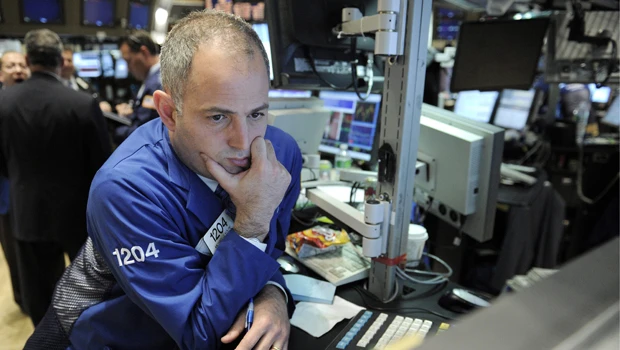
- NEW YORK: Oil prices plunged nearly 8 percent Thursday, tumbling to their lowest level in 10 months as concerns over the European economy sent traders rushing out of oil investments.
"Fear has obviously gripped the market, and we're trading accordingly," analyst and trader Stephen Schork said.
Benchmark crude for June delivery lost $5.34 at $64.53 a barrel on the contract's final trading day on the New York Mercantile Exchange. If that holds, it'll be the sharpest one-day drop since April 2009. Prices tumbled as low as $64.24 earlier in the day, the lowest price for oil since July.
Most of the trading already has moved to the July contract, which lost $3.52 at $68.96 a barrel.
In other Nymex trading in June contracts, heating oil fell 7.76 cents to $1.8676 a gallon, and gasoline lost 9.14 cents to $1.9238 a gallon. Natural gas dropped 6.9 cents to $4.089 per 1,000 cubic feet.
In London, Brent crude July contact gave up $2.84 to $70.85 a barrel on the ICE futures exchange.
Meanwhile, global stocks and the euro slid on Thursday, with US stocks down 10 percent from this year's highs, as worries mounted that Europe's debt crisis could crimp world economic growth.
Fears that other euro zone countries will follow Germany's move on Tuesday to ban short selling in some stocks and bonds propelled a widespread aversion to risk.
Germany said restoring confidence in the euro was its "top priority," while a Federal Reserve official said Europe's debt crisis poses a "potentially serious" risk to the US recovery as it threatens global credit markets and commerce.
"Investor uncertainty is leading to a flight to quality and safe havens," said Peter Dixon, economist at Commerzbank.
"Dumping stocks seems sensible with so much uncertainty on the macro environment, and all fundamental ways of looking at value are out of the window."
Markets were volatile. Traders pointed to purchases of 10-year Treasury notes by an Asian buyer and to a huge seller of e-minis, a futures contract providing holders exposure to the benchmark Standard & Poor's 500 Index.
The Chicago Board Options Exchange Volatility index, often referred to as Wall Street's fear gauge, rose as much as 28 percent to its highest intraday level since April 2009.
The Reuters-Jefferies CRB index, a global benchmark for commodities, slumped to 8-1/2 month lows.
The euro was down 0.56 percent at $1.2358.
MSCI's all-country world equity index fell 2.4 percent, while its emerging markets index was off almost 3.0 percent.
At 12:30 p.m., the Dow Jones industrial average was down 279.85 points, or 2.68 percent, at 10,164.52. The Standard & Poor's 500 Index was down 32.96 points, or 2.96 percent, at 1,082.09. The Nasdaq Composite Index was down 75.54 points, or 3.29 percent, at 2,222.83.
The S&P 500 slipped into negative territory for the year on Wednesday and fell more than 10 percent from its April high, signifying a correction.
European shares slipped for a second session, as financial stocks were hit hard.
The FTSEurofirst 300 index of top European shares finished down 2.2 percent at 974.80 points.
An apparent lack of unity among euro-zone leaders on tackling debt problems triggered US worries about additional regulation.
"You hear the cliche the markets hate uncertainty, and there is a whole hill of it over there right now," said Kevin Kruszenski, head of listed trading at KeyBanc Capital Markets in Cleveland.
Interbank dollar and euro funding costs rose, with a key dollar lending rate rising to a 10-month high, as demand for the US currency remained solid in a jittery market.
German 10-year government bond yields hit a record low and euro zone government bond futures extended gains to a fresh session high after the US labor market data suggested the still feeble recovery has hit a stumbling block.
The number of US workers filing new applications for unemployment insurance unexpectedly rose last week for the first time since early April, the Labor Department said.
The benchmark 10-year US Treasury note was up 39/32 in price to yield at 3.23 percent.
The US dollar rose against a basket of major currencies, with the Dollar Index up 0.09 percent at 86.47.
Against the yen, the dollar was down 1.99 percent at 89.81.
Oil extended early losses on the US jobless data and slide in global equity markets.
US light sweet crude oil fell $2.91 to $66.96 a barrel.
Spot gold prices fell $1.20 to $1189.50 an ounce.
Worries over the euro zone hammered Asian stocks, driving MSCI's index of Asia-Pacific shares outside of Japan down 2.4 percent to an eight-month low.
Japan's Nikkei average closed at a new three-month low despite data that showed Japan's economy grew 1.2 percent in the first quarter, outpacing its euro zone and US peers.