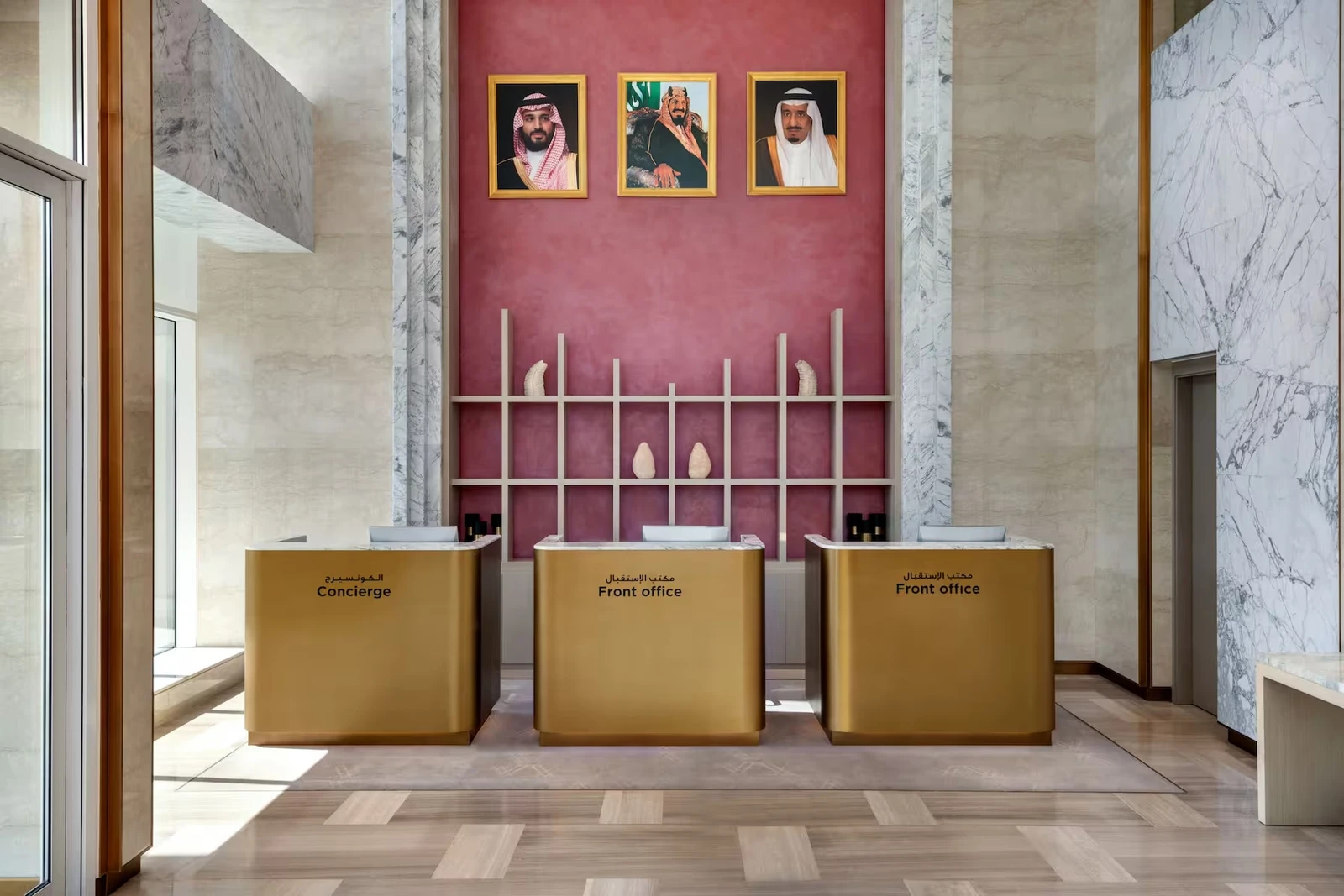
- There are two faces to Lebanon, one conveying glitz, glamour and “dolce vita,” the other struggling to preserve the country’s soul.
- Gordon Campbell Gray, the owner of Le Gray hotel in Beirut’s Solidere quarter, believes the Lebanese have a unique spirit that has come out of their history.
It is often wondered whether that determination is used in the right way. In other words, does Lebanon really benefit from it?
Do the Lebanese think that bringing all the well-known brands as well as the popular restaurants chains and outlets contribute to making a city unique?
Brands whose names are splashed all over the place on bags, clothes, magazines, posters and television have become sadly banal despite their unjustified prices. Incidentally, these five and six digit numbers (in dollars of course) explain why fakes are big business in Lebanon.
Fake clothes, shoes and bags are so well made that they even find their way to Beirut’s top exclusive stores. Although it has regained its financial strength, Lebanon can no longer be called the “Switzerland of the Middle East.” Instead, it is increasingly turning into an inferior version of Hong Kong.
Before the advent of air conditioning, most Beirut residents used to spend the summer months in the neighboring mountains. Now, a Lebanese entrepreneur is offering a meal in the sky, 50 meters above the ground for $250 per person without having to leave the capital. If you do not trust the crane or crave for more height, you can drive up to Bhamdoun and discover “little Kuwait.”
In the decades preceding the 1975-2000 civil war, Bhamdoun was a summer resort for many tourists from the Gulf countries, especially Kuwait. Weather is the main reason why Kuwaitis spend the summer in the cool mountains, where a 27 degrees temperature provides a wonderful change from the 52 degrees heat in the Emirates.
Despite prospects of unrest, Kuwaiti visitors believe that Lebanon is a safe country. At present, Kuwaitis own about 30 percent of the town. The Kuwaiti billionaire Nasser Kharafi, No. 45 on the Forbes rich list, has built the local mosque and the Sheraton Hotel.
When darkness creeps into the city, cool mists swirl along the streets, almost identical to those in Kuwait. A number of attractive women wear the latest headgear, a style originating from Qatar and imitated now by women in Kuwait and the Emirates.
A special item, similar to a huge artificial flower, is placed on top of the head and when covered by a veil, it gives the illusion of the woman having more hair than she actually has.
Bhamdoun, along with Aley and Sofar, have welcomed well-to-do Arabs from neighboring countries since the 19th century. Sofar, in particular, has some stunning late 19th century and early 20th century homes. However, most of the mountain resorts are losing their traditional architecture to make way for tall buildings.
Mona El-Hallak, a member of APSAD, an organization that strives to classify Lebanon’s old buildings as heritage sites, complained that Beirut is no longer a meeting point for people from all backgrounds.
“Now, if you don’t have money, there is nothing for you there, and you feel you are not welcome. Ten years from now, this city will not even bear resemblance to the Beirut we know” she said.
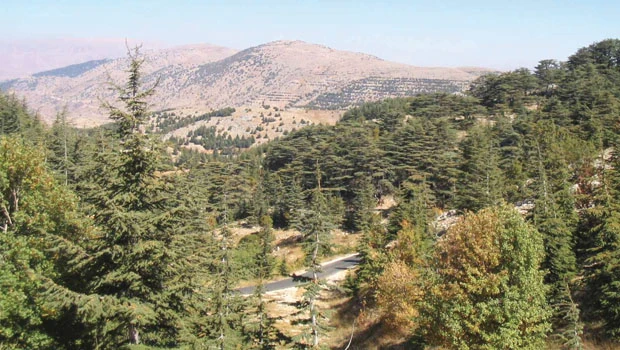
One of the few well-preserved regions in the country is the area lying from Damour right up to the Al-Shouf Cedar Nature Reserve. The largest of Lebanon’s nature reserves stretches from Dahr Al-Baidar in the north to Niha Mountain in the south. Blanketed with oak and juniper forests on its northeastern and southeastern slopes, the reserve’s most famous attractions are three magnificent cedar forests with some trees estimated to be 2,000 years old.
The reserve shelters wolves, Lebanese jungle cats as well as various species of mountain birds and plants. The wolf is a globally threatened species and it is thought that only a small number of wolves still live in the country.
Lebanon’s jungle cat is most commonly found in forests and shrubby areas near water. It is small and agile with long legs, sandy brown, reddish or grey fur and is most frequently observed during the night.
The reserve is an ideal destination for hiking and trekking on the Lebanon Mountain Trail (LMT), bird watching and mountain biking. According to Nizar Hani, manager of the reserve’s Project Development Unit, the LMT is the first long distance hiking trail in Lebanon.
Extending over 400 km from Al-Qbaiyat in the north to Marjaayoun in the south, the LMT demonstrates the determination of Lebanon’s mountain communities to conserve their unique natural and cultural heritage.
The LMT was designed to follow the footpaths used by the local resident’s ancestors. The trail reaches as high as 1,800 meters and allows travelers to visit historic sites as well as stay in family guest houses on a bed and breakfast basis for about $25 per night.
This area is known for the stunning Beiteddine Palace, the Mosque of Fakhreddine II, the Kfarhim Grotto and picturesque villages such as Deir El-Qamar, Barouk and Ain Zhalta.
Deir Al-Qamar, one of the most beautiful villages in Lebanon, has been on UNESCO’s list of World Heritage Sites since 1995. Its narrow streets overlook historic buildings and palaces. During the Ottoman era starting in 1516, the rulers of Mount Lebanon ran their affairs from the administrative centers of Bubaline, Beiteddine and Deir Al-Qamar. Prince Fakhreddine Al-Ma’ani, one of the most prominent Ottoman leaders, extended the frontiers of Mount Lebanon to its present borders.
After a severe water shortage in 1590, he moved the capital from Ba’aqline to Deir Al-Qamar. He ruled there until his death in 1635. Remnants of his heritage can still be seen in Deir Al-Qamar.
When Prince Bachir Al-Chehab II took power, he transferred the capital to Beiteddine from 1788 to 1840. Beiteddine is famous for its beautiful palace, which represents 19th-century Lebanese architecture. Its construction began in 1812 and continued until 1840. In 1934, it was designated as a historic building and placed on the list of Lebanese heritage sites.
The Fortress of Niha, another interesting historic monument, is situated in the southwest part of the reserve near the Niha village. The fortress, which overlooks the town of Jezzine, was used as a refuge for Emir Fakhreddine II who was hiding from the Ottomans. He was eventually captured and taken to Istanbul where he was put to death in 1635.
Although change is coming, life in the beautiful Shouf Mountains is still very traditional. One of the most colorful traditions is the gathering of provisions for the winter.
During my stay in Barouk, I met Ghenwa and Faten Kerbaje. Ghenwa spoke passionately about the region’s little known specialties, including “macaron bil kishk,” “kishk al-akhdar,” and “znut assitt bil smid” — a delicious sweet made with filo pastry and semolina filling, while Faten spoke about the inevitable changes affecting the Shouf Mountains.
Unlike other regions in Lebanon, the Shouf is not a battleground for real estate speculation, but according to Faten, an increasing number of families are facing financial difficulties and are tempted to sell their land.
This region, however, home to the largest reserve and some of the most beautiful historic sites in the country, has so far kept alive most of its traditions. Spending a night or more in a guesthouse is a unique opportunity to experience life in the Shouf Mountains.
— For more information on the guest houses, call Al-Shouf Cedar Reserve 00 9615502230. check [email protected] www.shoufcedar.org