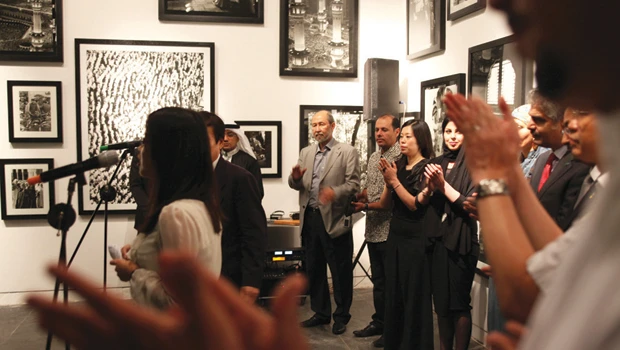
- The long-awaited exposition, “Nabatt: A Sense of Being,” presented by the Saudi Pavilion at the Shanghai Expo 2010, has proved to be a popular one.
- With over 23 Saudi artists and 130 pieces of artwork, it features contemporary art from the Kingdom of Saudi Arabia.
The exposition, which is held in association with Saudi Aramco’s King Abdul Aziz Center for World Culture and the Duluon Museum of Modern Art, was inaugurated on Sept.10 and continues until Oct. 31.
It is part of ongoing cultural activities of the Saudi Pavilion and is being held at the Duolun Museum of Modern Art in Shanghai — the first professional modern museum of contemporary art in China, which serves as a platform for the international exchange of contemporary art.
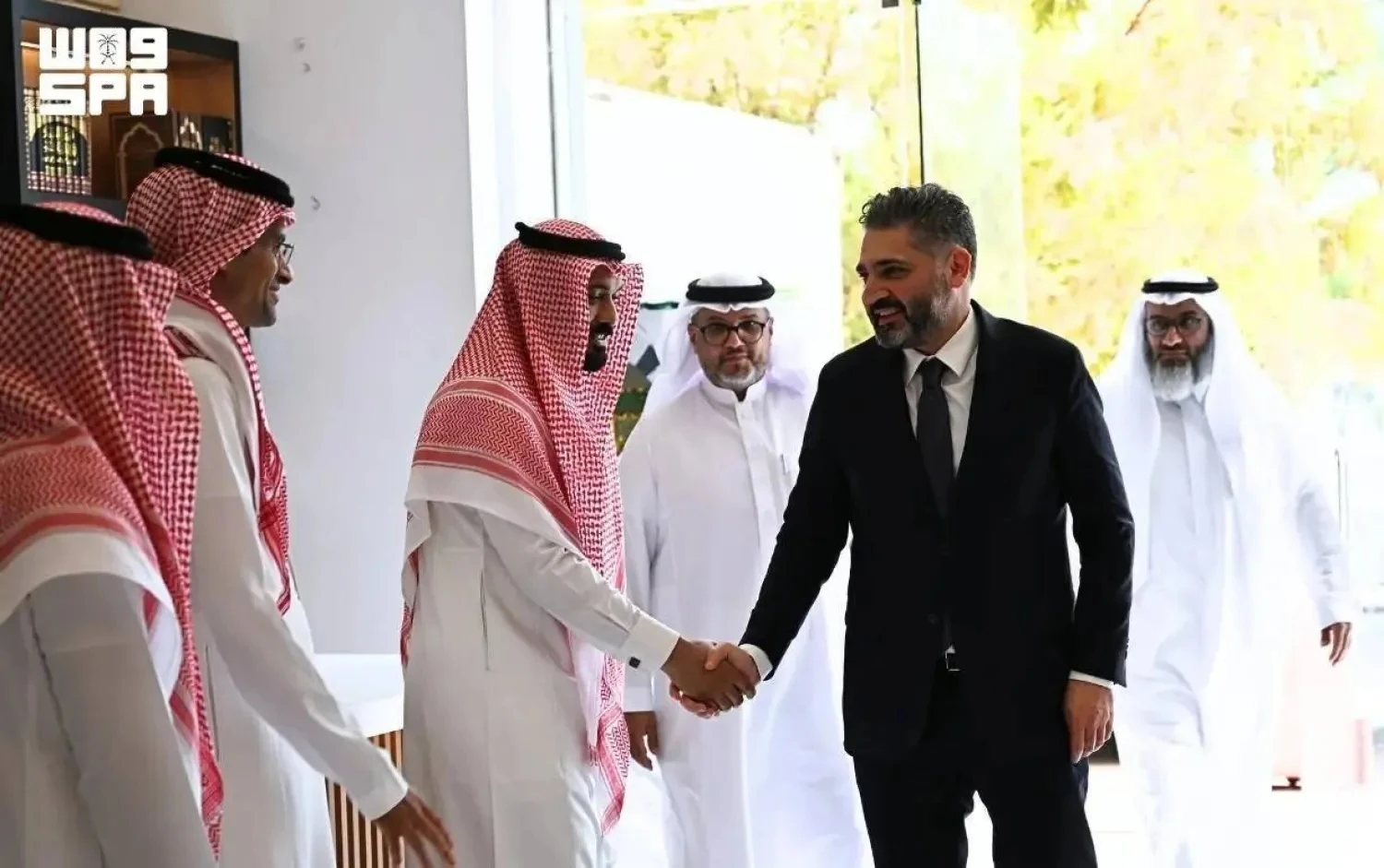
Dr. Abdulrahman Al-Shaikh, Commissioner General of the Saudi Expo 2010 at Shanghai, inaugurated the expo saying: “The expo’s theme is unique as it brings together Saudi people’s modern thinking and feelings, in addition to Saudi art and culture.”
According to Al-Shaikh, the creativity within Saudi art and culture will play an important role reaching out to Chinese and international audiences. “I truly believe that ‘Nabatt: A Sense of Being’ will add another dimension to the great success and popularity of the Saudi Pavilion at Shanghai World Expo 2010 among our Chinese friends.”
Mohammed Al-Ajlan is a Saudi artist participant who has three abstract pictures on display. “I participated in this expo in order to display my artwork outside the Kingdom,” he said.
Dia Aziz Dia, another Saudi participant, displays artwork that represents the Kingdom’s reality.
“I prefer to deliver a message about the reality of Saudi Arabia rather than the idea that the world has about us. I want to tell the world that we have emotions and feelings, and that we are not just a petrol and money country.”
As the expo did not define a specific theme, Zman Jassim, another participant, had a unique display.
“I presented five artworks made from Fiber Glass. The four pieces represent the four seasons. The fifth piece is empty as the audience is required to draw what they are expecting for our life in the coming years,” he said.
Lulwah Al-Homoud, co-curator of the Nabatt exposition, said that there would be various educational programs running throughout the exposition period.
Al-Homoud confirmed that the word ‘Nabatt’ has different meanings, and that two of them — extracting water from the ground and obtaining the sense of one word from another word — clearly establish the term’s folkloric and literary value. “The origin of the word is still being debated among scholars. One theory sees it deriving from 16th century Nabatti poetry, which is considered the richest form of popular Arabic literature,” said Al-Homoud.
According to her, Nabatti poetry, also known as the people’s poetry, deals with all themes dear to Arabic classical poetry, but is free from any formality and constraint.
“It [Nabatti poetry] allowed the inhabitants of the Arabian Peninsula to express their creativity and spontaneity, to discuss their sense of existence within diverse racial and complex societies,” she added.
Other attendees of the Nabatt expo included photography artist, Princess Reem Al-Faisal, the exposition’s co-curator, artist Lulwah Al-Homoud whose calligraphy works are also on display at the Saudi Pavilion “Corridor of Art” and Managing Director of the Duolun Museum, Zhang Yonglin.
Fouad Al-Durman, Director of Saudi Aramco’s King Abdul Aziz Center for World Culture, reiterated his conviction with the expo. “Art is the true reflection of our collective human experience. Aramco is interested in supporting Saudi Arabia to develop art and culture locally as well as globally.”