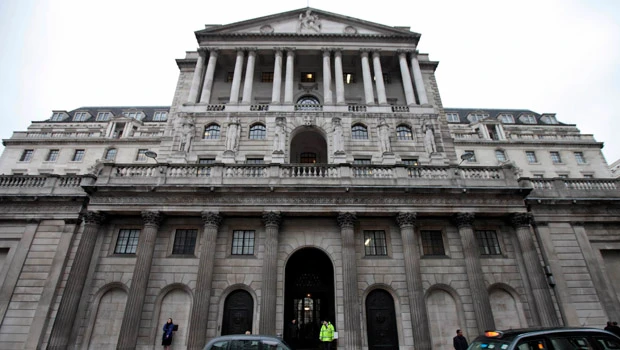
- LONDON: The Bank of England kept its key interest rate at a record low 0.5 percent as expected on Thursday, judging that longer-term downward pressure on prices will quell a looming spike in inflation.
- British consumer price inflation was 3.3 percent in November and is forecast to rise to 4 percent in the coming months due to higher food and fuel costs and last week's rise in sales tax.
But the BoE expects that by early next year inflation will fall back to its 2 percent target, which it has exceeded since December 2009. The economic recovery is still seen as too weak for this extended period of above-target inflation to trigger a longer-term spiral in wages and prices.
"Inflation is primarily being driven by temporary factors such as a rise in VAT, high commodity prices and past depreciation of the sterling. Stripping away these factors reveals that underlying price pressures remain low," said Nida Ali, economic adviser to accountants Ernst & Young.
Economists polled by Reuters last week were unanimous in the view that the BoE would keep its interest rates on hold and make no change to the 200 billion pounds of quantitative easing asset purchases conducted from March 2009 to February 2010.
There was no significant market reaction to the decision.
Minutes of the BoE Monetary Policy Committee's meeting on Wednesday and Thursday will not be published until Jan. 26, but economists expect a repeat of the three-way split that has been in place since October.
Meanwhile, the European Central Bank will face a grilling on its assessment of the euro zone debt crisis and firming price pressures in the bloc after it left interest rates on hold at 1 percent on Thursday.
The decision was correctly forecast by all economists polled by Reuters and keeps rates at the record low they have been at since May 2009.
The pressure on the ECB to buy bonds may be eased by Portugal's success in an auction of its benchmark 10-year bond on Wednesday, a similarly solid debt sale by Spain on Thursday and a call from the EU's top economic official for a stronger European financial safety net.
"It will be interesting to see any reaction to that," RBS economist Nick Matthews said of the safety net discussion.
"I think probably the fact that you've got the sovereign debt crisis still going on and the focus on Portugal suggests to us that you're still going to have the ECB talking about uncertainty remaining elevated," he added.
ECB buying of Portuguese bonds has bought Lisbon time and although it got through Wednesday's auction unscathed, markets still have concerns about Portugal's ability to finance itself.
The ECB is likely to give few indications about the future volume of its bond buys, keeping the onus on governments to deal with the problem.
The purchasing program, which has left the ECB exposed to potential losses, has divided opinion within the bank, with Germany's Bundesbank chief Axel Weber voicing his opposition publicly.
"It is not in the ECB's interest to make any disclosure/commitment on the Securities Markets Program," UniCredit economist Marco Valli wrote in a research note.
"Trichet should limit himself to stating that the program is ongoing and will be adjusted as needed," he added.
Keeping its bond buying plans ambiguous affords the ECB an element of surprise when it acts, generating more impact.
Thursday's policy meeting is the first since Estonia joined the currency bloc on Jan. 1, bringing its membership to 17 countries.
Analysts say they hope the ECB has learned from its experience in 2008, when it raised rates due to oil price-fueled inflation just ahead of the Lehman bankruptcy that tipped the global financial system into full-blown crisis.