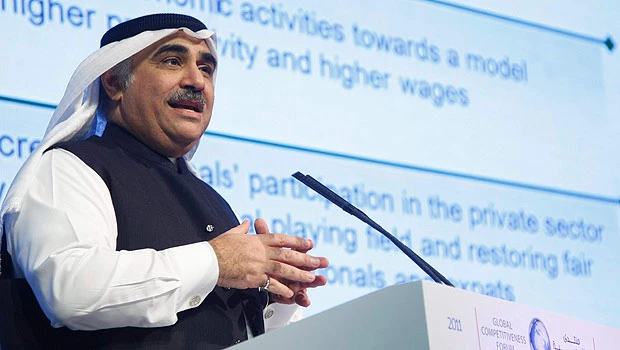
- RIYADH: Saudi Arabia has to create 5 million jobs by 2030 — quarter of a million a year for the next 20 years — to meet the needs of new Saudis coming onto the job market, said Labor Minister Adel Fakieh.
- The jobs are expected to be wholly in the private sector.
In his keynote speech to the 5th Global Competitiveness Forum (GCF) on Tuesday, he said that unless “rapid” action is taken, unemployment would dramatically increase. Conversely, Saudi salaries would decrease with available labor-force growing.
In both the speech and in the panel session afterward, “New Skills for New Jobs,” Fakieh indicated that the authorities are looking at a broad rage of options in an effort to free up the labor market. These include the possibility of a minimum wage although he said that nothing would be done to harm the economy’s competitiveness. He also indicated that that major reforms to the “iqama” (sponsorship) system were being examined. The salary differential between nationals and expatriates had to be reduced and a level field introduced. Without it, the incentive to employ foreign labor would remain.
Of the new 5 million jobs required by 2030, he said that 3 million had to be higher wage earners, such as in tourism. To achieve this would require changes across the board in the Kingdom. There had to be educational improvements, management practices had to alter, there had to be regulation and policy reforms, subsidies had to be removed and the different rules affecting the private and public sectors have to be ended.
Despite the enormity of the challenge of creating 250,000 jobs a year, Fakieh later expressed confidence the government’s plans would succeed and that the unemployment figure would soon be seen to reduce.
Fakieh also spoke of the need to provide jobs for women but figures for that were not divulged. The 5-million goal is seen as relating purely to male employment. Last year’s census showed that there are 9.5 million Saudi males and 9.1 Saudi females. Given the population growth rate (put by Fakieh at 2.3 percent a year) and the fact that 70 percent of the population is under 30, this translates to an annual average of 250,000 Saudi men entering the job market for many years to come — five million by 2030. But that is just the men. Given the increasing economic necessity for women to earn incomes as well as the government’s desire to include them in the workforce, it is thought that at least 100,000 further jobs a year will be required.