- TEHRAN: Iran's dream of competing in the London 2012 Olympic women's soccer tournament have been crushed by an unexpected ruling that their Islamic dress broke FIFA rules, a football federation official in Tehran said on Monday.
Iran is complaining to the world soccer body after its women were banned from playing, moments before an Olympic qualifier against Jordan last week, due to their full-body strip that includes a headscarf.
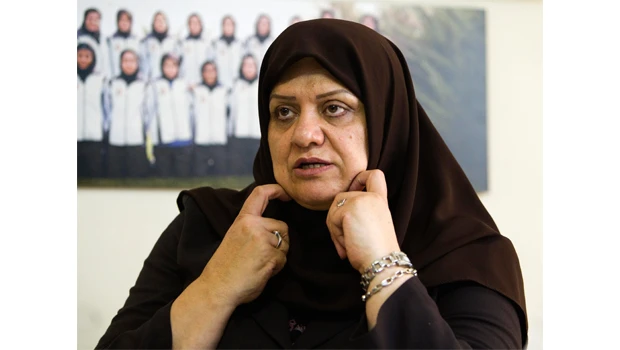
The head of women's affairs at Iran's football federation said Iran had made changes to its women's kit after a FIFA ban last year and believed it had been given the approval of the world federation and of its president, Sepp Blatter.
"We made the required corrections and played a match afterwards," Farideh Shojaei told Reuters TV in an interview.
"We played the next round and were not prevented from doing so, and they didn't find anything wrong. That meant that there are no obstacles in our path, and that we could participate in the Olympics." FIFA's rules for the 2012 Olympics state that: "Players and officials shall not display political, religious, commercial or personal messages or slogans in any language or form on their playing or team kits." In order to comply with the Islamic dress code, which is mandatory in the Islamic Republic, Iran's women footballers play in full tracksuits and headcoverings that conceal their hair.
"(Iran football federation chief Ali) Kafashian took it to FIFA and showed it to Blatter. And they proved that this conduct conforms to the fourth article of the FIFA constitution, which says (a kit should be) devoid of politics or religion," Shojaei said.
"In reality, this kit is neither religious, nor political, nor will it lead to harm a player. They proved this, and Blatter accepted this and we participated in the Olympics." Whatever the result of Iran's complaint, it was unlikely that the team, who were awarded a 3-0 defeat in the unplayed qualifier in Amman, would qualify for 2012, Shojaei said.
"It is extremely difficult to predict what results will come out of this, but I think it unlikely because the preliminary games will not be repeated.
"The countries that invested, and spent money and time and took part in the second round will clearly not be willing to repeat these games, especially if this week it becomes clear which team will enter the final round. So it is extremely unlikely." FIFA made no immediate comment on the controversy.
FIFA says its match officials were right to stop Iran's women's team from playing a 2012 Olympic qualifier wearing Islamic headscarves (hijab). Iranian officials were "informed thoroughly" before Friday's match against Jordan that the scarf covering a women's neck is banned for safety reasons, FIFA says.
Iran's soccer association has said it will complain about the FIFA delegate from Bahrain who ordered the match abandoned.
Jordanian officials accepted the rule and "decided not to select a number of players," FIFA says.
FIFA banned the scarf in 2007 and has extended the safety rule to include neck warmers.